“ Ronda crouches on the bald summit of a rock so mighty that one can easily fancy it the broken base of some pillar that once upheld the sky. Nature seems here to have established division of labor. The gigantic rock bearing aloft the city sustains of itself not a sprig of vegetation. Below, so far below that Ronda dares even in summer to fling down unburied the mutilated carcasses from her bullring, spreads the encircling vega, producing liberally for the multitude above, but granting foothold scarcely to a peasant's hovel. ”
Ronda
Definition and stakes
Ronda, a town in southern Spain, is renowned for its dramatic geography—perched on a rocky precipice overlooking a deep gorge—and its rich cultural heritage, including historic bullfighting. Authors have long been drawn to its stark contrasts: C. Rochfort Scott evokes its rugged landscapes and fertile valleys, while W. Somerset Maugham contrasts the town’s austerity with the grandeur of its surroundings.
William Dean Howells highlights Ronda’s agricultural abundance and famed bullring, and A. M. Williamson captures its haunting beauty under moonlight. These varied depictions reveal Ronda as a place where nature’s power and human resilience converge, etched into the imagination through vivid, often paradoxical, imagery.
Quotes about “Ronda”
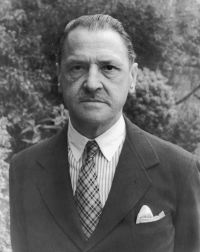
W. Somerset Maugham,
The Land of The Blessed Virgin…
“ The Swineherd But if Ronda itself is a somewhat dull and unsympathetic place with nothing more for the edification of the visitor than a melodramatic chasm, the surrounding country is worthy the most extravagant epithets. The mountains have the gloomy barrenness, the slate-grey colour of volcanic ranges; they encircle the town in a gigantic amphitheatre, rugged and overbearing like Titans turned to stone. They seem, indeed, to wear a sombre insolence of demeanour as though the aspect of human kind moved them to lofty contempt. ”
“ Travelers come to Ronda chiefly to gaze elsewhere. As an outlook upon the world she is well worth the coming; as a city she is almost monotonous, with her squat, white-washed houses sweltering in the omnivorous sunshine. ”
William Dean Howells,
Familiar Spanish Travels
“ You have probably come to see that market because you have read in your guide-books that the region round about Ronda is one of the richest in Spain for grapes and peaches and medlars and melons and other fruits whose names melt in the mouth. If you do not find in the market the abundance you expect of its picturesqueness you must blame the lateness of the season, and go visit the bull-ring, one of the most famous in the world, for Ronda is not less noted for its toreros and aficionados than for its vineyards and orchards. ”
C. Rochfort Scott, Excursions in the mountains of Ronda and Granada…
“ The pass is about four miles from Ronda, and commands a splendid view of the fruitful valley, which lies, like an outspread cornucopia, at its foot. On the other side, too, the scenery is not less fine, though of a totally different nature. There a singular double-peaked crag rises up boldly and darkly on the left hand, casting its shadow on the bright foliage of an oak forest, which, deep sunk below the rest of the country, spreads its verdant covering as far to the eastward as where the huge Sierra Endrinal raises its cloud-enveloped head above all the other mountains of the range. ”
A. M. Williamson,
The Car of Destiny
“ To think, if we had known at Jerez that Granada was the lodestar, we could have reached Ronda in a run of four hours day before yesterday! But it was useless to repine, and fate had given us Ronda. By the time we had passed through the straggling village of Campillos the moon was up, a great white, incandescent globe of light, so brilliant that instead of draining colour from rock, and grass, and flower, it gave new and almost supernatural values to all. We had the world to ourselves, a wonderful world like a vast silver bowl half full of jewels. ”
C. Rochfort Scott, Excursions in the mountains of Ronda and Granada…
“ The space that nature has thus singularly walled in, and sunk beneath the rest of the vale of Ronda, is richly clad with gardens and vineyards; and the little stream, having disengaged itself from the dark chasm that divides the two towns, here once more slackens its pace, to luxuriate under refreshing groves of orange, citron, and pomegranate trees. ”
A. M. Williamson,
The Car of Destiny
“ If it had not been for that first glimpse, and if we had not read “Miranda of the Balcony” we should not have guessed, in walking from the station to the Alameda, that Ronda differed from other Moorish towns. But far away was a barrier of iron railing, and a curious effect as if beyond it everything ended except the sky. We walked on, reached that railing, and leaned over. No picture, no book had been able to give us a real idea of Ronda. It was stupendous—wonderful. We stared down at the world beneath as if we hung in a balloon, for the rock fell away from our feet, a sheer precipice ”
Katharine Lee Bates, Spanish Highways and Byways
“ The street rabble of Ronda was the rudest and fiercest we encountered anywhere in Spain. Several times our guide wheeled suddenly to confront some gypsyish lad, creeping up behind us with stone all ready to throw, and when, at a glint of sunset through the stormy clouds, we tried to slip out unattended to the neighboring alameda, with its far-sweeping prospect of folded mountain ranges and its vertical view of gorge and rushing river, the children actually hounded us back to the hotel. ”
Katharine Lee Bates, Spanish Highways and Byways
“ And so we said good-by to Granada before we were ready to go, and persuaded ourselves, in defiance of maps and time-tables, that our shortest route to Seville led by Ronda. The weather did its very best to dampen our enthusiasm for this wildest of crag aeries, equally famed for romantic beauty of outlook and salubrity of air. Men live long in Ronda, unless, indeed, they hit against a bullet while practising their hereditary trade of contrabandista. They have a saying that octogenarians there are only chickens, but one should not believe all that they say in Ronda. ”
Maud Howe Elliott,
Sun and Shadow in Spain
“ Patsy maundered on, sleepily giving us bits of guidebook information.“Andalusia, Vandalusia, Vandalusia, Andalusia.” The wheels sang it like a lullaby. “Anda{42}——”“Ronda, Ronda!” cried the guard. We rubbed our eyes, snatched our belongings, tumbled out of the compartment to the platform, and almost into the arms of the Sibyl of Ronda, patiently waiting for us there, like Fate. She was a tiny old woman, draped like a Tanagra statuette, in veils of soft, rusty black: her face was like a damask rose that has withered on its stalk; the eyes alone, diamond bright, were young, full of fire. ”
W. Somerset Maugham,
The Land of The Blessed Virgin…
“ But in Ronda even the girls have a weary look, as though life were not so easy a matter as in warmer places, or as the good God intended; and they seem to suffer from the brevity of youth, which is no sooner come than gone. They walk inertly, clothed in sombre colours, their hair not elaborately arranged as would have it the poorest cigarette-girl, but merely knotted, without the flower which the Sevillan is popularly said to insist upon even at the cost of a dinner. And when they go out the grey shawls they wrap about their heads add to their unattractiveness. ”
1911 Encyclopædia Britannica (1911)
“ RONDA, a town of southern Spain, in the province of Malaga; on the river Guadiaro and on the Algeciras-Bobadilla railway. Pop. (1900) 20,995. Ronda is built on a high rock nearly surrounded by the Guadiaro, which Hows through an abrupt chasm 530 ft. deep and 300 ft. wide, by which the old town is separated from the new. Of the three bridges, one is said to have been built by the Romans, another by the Moors; the most modern (1761) spans the stream in a single arch at a height of about 255 ft. ”
C. Rochfort Scott, Excursions in the mountains of Ronda and Granada…
“ At our backs lay the beautifully wooded country we had travelled over in the morning—Ronda and its vale, and the distant sierras of El Burgo and Casarabonela. Before us, a wild mountain country extended for several miles; and beyond, spreading as far as the eye could reach, were the vast plains of Arcos, through which the gladdening Guadalete, winding its way past Xeres, turns to seek the bay of Cadiz, whose glassy surface the white walls of its proud mistress, and the deep blue ocean, could be seen distinctly on the left, though at a distance of more than fifty miles. ”
Bayard Taylor,
Lands of the Saracen
(1859)
“ Were these sublime cliffs, these charming cascades of the Guadalvin, and this daring bridge, in Italy instead of in Spain, they would be sketched and painted every day in the year; but I have yet to know where a good picture of Ronda may be found. In the bottom of the chasm are a number of corn-mills as old as the time of the Moors. The water, gushing out from the arches of one, drives the wheel of that below, so that a single race supplies them all. ”
W. Somerset Maugham,
The Land of The Blessed Virgin…
“ In a little town like Ronda, so entirely apart from the world, poverty-stricken, this desire for realism makes a curiously strong impression. The churches, coated with whitewash, are squalid, cold and depressing; and at first sight the row of images looks nothing more than a somewhat vulgar exhibition of wax-work. But presently, as I lingered, the very poverty of it all touched me; and forgetting the grotesqueness, I perceived that some of the saints in their elaborate dresses were quite charming and graceful. ”
Walter Shaw Sparrow, A book of bridges (1915)
“ Two other bridges, one Moorish and one Roman, cross the chasm at Ronda, but at the upper end where the depth is less prodigious; so their architects had easier problems to solve, and yet they did not equal in any respect the heroic inspiration of Aldeguela. Mr. Edgar Wigram has said that although Ronda Bridge owes much of its effect to its extraordinary site, yet an extraordinary piece of architecture is necessary to command the site; it is the triumph of genius over nature that we feel both at Ronda and in the Pont Napoléon. ”
A. J. Duffield, Peru in the Guano Age
“ I was well received by the capitaz and his charming wife Doña Carmen, who with her own hands and in my presence prepared for my supper a partridge and other delightful things. If the day had been hot, the night on the highest point of the royal road to Ronda was cold. A glorious wood fire added to the universal beauty of everything. ”
“ Her valor's paragon, and she the glass of woman's grace. And since that hour the tale is told, while many a tear-drop falls, Of the lovers of the vega by Antequera's walls. And they praise the noble lady and they curse the robber band, And they name her the Lucretia of fair Andalusia's land. And if the hearer of the tale should doubt that it be true, Let him pass along the mountain road, till Ronda comes in view, There must he halt and searching he may the story trace In letters that are deeply cut on the rocky mountain's face. ”
C. Rochfort Scott, Excursions in the mountains of Ronda and Granada…
“ The hills here offer an easy egress from the rock-bound basin; but, though nature has left this one level passage through the mountains, art has taken no advantage of it to improve the state of the road, for a viler trocha is not to be met with, even in the rudest part of the Serranía.The view of the rich plain and dark battlements of Ronda is remarkably fine. ”
Washington Irving,
Chronicle of the Conquest of Granada…
“ Besides the inhabitants of Ronda and some of his own tribe, he had a legion of African Moors in his immediate service. They were of the tribe of the Gomeres, so called from their native mountains—mercenary troops whose hot African blood had not yet been tempered by the softer living of Spain, and whose whole business was to fight. These he kept always well armed and well appointed. The rich pasturage of the valley of Ronda produced a breed of horses famous for strength and speed; no cavalry, therefore, was better mounted than the band of Gomeres. ”
Walter John Buck, Unexplored Spain
“ This picturesque and altogether break-neck style of hunting the boar—a style perhaps more consonant than “driving” with popular notions of the dash and chivalry of Spanish character—still survives in the wild province of Estremadura. No species of sport in our experience will compare with the Ronda for danger and sheer recklessness unless it be that of “riding lions” to a stand, as practised on British East African plains. ”
A. M. Williamson,
The Car of Destiny
“ There was just time to telegraph back to the Reina Cristina and beg some of the young Californian, who had fallen so deeply in love with the place that he intended to stay a week. We had become friendly and he would certainly grant the favour, therefore we might count on travelling that night by acetylene and moonlight. Meanwhile, there was a long day to wait, but I tramped off my restlessness as best I could in exploring every foot of Ronda. ”
Washington Irving,
Chronicle of the Conquest of Granada…
“ There was nothing that stirred up the spirit of the Moors of the frontiers more thoroughly than the idea of a foray. The summons of Bexir was gladly obeyed by the alcaydes of the border towns, and in a little while there was a force of fifteen hundred horse and four thousand foot, the very pith and marrow of the surrounding country, assembled within the walls of Ronda. The people of the place anticipated with eagerness the rich spoils of Andalusia soon to crowd their gates; throughout the day the city resounded with the noise of kettle-drum and trumpet ”
C. Rochfort Scott, Excursions in the mountains of Ronda and Granada…
“ One of the most remarkable as well as most delightful families of Ronda, is that of Holgado y Montezuma. It is lineally descended from the last Cacique of Mexico, whose name it bears, and whose character and features I almost fancied were to be recognized in the somewhat haughty eye, and occidental cast of countenance, of the present head of the family.The lower orders of inhabitants have, amongst travellers, the credit of being a fierce, intractable race; but this character is by no means merited, and belongs altogether to the savage mountaineers of the Serranía. ”
C. Rochfort Scott, Excursions in the mountains of Ronda and Granada…
“ Nor did their kindness cease there; for I afterwards received pressing invitations to visit them, as well at Ronda as at the neighbouring watering-places, to which they are in the habit of resorting during the summer months; for the Spanish fashionables—like those of other climes—deem it essential to their well being to migrate periodically to these rendezvous for dancing and dosing. ”
C. Rochfort Scott, Excursions in the mountains of Ronda and Granada…
“ It was only at his bivouac in the dark cork forest under the lofty Sierra del Pinar that the thunder of the Castillian artillery burst upon his astounded ear.—He mounted his courser in all haste, and, dashing forward with mad speed, stopped not until he had gained the pass of Montejaque. You see it there, Don Carlos, (said the Padre, pointing to a deep gap in the summit of the serrated ridge that bounds the basin of Ronda to the west) it is still known in the country as El Puerto del Pasmo del Moro. ”
C. Rochfort Scott, Excursions in the mountains of Ronda and Granada…
“ My own accounts of the state of the garrison of Ronda coinciding perfectly with that of Alonzo, I readily agreed to his proposal; and it was decided that, after he had given the necessary instructions to Beltran, with whom, notwithstanding their little coolness, he still continued on friendly terms, a messenger should be sent to me, to fix the day for our rendezvous at Grazalema, a small but strongly situated town, on the line of communication between Ronda and Cadiz, from which the French had recently been driven. ”
Washington Irving,
Chronicle of the Conquest of Granada…
“ In this way they passed in deep midnight by Arcos, crossed the Guadalete, and effected their retreat to the mountains. The day dawned as they made their way up the savage defiles. Their comrades had been hunted up these very glens by the enemy. Every now and then they came to where there had been a partial fight or a slaughter of the fugitives, and the rocks were red with blood and strewed with mangled bodies. The alcayde of Ronda was almost frantic with rage at seeing many of his bravest warriors lying stiff and stark, a prey to the hawks and vultures of the mountains. ”
C. Rochfort Scott, Excursions in the mountains of Ronda and Granada…
“ The direct Road from Casarabonela crosses the River, previous to its confluence with the Rio Grande; and about a mile beyond the ford, reaches the Venta de Cartáma. This is often made the resting-place between Ronda and Malaga. Now, as I write with the view of tempting others to ride after me, I feel called upon, despite the poor accommodation of Casarabonela, to advise future travellers to put up with it; for certainly a more wretched hovel than the Venta of Cartáma I never looked into. A single glance produces an irritation of the skin, and a sympathetic restlessness of the fingers. ”