“ When other European capitals were mere congeries of rookeries, Dublin, the centre of Irish political life, possessed splendid streets, grandly planned. But there was little solidarity among the artistic fraternity. Various associations of artists were formed, which held together fairly well until the flight of the resident town gentry after the Union, and many admirable artists were trained in the schools of the Royal Dublin Society, but, since the opening of the nineteenth century, there has been almost no visible art effort in Dublin. ”
Royal Dublin Society
Definition and stakes
Quotes about “Royal Dublin Society”
1911 Encyclopædia Britannica, Volume 8… (1911)
“ The Royal University replaced the Queen’s University under the University Act (Ireland) in 1879. No teaching was carried on, but examinations were held and degrees conferred, both on men and on women. On the west side of St Stephen’s Green is the Catholic University (1854) , which is under the Jesuit Fathers and affiliated to the Royal University. Between Trinity College and St Stephen’s Green, a large group of buildings includes the Royal Dublin Society, founded in 1683 to develop agriculture and the useful arts, with a library and gallery of statuary ”
Leslie Stephen,
Dictionary of National Biography…
(1896)
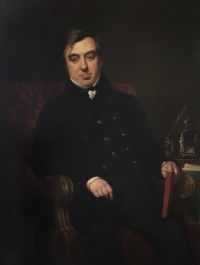
“ Among his gifts were 14,000l. for a stove- tenter house at Dublin, to facilitate the work of poor weavers; 6,000l. for a Dublin hospital; and 700l. for buildings at a botanic garden. In 1816 Pleasants defrayed the cost of reprinting at Dublin 'Reflections and Resolutions proper for the Gentleman of Ireland' (1738) , by Samuel Madden [q. v.] . Pleasants died on 1 March 1818, in Camden Street, Dublin, and bequeathed sums for schools, almshouses, and hospitals in Dublin. A portrait of Pleasants in oil is in the possession of the Royal Dublin Society. ”
Francis Storr, 1911 Encyclopædia Britannica (1911)
“ A society was formed in Dublin, similar to the Royal Society in London, as early as 1683; but the distracted state of the country proved unpropitious to the cultivation of philosophy and literature. The Royal Irish Academy grew from a society established in Dublin about 1782 by a number of gentlemen, most of whom belonged to the university. They held weekly meetings, and read, in turn, essays on various subjects. They professed to unite the advancement of science with the history of mankind and polite literature. ”
Various, Encyclopaedia Britannica, 11th Edition…
“ The Royal Hibernian military school in Phoenix Park (1765) provides for soldiers’ orphan sons. The Drummond Institution, Chapelizod, for the orphan daughters of soldiers, was established in 1864 by John Drummond, alderman, who left £20,000 to found the asylum. The Hibernian Marine Society for the maintenance of seamen’s sons was established in the city in 1766, but now has buildings at Clontarf. The Roman Catholic Church has charge of a number of special charities, some of them educational and some for the relief of suffering.History.—The name of Dublin signifies the “Black pool.” ”
John Ayrton Paris,
The Life of Sir Humphry Davy, Bart…
“ On these grounds, they have been pleased to permit me to be absent from the meetings of the Royal Society, during the period that may be necessary for delivering a Course of Lectures at the Laboratory of the Dublin Society, in the month of November next.Be pleased to express to the Dublin Society my grateful acknowledgments for the honour they have done me in making such a proposition; and assure them that I shall use my best exertions to promote their views for the extension of Chemical Science, and every other species of useful knowledge. ”
Wright, Wright's Historical Guide to the City of Dublin…
“ The lectures in Natural Philosophy have been discontinued, and the lecture-room latterly let to a Methodist congregation. Proprietors, paying one guinea per annum, have the privilege of introducing a visitor, not generally residing in Dublin, for one month.Dublin Library Society - The origin of this now numerous society can be traced to the meeting of a few persons at a bookseller's, No. 80 Dame-street, to read newspapers and new publications. Growing too numerous, they removed, in 1791, to a house in Eustace-street, and assumed the name and form of a regular society. ”
“ Three Relief Funds in Dublin coped as best they{36} could with the distress of the Irish poor. One of them was worked with great enthusiasm and organising power by the Duchess of Marlborough, and by every means known to a most capable leader of Society she lured from Society of all grades a ready “rate in aid.” Entertainments sprang up—theatricals, bazaars, concerts—that helped the Fund and at the same time put heart into the flagging Dublin season, and Robert was in the thick of charitable endeavour. ”
Robert Dunlop, Dictionary of National Biography… (1891)
“ On the reconstruction of the United Irish Society in 1795, he consented, though reluctantly, to take the oath of secrecy and fidelity, and was appointed a delegate to the upper baronial committee of Belfast. In the spring of 1796 he was sent to Dublin to extend the principles of the society among the operatives of the capital. For a time he resided at Balbriggan, working as a silk-weaver; but his object being suspected by the Orangemen in the factory, he removed to Dublin, working in the liberties as a cotton-weaver. ”
Henry Brooke, An Essay on the Antient and Modern State of Ireland
“ The Linen-Hall was erected in Dublin, under as just and nice Regulations as any commercial House in Europe. The North of Ireland began to wear an Aspect entirely new; and, from being (through Want of Industry, Business, and Tillage) the almost exhausted Nursery of our American Plantations, soon became a populous Scene of Improvement, Traffic, Wealth, and Plenty; and is, at this Day, a well-planted District, considerable for Numbers of well-affected, useful, and industrious Subjects. Now arose, now shone forth, the ever Honourable Dublin Society; a Society equalled by none. ”
Thomas Davis, Thomas Davis, selections from his prose and poetry
“ It undoubtedly has some men of great ability and attainments, and some who have neither; but what can be done without funds, statues, or pictures? To aggravate its difficulties, the Dublin Society has another art school, still worse off as to casts, and equally deficient in pictures. As a place of instruction in the designing of patterns for manufactures and the like, the Dublin Society school has worked well; and many of the best-paid controllers of design in the English manufactories were educated there ”
Thomas Davis, Thomas Davis, selections from his prose and poetry
“ Our readers will be glad to hear that this great boon is about to be given to Irish Art. A society for the formation of a gallery of casts in Dublin has been founded. It embraces men of every rank, class, creed, politics, and calling, thus forming another of those sanctuaries, now multiplying in Ireland, where one is safe from the polemic and the partisan. ”
Mrs. Hamilton Norway, The Sinn Fein Rebellion as I Saw It
“ Surely it must be possible to find men who will rule with firmness and understanding this fine people—so kindly, so emotional, so clever, so easily guided, and so magnificent when wisely led. One prays they may be found, and found quickly, and that we may live to see a Dublin restored to its former stateliness with a Government worthy of the nation. ”
Thomas O'Neill Russell, Beauties and Antiquities of Ireland
“ There are three libraries in Dublin, of which two are free to any one known as a respectable person—these are the National Library and the Royal Irish Academy. To become a reader in Trinity College Library costs, to a person known to be respectable, only a couple of shillings a year. Seeing the facilities that are in Dublin for cultured people, or for those who wish to become cultured, it is strange that it does not stand higher as an educational centre. ”
Thomas Davis, Thomas Davis, selections from his prose and poetry
“ The Dublin Society was founded for the promotion of husbandry and other useful arts. Its labours to serve agriculture have been repeated and extensive, though not always judicious. It has also endeavoured to promote manufactures. It has gardens and museums fitter for scientific than practical instruction, admirable lecturers, a library most generously opened, a drawing-school of the largest purposes and of equivocal success, and various minor branches. The Irish Academy has some of this fault. It endeavours to unite antiquarianism and abstract science. ”
Charles Kingston O'Mahony, The Viceroys of Ireland
“ The viceroyalty remained, but it was shorn of some of its glory. With the death of the Irish House of Commons and the admittance of Irish peers to the English House of Lords, there was no longer any need for the native nobility to maintain expensive houses in Dublin. London became their centre, and they made their country houses their headquarters while in Ireland. Gradually the social power fell into the hands of the professional classes and the higher-grade civil servants; doctors, lawyers, officers in the army, and others of the professions dominated Dublin society. ”
Various, Blackwood's Edinburgh Magazine…
“ Who could have recognised in the youthful sovereign visiting the public buildings of Dublin, like a private peeress, without any of the state of a Sovereign, and chiefly interested with her royal consort in the institutions devoted to beneficence, the Head of a Government whom The Nation had so long represented as callous to all the sufferings of the people? ”
Joseph Sheridan Le Fanu,
In a Glass Darkly
(1872)
“ He was in person about the middle size, and somewhat strongly formed—his countenance was marked with the lines of thought, and on the whole wore an expression of gravity and melancholy; being, however, as I have said, a man of perfect breeding, as well as of good family, and in affluent circumstances, he had, of course, ready access to the best society of Dublin, without the necessity of any other credentials. ”
Canon John O'Rourke, The History of the Great Irish Famine of 1847…
“ The young counsellor, fresh from the Kerry Mountains—an athlete in mind and body—had no notion to submit so such degradation from men who were his inferiors in every respect, and, consequently, his language was full of manly independence. His high spirit appeared in his whole manner, and as he walked through Dame Street, Parliament Street, and along the quays to the Four Courts, he looked the noblest and proudest man in Dublin—a very king of men. ”
| override_editor, Encyclopædia Britannica, Ninth Edition (1882)
“ There is no library in Dublin corresponding in extent and public accessibility to the British Museum in London, or the Advocates Library in Edinburgh. About 1850 it was proposed to supply the deficiency by combining the libraries of the Dublin Society and the Irish Academy, both of which had long received grants of public money, together with the collection of Archbishop Marsh. Accordingly in 1854 an Act of Parliament was passed "for the establishment of a national gallery and for the care of a public library in Dublin." The scheme thus authorized has never been carried out. ”
Various, The Irish Penny Journal, Vol. 1 No…
“ It was a pic-nic party given by the Alexanders, the Armits, and the present popular and deservedly honoured veteran the Commander of the Forces in Ireland—then lieutenant-colonel of the 18th or Royal Irish Fusileers, which were at the time quartered in Dublin. On the morning of as beautiful a day in June as ever came, the inhabitants of the leading thoroughfares of the city, and those along the road side from Dublin to Dunleary, were surprised by the unusual crowds of open carriages of all kinds conveying the youth and beauty of the aristocracy of the metropolis to the chosen scene ”
Charles James Lever,
Nuts and Nutcrackers
“ Dublin is the same dirty, ill-cared-for, broken-windowed, tumble-down concern it used to be—the country the same untilled, weed-grown, unfenced thing I remember it fifty years ago—the society pretty much the same mixture of shrewd lawyers, suave doctors, raw subalterns, and fat, old, greasy country gentlemen, waiting in town for remittances to carry them on to Cheltenham—that paradise of Paddies, and elysium of Galway belles. ”
Thomas O'Neill Russell, Beauties and Antiquities of Ireland
“ Since then, in spite of what the census may show, it has grown considerably, and has been improved immensely. It is not easy to see what has caused such improvement in Dublin since 1870. The only way that the improvement in the state of the streets, the pulling down of old buildings and the erection of new ones, can be accounted for, is by the fact that the local government of the city is in the hands of a different class of men from those who ruled it so long and so badly up to about the time mentioned. ”
Lewis Wingfield, My Lords of Strogue, Vol. 1 (of 3…
“ During the last tempestuous years which preceded the Union, members of all parties were accustomed to meet in social intercourse, dining to-day with men they would hang tomorrow, even in some cases advancing funds out of their own pockets to secure the escape of those whom it was their duty to convict. The cause of the anomaly is not far to seek. Dublin society, though magnificent, was limited to a tiny circle. Absenteeism being voted low, the great families became interwoven by a series of intermarriages, while they were torn at the same time by religious or political dissensions. ”
1911 Encyclopædia Britannica, Volume 8… (1911)
“ A competent fire-brigade is maintained by the corporation. The city coroner is a corporate officer. The city hall, used as municipal offices, has already been mentioned; the official residence of the lord mayor is the Mansion House, Dawson Street. The Dublin metropolitan police is a force peculiar to the city, the remainder of Ireland being protected civilly by the Royal Irish Constabulary. A large military force is usually maintained in the city of Dublin, which is the headquarters of the military district of Dublin and of the staff of Ireland (q.v.) ”
William Reid, History of the United Co-operative Baking Society Ltd (1920)
“ In and around Dublin there were several small societies, having a combined membership of somewhere over two thousand. The Dublin Industrial Society, after unsuccessfully endeavouring a few years earlier to get the Baking Society to help in the financing of a bakery in Dublin, had gone ahead with the erection of a bakery for themselves, but it had never been very successful. The Society itself was not too successful for a time, owing to the fact that the members were not pulling very well together ”
1911 Encyclopædia Britannica, Volume 8… (1911)
“ It is also the seat of the Irish courts of law and equity. In connexion with these it may be noted that in 1904 a special court was established for children. On the constitution of Dublin as a county borough in 1898, the positions and duties of its corporation were left practically unaltered. The corporation consists of a lord mayor, 20 aldermen and 60 councillors, representing 20 wards. The income of the body arises from rents on property, customs and taxes. ”
Maria Edgeworth,
Tales and Novels — Volume 06
“ Lord Colambre, from his family connexions, had of course immediate introduction into the best society in Dublin, or rather into all the good society of Dublin. In Dublin there is positively good company, and positively bad ”
Thomas O'Neill Russell, Beauties and Antiquities of Ireland
“ It is not to be wondered at that wealthy English and Scotch people should prefer to live in their own countries, but wealthy Irish people seem not to desire to live in Dublin unless it is their native place. Ireland, unfortunately, does not possess very many rich people, but she has at least some outside of Dublin; but very few of these, even if they have young, growing-up families, go to reside in the capital in order to educate them. Some seem to think that outside of Trinity College, Dublin has no advantages in an educational point of view worth speaking of. ”
Lee L. Powers, The Cathedral Towns and Intervening Places of England…
“ There is no city of Ireland where wealth and poverty are more contiguous, and where aristocracy and democracy are nearer neighbors, than at Dublin.Nine bridges, two of which are iron, cross the river, and a magnificent avenue nine miles long, called the Circular Road, environs the city. The Bank of Ireland, near the college, is a low but very large building, and was once the House of Parliament. Trinity College opposite—and both are in the very centre of the most crowded business portion of the city—has fine stone buildings, with large and elegantly kept lawns, one opening into the other. ”