Sabellianism

Definition and stakes

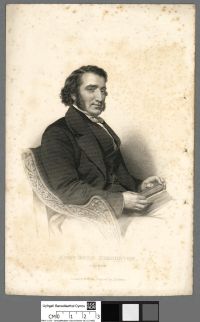
Portrait of John Stoughton John Stoughton,  Ecclesiastical History of England… (1874)

“ In like manner Sabellianism, in the eyes of some, lurked under the folds of South’s argument, though he indignantly repelled the idea. The fact is, no man can attempt a logical explanation [219] of the Godhead without being in danger of falling into Tritheism on the one side, or Sabellianism on the other. In such controversies we notice the frequent use of some word not in Scripture, but considered to be an equivalent for what is Scripture—a term conceived to be a concentration of diffused truth—the quintessence of a doctrine previously in a state of solution. ”
Source: Gutenberg

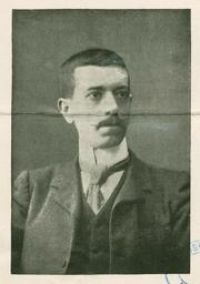
Portrait of J. M. Robertson J. M. Robertson,  A Short History of Christianity

“ Under such a theorem, however, the Man-God as such theoretically disappeared; and as that was precisely the side of the creed which identified the cult, gave it popularity, and won it revenue, Sabellianism, though accepted by many, even by many bishops, could not become the official doctrine. It persistently remained, nevertheless, in the background, the idea taking new forms and names in succeeding generations, as new men arose with courage and energy enough to reopen the insoluble strife, during a period of four hundred years. ”
Source: Gutenberg

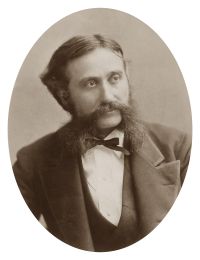
Portrait of Philip Schaff Philip Schaff,  Nicene and Post-Nicene Fathers… (1885)

“ Of the later life of Sabellius we know nothing. His writings are no longer extant, though there are apparently quotations from some of them in Epiphanius, Hær. 62, and Athanasius, Contra Arian. Oratio 4. In the third century those Monarchians (modalists) who were known as Patripassians in the West were called Sabellians in the East. In the fourth and fifth centuries the Fathers used the term Sabellianism in a general sense for various forms of Monarchianism, all of which, however, tended in the one direction, viz. ”
Source: Wikisource

Get perspective with Kwize: daily news enlightened by great literature