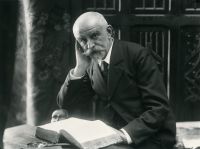
“ At Ascension the heavy and clear crystals of Saint Ambrose filled with their luminous water the tiny basin of the catkins; the fire of rubies and garnets lighted up again with the crimson hymn and scarlet sequence of Pentecost the "Veni Creator" and "Veni Spiritus." ”
Saint Ambrose
Definition and stakes
Saint Ambrose, portrayed in an anonymous painting, represents the convergence of religious art and historical legacy. This theme echoes across various literary viewpoints: Saint Augustine contemplates Ambrose’s spiritual challenges, while Mrs. Hugh Fraser emphasizes his guidance of Emperor Gratian.
Huysmans uses lyrical imagery to conjure Ambrose’s symbolic figure, and Ambrose’s own writings demonstrate his theological depth and compassionate leadership. The combination of these narratives highlights his lasting impact as a link between faith, governance, and cultural remembrance.
Quotes about “Saint Ambrose”
Bishop of Hippo Saint Augustine, The Confessions of St. Augustine
“ And Ambrose himself, as the world counts happy, I esteemed a happy man, whom personages so great held in such honour; only his celibacy seemed to me a painful course. But what hope he bore within him, what struggles he had against the temptations which beset his very excellencies, or what comfort in adversities, and what sweet joys Thy Bread had for the hidden mouth of his spirit, when chewing the cud thereof, I neither could conjecture, nor had experienced. Nor did he know the tides of my feelings, or the abyss of my danger. ”
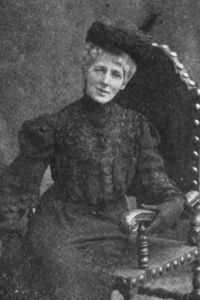 Mrs. Hugh Fraser,
Italian Yesterdays, vol. 1
“ Valentinian’s next care was to provide Gratian with wise tutors, and surely few youths were ever more favoured in that respect. The tie between him and St. Ambrose was as strong and tender a one as history has ever presented to our admiration. Gratian, in every circumstance of his short and stormy life, turns to the great Bishop for support and counsel. Ambrose never seems to have the young ruler out of his thoughts; the Saint’s outburst of sorrow at his death is the cry of a broken heart. It all forms a chapter of most unusual beauty in the story of mankind. ”
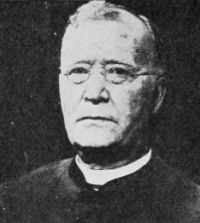 James Francis Loughlin,
Catholic Encyclopedia
(1913)
“ The materials for a biography of the Saint are chiefly to be found scattered through his writings, since the "Life" written after his death by his secretary, Paulinus, at the suggestion of St. Augustine, is extremely disappointing. Ambrose was descended from an ancient Roman family, which, at an early period had embraced Christianity, and numbered among its scions both Christian martyrs and high officials of State. ”
Bishop of Milan Saint Ambrose, The Letters of S. Ambrose, Bishop of Milan
“ SIMPLICIAN, to whom this and the following Letters, and several later ones, are addressed, seems, from what little we know of him, to have been a very learned and yet simple-minded man. He was older than S. Ambrose, who speaks in this Letter of his ‘fatherly love’ towards himself, and was probably his adviser in the early days of his episcopate, and possibly, as the Benedictine Editors, (note on Letter lxv,) suggest, his ‘father in the faith,’ as having prepared him for his ordination, or even taught him as a catechumen at Rome in earlier days. ”
Bishop of Milan Saint Ambrose, The Letters of S. Ambrose, Bishop of Milan
“ Ambrose is not of such importance as to degrade the priesthood on his account. One man’s life is not of as much value as the dignity of the whole priesthood, by whose advice I gave my direction when they suggested that there might be some heathen or Jew, chosen by Auxentius, to whom we might give a triumph over Christ if we committed to him judgment concerning Christ. ”
James Francis Loughlin,
Catholic Encyclopedia
(1913)
“ Theodosius did not long survive his triumph; he died at Milan a few months later (January 395) with Ambrose at his bedside and the name of Ambrose on his lips. "Even while death was dissolving his body", says the Saint, "he was more concerned about the welfare of the churches than about his personal danger". "I loved him, and am confident that the Lord will hearken to the prayer I send up for his pious soul" (In obitu Theodosii, c. 35) . Only two years elapsed before a kindly death reunited these two magnanimous souls. No human frame could long endure the incessant activity of an Ambrose. ”
 James Joyce,
Ulysses
(1922)
“ Saint Ambrose heard it, sigh of leaves and waves, waiting, awaiting the fullness of their times, diebus ac noctibus iniurias patiens ingemiscit. ”
Bishop of Milan Saint Ambrose, The Letters of S. Ambrose, Bishop of Milan
“ Now in Latin Shem signifies a ‘name.’ And truly is this Ambrose of ours a good name, in whose tents Japhet may be enlarged, Prov. xxii. 1. because a good name is rather to be chosen than great riches. Let him therefore also be blessed, let his name be above gold and silver, let the seed of Abraham be in his portion, let all his blessing rest on his posterity, and on the whole family of the just man. But no one is cursed, all are blessed, for blessed is the fruit of Sarah. ”
Bishop of Milan Saint Ambrose, The Letters of S. Ambrose, Bishop of Milan
“ PALLADIUS said; ‘The Father is greater than the Son.’ Ambrose, Bishop, said; ‘In respect of the flesh the Son is less than the Father: in respect of Godhead He is equal to the Father: I read therefore that the Son of God is equal to the Father, as also the instances that have been adduced testify. But why should you wonder that He is less in respect of the flesh, when He has called Himself a servant, a stone, a worm, when He has said that He is less than the angels, for it is written: Heb. ”
Bishop of Milan Saint Ambrose, The Letters of S. Ambrose, Bishop of Milan
“ The following day we transferred them to the Basilica which they call Ambrosian. During their transportation a blind man was healed126. My discourse to the people was as follows. When I considered in what overflowing and unprecedented numbers you were met together, and thought on the gifts of Divine Grace which shone forth in the holy Martyrs, I felt myself, I confess, unequal to this task, and thought it impossible that I could find language to express that which we can hardly conceive in mind or endure with our eyes. ”
Bishop of Milan Saint Ambrose, The Letters of S. Ambrose, Bishop of Milan
“ Here are persons in dealing with whom you ought still to invite and earn the Clemency of God towards the Roman empire; here are persons for whom rather than for yourself you have to hope; let their grace, their well-being, appeal to you in what I now say. I fear your entrusting your cause to the judgement of others. As yet you are committed to nothing. Herein I will pledge myself for you to our God, fear not your oath. That change cannot be displeasing to God which is made for His honour. ”
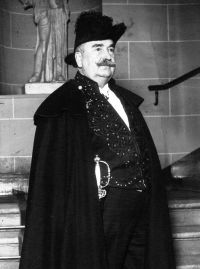 Louis Bertrand,
Saint Augustin
“ The rhetoric professor gathered only one thing from the visit, which was, that the Bishop of Milan had received him well. And as human vanity immediately lends vast significance to the least advances of distinguished or powerful persons, Augustin felt thankful for it. He began to love Ambrose almost as much as he admired him, and he admired him for reasons altogether worldly. "Ambrose I counted one of the happy ones of this world, because he was held in such honour by the great." ”
Bishop of Milan Saint Ambrose, The Letters of S. Ambrose, Bishop of Milan
“ No ordinary degree of virtue befits a priest, for he ought sedulously to shun not only more heinous sins, but even the smallest; he ought to be open to compassion, not to revoke his promise, to raise the fallen, to sympathise with sorrow, to preserve meekness, to love piety, to drive away or stifle wrath, to be a trumpet to rouse the people to devotion, or to soothe them into tranquillity. ”
Bishop of Milan Saint Ambrose, The Letters of S. Ambrose, Bishop of Milan
“ Why have Ib. pangs taken thee, as a woman in travail; that thou shouldest be in labour of iniquity, and bring forth unrighteousness? For there is no greater grief than for a man to wound his conscience with the sword of sin; nor is there any heavier burden than the weight of sin and the load of transgression. It bows down the soul, it bends it even to the earth, so that it cannot raise itself. Heavy, my son, heavy indeed is the weight of sin. ”
Bishop of Milan Saint Ambrose, The Letters of S. Ambrose, Bishop of Milan
“ The beneficence which has led you, at my request, to liberate many persons from exile, from prison, from the extreme penalties of death, obliges me to incur the danger of offending you for the sake of your own good, rather than lose in one moment that privilege of every Bishop which I have for so long possessed. For no man can feel greater confidence than he who zealously loves, no man certainly ought to injure him who is careful for his well-being. ”
Bishop of Milan Saint Ambrose, The Letters of S. Ambrose, Bishop of Milan
“ And yet no man arrested me, though they wished to drive me from the city, as they shewed afterwards by saying, ‘Leave this city, and go where thou wilt.’ I expected, I confess, something great, to be burned or slain with the sword for the name of Christ, but they offered me delights in the place of sufferings; and yet the soldiers of Christ seeks not for delights but for sufferings. Wherefore let no man trouble you by the intelligence that they have prepared a carriage115, or that Auxentius, who calls himself Bishop, has uttered what he thinks terrible words. ”
F. A. Forbes, The Life of Saint Monica
“ Augustine was furnished with letters of introduction to Ambrose, the Bishop, who had been brilliantly successful at the Bar in his youth, and was probably an old friend of Symmachus. He was of a noble Roman family, and famous alike for his great learning and peculiar charm of manner. He was famous also for his holiness of life, but this was of less interest to Augustine; it was Ambrose the orator with whom he desired to make acquaintance. ”
Bishop of Milan Saint Ambrose, The Letters of S. Ambrose, Bishop of Milan
“ But if pity for a single person can sway you, much more let the prayer of all the Bishops move you. For which of us will be united to him in fellowship and communion when he has attempted to usurp a place not due to him, and one he could not lawfully have arrived at, and endeavours to regain in a manner most unreasonable what he was most unreasonable in aiming at? Often as he has been found guilty of turbulence, he still goes on, as if his past conduct should inspire no horror. ”
Bishop of Hippo Saint Augustine, The Confessions of St. Augustine
“ To Milan I came, to Ambrose the Bishop, known to the whole world as among the best of men, Thy devout servant; whose eloquent discourse did then plentifully dispense unto Thy people the flour of Thy wheat, the gladness of Thy oil, and the sober inebriation of Thy wine. To him was I unknowing led by Thee, that by him I might knowingly be led to Thee. That man of God received me as a father, and showed me an Episcopal kindness on my coming. ”
Bishop of Milan Saint Ambrose, The Letters of S. Ambrose, Bishop of Milan
“ By ancient right Priests have conferred sovereignty, never assumed it, and it is a common saying that Emperors have coveted the Priesthood more often than Priests sovereignty. Christ fled that He might not be made a king. We have a power of our own. The power of a Priest is his weakness; 2 Cor. xii. 10. When I am weak, it is said, then am I strong. But let him against whom God has raised up no adversary beware lest he raise up a tyrant for himself. Maximus did not say that I domineered over Valentinian, though he complains that my embassage prevented his passing over into Italy. ”
Bishop of Milan Saint Ambrose, The Letters of S. Ambrose, Bishop of Milan
“ S. AMBROSE replies to the inquiry of Sabinus whether he had written concerning Paradise, and what was his opinion concerning it. Having first touched on the historical description of the place, he proceeds to the mystical explanation of it. And having shewn that Paradise is situate in the principal region of the soul, he teaches what is signified by the several parts thereof, and what men should imitate in the serpent. Lastly, having declared the greatness of human weakness and what great love God has shewn us from the beginning, he exhorts men to fly the pleasures of the senses. ”
Bishop of Milan Saint Ambrose, The Letters of S. Ambrose, Bishop of Milan
“ Let us fly pleasure as a serpent; it has many allurements, and especially as regards man. For other animals are captivated by greediness after food; man, in that the powers of his eyes and ears are more varied, is exposed to greater dangers. Farewell; love me, as you indeed do, for I love you. LETTER XLVI. A.D. 389. SABINUS, who was Bishop of Placentia, had written to S. Ambrose to tell him of an Apollinarian heretic, who appears, after being condemned at Placentia, to have gone to Milan. ”
Bishop of Milan Saint Ambrose, The Letters of S. Ambrose, Bishop of Milan
“ Let your piety be moved by the title of Bishop, which that sacrilegious person dishonours, convicted as he is of atrocious crime even by the voice of his own people, if indeed any of his own people can still survive. Let him at least return to his own home, and cease to contaminate the most flourishing cities of Italy; at present by unlawful ordinations he is associating with himself persons like himself, and he endeavours by help of all abandoned individuals to leave behind him a seed-plot of his own impiety and perfidy: whereas he has not so much as begun to be a Bishop. ”
Bishop of Milan Saint Ambrose, The Letters of S. Ambrose, Bishop of Milan
“ Count, of the East 259, note. Creature, the How made subject to vanity, 225 &c. Curse, of man To be desired, if it bring a blessing from God, 392. Cybele Heathen rites in honour of, 111. Cycle Of nineteen years for Easter, 166. Cyrus An instance of reverse of fortune, 113. D DALMATIUS Conveys Valentinian’s commands to Ambrose, 137. Damasus, Bishop of Rome Writes to S. Ambrose, 91. Daniel A type of those who refuse allegiance to the Prince of this world, 25. David His two wives Ahinoam and Abigail, mystically explained, 215. Nathan’s expostulation with, applied to Theodosius by Ambrose, 278. ”
Louis Bertrand,
Saint Augustin
“ At this period, what Augustin saw in Ambrose, even when he consulted him on sacred matters, was chiefly the orator, that is to say, a rather older rival.... He enters. He is shewn into the private room of the great man, without being announced, like any ordinary person. The great man does not lay aside his book to greet him, does not even speak a word to him.... What would the official professor of Rhetoric to the City of Milan think of such a reception? One can make out clearly enough through the lines of the Confessions. ”
Bishop of Milan Saint Ambrose, The Letters of S. Ambrose, Bishop of Milan
“ During these strivings of hope and virtue shamelessness runs onward, and by the glare of things present, penitence is excluded, its affections are, as it were, burnt up, and all that has respect to it is lost. The Law seeks and finds it not, for it is scorched by the heat and smoke of iniquity, and the anger, as it were, of the Law is roused. Moses says that the sin-offering ought to have been eaten in the holy place, and rebukes the priests as remiss; Aaron replies that the priestly judgment ought to be cautious ”
Bishop of Milan Saint Ambrose, The Letters of S. Ambrose, Bishop of Milan
“ These are words full of humility, and, I believe, of that affection which a Bishop owes to his Emperor. But since Eph. vi. 12. our contest is not only against flesh and blood, but also (which is more trouble) against spiritual wickedness in high places, that tempter, the Devil, sharpens the contest by his ministers, and deems that by the wounds of my body the trial must be made. I know, brethren, that these wounds which we receive for Christ, are no wounds: life is not lost by them, but its seed propagated. Permit, I beseech you, the contest to take place, it is for you to be spectators only. ”
Bishop of Milan Saint Ambrose, The Letters of S. Ambrose, Bishop of Milan
“ For how can he give consolation or honour to a widow; how can he exhort her to continue a widow, or to preserve that faith to her husband which he has not preserved to his own first marriage? Or what difference would there be between the people and the priest, if they were bound by the same laws? The life of the priest ought to be pre-eminent as well as his graces, for he who obliges others by his precepts ought himself to observe the precepts of the law. ”
Bishop of Milan Saint Ambrose, The Letters of S. Ambrose, Bishop of Milan
“ Assuredly we cannot deny that he is justly blamed concerning the sons of Mary, and that your Holiness deservedly repudiated the opinion that from the same Virgin womb, of which according to the flesh Christ was born, other offspring was produced. For the Lord Jesus would not have chosen to be born of a Virgin, if He had conceived she would be so wanting in continence as to suffer that birthplace of the Lord’s Body, that palace of the eternal King, to be polluted by human intercourse. ”
Bishop of Milan Saint Ambrose, The Letters of S. Ambrose, Bishop of Milan
“ This fault therefore the priests cannot remove, nor the sin of him who offers himself in guile, and still harbours a desire of transgressing. For they cannot eat of that which is full of fraud, and has the serpent’s scar within; for the food of the priest lies in the remission of sins. Wherefore Christ the chief of Priests says, S. John iv. 34. My meat is to do the will of My Father which is in heaven. What is the will of God but this, Isa. xxx. 15. In returning and rest shall ye be saved? In the guileful man therefore there is no food. ”
