“ Brendan; because, though it be but a monk-ideal, it is an ideal still: and therefore profitable for all who are not content with this world, and its paltry ways.Saint Brendan, we read, the son of Finnloga, and great grandson of Alta, son of Ogaman, of the race of Ciar son of Fergus, was born at Tralee, and founded, in 559, the Abbey of Clonfert, [260a] and was a man famous for his great abstinence and virtues, and the father of nearly 3,000 monks. [260b] And while he was “in his warfare,” there came to him one evening a holy hermit named “Barintus,” of the royal race of Neill ”
Saint Brendan
Definition and stakes
The theme of “Saint Brendan” has been addressed by authors such as Marquess of John Patrick Crichton-Stuart Bute, John Healy, Michael Barrett, Thomas Olden and active 1895-1897 Elizabeth Hodges. It is often associated with terms like navigator, Brenda, Barnabas, monastery and isle.
Quotes about “Saint Brendan”
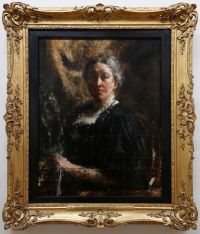
active 1895-1897 Elizabeth Hodges, The Cabots and the Discovery of America
“ The Hill takes its name from the Irish saint, Brendan, a chapel and hermitage dedicated to him having once stood on its summit. This St. Brendan is said to have been a great sailor, and claims to have himself discovered land across the Atlantic. Whether the claim be true or false, certain it is that the story of his "voyages," and the golden legends connected therewith, aroused men's curiosity and incited to subsequent expeditions, which, nearly a thousand years after Brendan's death, resulted in the discovery of the Northern Continent. ”
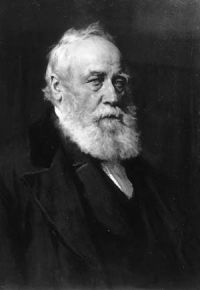 W. F. Skene,
Celtic Scotland: a history of ancient Alban…
(1886)
“ Saint Brendan went to Bishop Ere when five years old, ‘ad legendum ... et quinquaginta ex illis manserunt sub lege Sancti Episcopi Erci usque ad mortem suam.’—Act. S. Brendani, c. vi. 154. Postea navigavit Sanctus Brendanus in peregrinatione ad Britanniam, adivitque sanctissimum senem Gilldam, virum sapientissimum in Britannia habitantem, cujus fama sanctitatis magna erat.—Act. Brendani, c. xv. It is usually stated that he went to Armorica, or Bretagne, but by Britannia, when used without qualification, Britain can only be meant. ”