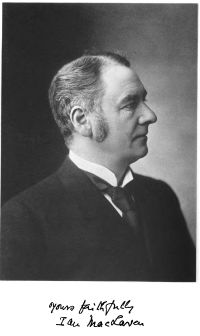
The literary concept of "Saunderson" represents a recurring character archetype in 19th- and early 20th-century fiction, typically portrayed as a morally upright, socially withdrawn figure confronting personal and communal difficulties. Authors like Ian Maclaren depict him as a devout minister wrestling with human imperfection, while Henry Handel Richardson places him in harsh settings, underscoring his rigid commitment to tradition.
Sax Rohmer’s portrayal presents a Saunderson unaware of deceit, underscoring his innocence. These diverse representations highlight a character type that mirrors societal conflicts, spiritual struggles, and the tension between personal virtue and external influences, as seen in his appearances from Scottish parishes to colonial settlements. The theme emerges through Saunderson’s function as a vehicle for examining moral complexity and the human experience within literary narratives.
 Sax Rohmer,
Brood of the Witch Queen — CHAPTER XXI.
(1918)
Sax Rohmer,
Brood of the Witch Queen — CHAPTER XXI.
(1918)