“ All through the early part of 1916 we were keeping in touch with the Sharif of Mecca by means of envoys, whom we landed where they listed, away from the Turks, picking them up at times and places indicated by them. ”
Sharif of Mecca
Definition and stakes
The theme of “Sharif of Mecca” has been addressed by authors such as Moulavi Gerágh Ali, Gladys M. Draycott, Anna May Wilson, Cherágh Ali and Theodore R. W. Lunt. It is often associated with terms like Islam, Kaaba, Muhammad, Muslim and Arabs.
Quotes about “Sharif of Mecca”
Robert Kerr, A General History and Collection of Voyages and Travels…
“ The king wore a white cotton coat, with a turban on his head, and a painted calico of Guzerat about his middle, being little whiter than the rest. He was very lean, with a round thin black beard and large eyes. His stature was short, and he was a man of few words, having some knowledge of Arabic, which he had learnt when on a pilgrimage to Mecca, on which account he had the name or title of Sharif. [402] At this place they chiefly desire money, or Spanish dollars, rather than commodities. ”
Various, Encyclopaedia Britannica, 11th Edition…
“ Until the Egyptian invasion in 1814 the Sharifs of Mecca were the recognized rulers of Hejaz, and though the Turks have attempted to suppress their importance, the Sharif still executes justice according to the Mahommedan law in the holy cities, though, nominally, as a Turkish official. In Yemen and Hadramut many villages are occupied exclusively by this religious hierarchy, who are known as Ashraf, Sada or Kudha (i.e. Sharifs, Seyyids or Kadhis) ; the religious affairs of the tribes are left in their hands; they do not, however, interfere in tribal matters generally, or join in fighting. ”
 William Robertson Smith,
1911 Encyclopædia Britannica, Volume 17…
(1911)
William Robertson Smith,
1911 Encyclopædia Britannica, Volume 17…
(1911)
“ The victory of Mahommedanism made a vast change in the position of Mecca. The merchant aristocracy became satraps or pensioners of a great empire; but the seat of dominion was removed beyond the desert, and though Mecca and the Hejāz strove for a time to maintain political as well as religious predominance, the struggle was vain, and terminated on the death of Ibn Zubair, the Meccan pretendant to the caliphate, when the city was taken by Hajjāj (A.D. 692) . The sanctuary and feast of Mecca received, however, a new prestige from the victory of Islām. ”
Various, Encyclopaedia Britannica, 11th Edition…
“ By the time he had successfully stormed the rich Jewish town of Khaibar, he had found that it was better to allow industrious Jews to remain in Arabia as payers of tribute than to expel or kill them: this policy he followed afterwards. The capture of Mecca (630) was not only an evidence of his growing power, which induced Arabs throughout the peninsula to join him, but gave him a valuable centre of pilgrimage, in which he was able by a politic adoption of some of the heathen Arabian ceremonies into his own rites to win men over the more easily to his own cause. ”
Cherágh Ali, A Critical Exposition of the Popular 'Jihád'
“ But the remaining tribes who had not hitherto embraced Islam, and the chiefs of the Southern and Eastern Arabia, did not adopt Islam, because Mohammad possessed Mecca, a position of no political supremacy. No paramount authority throughout the Peninsula had ever been vested in the chief who possessed Mecca. ”
Anna May Wilson, The Days of Mohammed
“ Mohammed will keep Mecca as a sort of sacred spot, dedicated to his worship—and the worship of Allah!" with infinite scorn. "But Khaïbar is a pomegranate of the highest branches, too mellow, too luscious, too tempting, to elude his grasp. Yes, Manasseh, Khaïbar will be his next point of attack. However, I am truly glad that Yusuf and Amzi have gone home. The Jews and Christians in Mecca will be safe enough for some time to come, and our friends are getting too old to endure much fatigue of battle." ”
William Robertson Smith,
1911 Encyclopædia Britannica, Volume 17…
(1911)
“ To this influence the Hejāz owes what little of law and order it enjoys. During the last quarter of the 19th century Turkish influence became preponderant in western Arabia, and the railway from Syria to the Hejāz tended to consolidate the sultan’s supremacy. After the sherīfs, the principal family of Mecca is the house of Shaibah, which holds the hereditary custodianship of the Kaʽba. ”
Cherágh Ali, A Critical Exposition of the Popular 'Jihád'
“ But there were many new converts at Mecca since the expulsion of the Moslems. Those unable to fly from Mecca in the teeth of the oppressions of the wrathful Koreish (Sura IV., 77, 79, 100) were increasing. They appealed for deliverance and aid, while the Moslem pilgrims were near Mecca at Hodeibia, six years after the Hegira, and an allusion is made to the great number of the Meccan converts, living at Mecca during that time in Sura XLVIII, 25.Disturbed state of the public peace among the tribes surrounding Medina. Internecine wars an obstacle to the propagation of Islam. ”
 Samuel Marinus Zwemer,
Arabia: The Cradle of Islam
Samuel Marinus Zwemer,
Arabia: The Cradle of Islam
“ Mohammed is reported to have said of Mecca, “What a splendid city thou art, if I had not been driven out of thee by my tribe I would dwell in no other place but in thee. It is not man but God who has made Mecca sacred. My people will be always safe in this world and the next as long as they respect Mecca.” (Mishkat book XL., ch. xv.) The sacred boundaries of Mecca and Medina not only shut out all unbelievers, but they make special demands of “purity and holiness” (in the Moslem sense) on the part of the true believers. ”
Theodore R. W. Lunt, The story of Islam (1909)
“ Mohammed appealed to the men of Medina, 'Here is a caravan of the Koreish in which they have embarked much wealth. Come! {80} perchance the Lord will enrich you with the same.' The appeal was not in vain. With an army of 305 men and 70 camels he marched to meet it at Badr, still a halting-place on the pilgrim road from Syria to Mecca. Meanwhile, through spies or traitors, the news reached Abu Sufyan, who sent to Mecca for help. The men of Mecca, not without misgivings at making war upon their relatives, turned out for battle nearly a thousand strong. ”
Theodore R. W. Lunt, The story of Islam (1909)
“ To break up and plunder the caravan was not a difficult and certainly was an effective way of punishing Mecca, and, incidentally, of replenishing the dwindling resources of the 'brotherhood' of believers. Some of them did, indeed, revolt against such a step, remembering how they had been taught more merciful practices at Mecca, but Mohammed was ready for them with a new revelation, reminding them that to punish those who had driven out God's Prophet was to defend the honour of God. ”
Sacred Books of the East (1880)
“ Almost alone, exposed to hourly danger and annoyance, it is not to be wondered at that Mohammed should for a moment have conceived the idea of a compromise. The chiefs of Mecca cared little for their own idols, but they cared greatly for their traffic and their prestige. If the gods in the Kaabah were false and their service vain and wicked, who would visit the holy shrine? and where would then be the commercial advantages that flowed into Mecca from the pilgrims who crowded yearly to the town? ”
 H. G. Wells,
The Outline of History: Being a Plain History of Life and Mankind
H. G. Wells,
The Outline of History: Being a Plain History of Life and Mankind
“ There had been a great proselytizing of Arabs during the period of the Maccabeans and Herods in Judea; and, as we have already noted, the Yemen had been in succession under the rule of Jews (Arab proselytes to Judaism, i.e.) , Christians, and Zoroastrians. It is evident that there must have been plenty of religious discussion during the pilgrimage fairs at Mecca and the like centres. Naturally enough Mecca was a stronghold of the old pagan cult which gave it its importance and prosperity; Medina, on the other hand, had Jewish proclivities, and there were Jewish settlements near by. ”
Edward Sell, The Faith of Islam
“ This was well calculated to attract the attention of the Meccans and to gain the goodwill of the Arabs. Muhammad could not then make the pilgrimage to Mecca, for as yet there was a hostile feeling between the inhabitants of the two cities; but on the tenth day of the month Zu'l-Hajja, at the very time when the Arabs at Mecca were engaged in sacrificing victims, Muhammad went forth from his house at Madína, and assembling his followers instituted the Íd-uz-Zuhá or Baqr-'Íd. ”
Samuel Marinus Zwemer,
Arabia: The Cradle of Islam
“ No excesses were committed against the people except that religion was forced upon them. The mosques were filled by public “whips” who used their leather thongs without mercy on all the lazy or negligent. Everybody, for a marvel, prayed five times a day. The result of his victory at Mecca was communicated by the dauntless Saud in the following naïve letter addressed to the Sultan of Turkey:“Saud To Salim—I entered Mecca on the fourth day of Moharram in the 1218th year of the Hegira. ”
Samuel Marinus Zwemer,
Arabia: The Cradle of Islam
“ A hazardous feat it is to make the journey, since on it depends one’s eternal destiny. Around this area are pictured the tombs of David, Solomon, Moses and Jacob, and in the right-hand upper corner is seen Jebel, Toor Sina, or Mount Sinai.Needless to relate these certificates cost money, as does everything at Mecca save the air you breathe. No honest Moslem ever spoke with praise of the citizens of Mecca; many are their proverbs to prove why wickedness flourishes in the courts of Allah. And European travellers agree that of all Orientals the Meccans take the palm for thoroughgoing rascality. ”
William Robertson Smith,
1911 Encyclopædia Britannica, Volume 17…
(1911)
“ MECCA (Arab. Makkah) , [1] the chief town of the Hejaz in Arabia, and the great holy city of Islām. It is situated two camel marches (the resting-place being Bahra or Hadda) , or about 45 m. almost due E., from Jidda on the Red Sea. Thus on a rough estimate Mecca lies in 21° 25′ N., 39° 50′ E. It is said in the Koran (Sur. xiv. 40) that Mecca lies in a sterile valley, and the old geographers observe that the whole Haram or sacred territory round the city is almost without cultivation or date palms, while fruit trees, springs, wells, gardens and green valleys are found immediately beyond. ”
Cherágh Ali, A Critical Exposition of the Popular 'Jihád'
“ Let us suppose that these alleged interceptions of the Meccan caravans by the Moslems did actually take place, as related by the biographers of Mohammad, were they not all justified by the International Code of the Arabs, or the ancient usage and military law of nations. It has been proved beyond all dispute that the Meccans were the first aggressors in persecuting the Moslems, and expelling them from their dear homes at Mecca with the unbearable annoyance, they caused the converts of the new faith in the peaceful prosecution of their religion ”
Anna May Wilson, The Days of Mohammed
“ In the meantime Yusuf and Amzi had taken up the old routine of life in Mecca—the faithful doing of the daily round, the little deeds of charity, the duties of business, the attendance at meetings in the little church. Everything seemed to sink back into the old way, yet there was not a man in the city but held himself in readiness to take [72] up arms were an attack made upon them to wrest from them their freedom.And word came that Mohammed was coming,—coming, not in war, but in peace, on his first pilgrimage to the Caaba. Mecca was instantly thrown into the wildest confusion. ”
 Richard Francis Burton,
Personal Narrative of a Pilgrimage to Al Madinah and Meccah
Richard Francis Burton,
Personal Narrative of a Pilgrimage to Al Madinah and Meccah
“ The Sharifs are born and bred to fighting: the peculiar privileges of their caste favour their development of pugnacity. Thus, the modern diyah, or price of blood, being 800 dollars for a common Moslem, the chiefs demand for one of their number double that sum, with a sword, a camel, a female slave, and other items; and, if one of their slaves or servants be slain, a fourfold price. The rigorous way in which this custom is carried out gives the Sharif and his retainer great power among the Arabs. As a general rule, they are at the bottom of all mischief. ”
Lady Mary Ross, "Granny's Chapters" (on scriptural subjects…
“ They believed in one Supreme Being; and also in three goddesses of equal power and wisdom, to be worshipped as well: they likewise worshipped idols.At Mecca, the capital of Arabia, there was a small temple, called the Cāābba, in which there was a stone, said to have fallen white from heaven, in the time when man was innocent, and to have gradually lost its pure colour as man became sinful; it was now quite black. This stone was held in such veneration, that people from all parts of Arabia came to the Cāābba, to worship, bringing gifts; and thus Mecca grew to be a rich and flourishing city. ”
 Lothrop Stoddard,
The New World of Islam
Lothrop Stoddard,
The New World of Islam
“ The seat of government was moved to Damascus in Syria, and afterward to Bagdad in Mesopotamia. The reason for this was obvious. In Mecca despotism was impossible. The fierce, free-born Arabs of the desert would tolerate no master, and their innate democracy had been sanctioned by the Prophet, who had explicitly declared that all Believers were brothers. The Meccan caliphate was a theocratic democracy. Abu Bekr and Omar were elected by the people, and held themselves responsible to public opinion, subject to the divine law as revealed by Mohammed in the Koran. ”
Eastern Tales by Many Story Tellers
“ Know, then, my faithful Vizier, that the powers of enchantment are let loose against my throne, and the prophets have said, 'Thou shalt not prevail but with the signet of Mahomet and the girdle of Opakka;' therefore it is expedient that I first go to Mecca to obtain this valuable gift of the Prophet. My purpose this morning was to go surrounded by the nobles of my Court; but while rebellion stalketh abroad, pageants are idle, and the parade of a Sultan's pilgrimage will give my enemies time to increase in their numbers and strength. No, Horam ”
Various, Encyclopaedia Britannica, 11th Edition…
“ Power, civilization and learning were thus associated with monotheism (Judaism) , dualism (Mazdaism) and tritheism (as the Arabs interpreted Christianity) ; paganism was the religion of ignorance (jāhiliyyah, interpreted by Goldziher as “barbarism,” but the difference is not very considerable) . Mecca itself and the neighbouring and allied Ṭāif are said to have produced some monotheists or Christians, who identified the Allah of Mecca with the Allāhā or God of the Syrian Christians, called by the Abyssinian Christians “Lord of the Regions,” and by the Jews “the Merciful” (Raḥmānā) ”
 A. E. W. Mason,
The Broken Road — XVII: News from Mecca
(1907)
A. E. W. Mason,
The Broken Road — XVII: News from Mecca
(1907)
“ Shere Ali turned to Hatch again and said in a quiet voice which had some note of rather pathetic appeal: "Will you tell me what you thought of Mecca? I should like to know."The vision of the three men descending the Lowari Pass was present to him as he listened. And he listened, wondering what strange, real power that sacred place possessed to draw men cheerfully on so long and hazardous a pilgrimage. But the secret was not yet to be revealed to him. Hatch talked well. ”
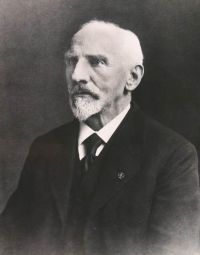 Christiaan Snouck Hurgronje,
The Revolt in Arabia
(1917)
Christiaan Snouck Hurgronje,
The Revolt in Arabia
(1917)
“ The chief Islam powers have always attached a certain reservation to their tacit recognition of the Shereefs of Mecca which the latter have found themselves forced to accept. He was never an independent ruler and, in the long run, had to recognise the suzerainty of the protecting states. ”
William Robertson Smith,
1911 Encyclopædia Britannica, Volume 17…
(1911)
“ The fanaticism of the Meccan is an affair of the purse; the mongrel population (for the town is by no means purely Arab) has exchanged the virtues of the Bedouin for the worst corruptions of Eastern town life, without casting off the ferocity of the desert, and it is hardly possible to find a worse certificate of character than the three parallel gashes on each cheek, called Tashrīṭ, which are the customary mark of birth in the holy city. ”
Various, Encyclopaedia Britannica, 11th Edition…
“ When the great Mahommedan sultanates had become too much occupied in internecine wars to maintain order in the distant Hejāz, those branches of the Hassanids which from the beginning of Islam had retained rural property in Arabia usurped power in the holy cities and the adjacent Bedouin territories. About A.D. 960 they established a sort of kingdom with Mecca as capital. The influence of the princes of Mecca has varied from time to time, according to the strength of the foreign protectorate in the Hejāz or in consequence of feuds among the branches of the house ”
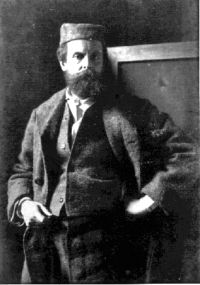 Wilfrid Scawen Blunt,
The Future of Islam
Wilfrid Scawen Blunt,
The Future of Islam
“ In its simplest form Islam was but an emphatic renewal of the immemorial creed of the Semites, and as long as a pure Semitic race is left in the [Pg 143] world, the revelation of Mecca may be expected to remain a necessary link in their tradition. No modern arguments of science are ever likely to affect the belief of Arabia that God has at sundry times and in sundry places spoken to man by the mouth of his prophets ”
Related terms
Authors who wrote about “Sharif of Mecca”
Moulavi Gerágh AliGladys M. DraycottAnna May WilsonCherágh AliTheodore R. W. Lunt C. Snouck HurgronjeSamuel Marinus ZwemerWilliam Robertson SmithChristiaan Snouck HurgronjeHadji KhanRoy Floyd DibbleWilfrid Scawen BluntAmy E. ZwemerMurray Thurston TitusEdward SellVariousRichard Francis BurtonA. E. W. Mason
 Gilbert ParkerG. Wyman Bury
C. Snouck HurgronjeSamuel Marinus ZwemerWilliam Robertson SmithChristiaan Snouck HurgronjeHadji KhanRoy Floyd DibbleWilfrid Scawen BluntAmy E. ZwemerMurray Thurston TitusEdward SellVariousRichard Francis BurtonA. E. W. MasonGilbert ParkerG. Wyman Bury