Siouan languages

Definition and stakes

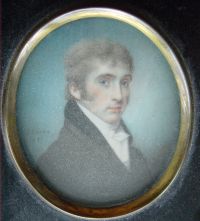
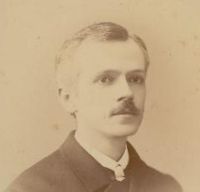
Portrait of James Owen Dorsey James Owen Dorsey,  A Study of Siouan Cults

“ The Kan [s] e gens of the Osage has several names, Wind people, South-wind people, Those who light the pipes (in council) , and Fire people.
The powers of the Earth and Water are interested in the preservation of life, and so we may consider them the patrons of peace. “Peace,” in Omaha, Ponka, and ┴ɔiwere, means “The land is good,” and “to make peace” is expressed by “to make the land good.” The words for “water” and “life” are identical in some of the Siouan languages, and they differ but slightly in others.
”
Source: Gutenberg

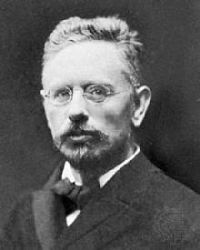
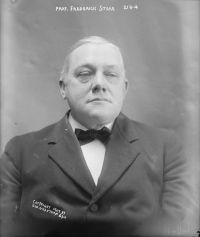
Portrait of Frederick Starr Frederick Starr,  American Indians

“ These are all Sioux proper, but there are many other tribes that speak languages that are related to the Sioux. Among these Siouan—but not Sioux—tribes are the Winnebagoes, Mandans, Ponkas, Assinaboines, Omahas, and Otoes.
The Sioux are tall, finely built Indians, with large features and heavy, massive faces. They are a good type of the Plains Indians who until lately lived by hunting buffalo. There are now nearly thirty thousand true Sioux and about ten thousand Siouans of related tribes.
”
Source: Gutenberg

Warren H. Miller,  Red Mesa (1923)

“ Sid was convinced that they are of the same Aryan stock as ourselves. If so, his theory was that they must have migrated east from Asia at a far earlier period than our own ancestors’ westward migration, for we still have the Aryan word roots, while in America there are no less than three great Indian languages—Algonquin, Athapascan, Siouan—totally different, the peoples also as different in physical and moral characteristics as are our own Teutonic and Latin branches of the same Aryan stock.
We developed individualism as we migrated westward.
”
Source: Gutenberg

Get perspective with Kwize: daily news enlightened by great literature