“ The ceremonial observances of the Siouan tribes were not different in kind from those of neighboring contemporaries, yet some of them were developed in remarkable degree—for example, the bloody rites by which youths were raised to the rank of warriors in some of the prairie tribes were without parallel in severity among the aborigines of America, or even among the known primitive peoples of the world. ”
Siouan peoples
Definition and stakes
The theme of “Siouan peoples” has been addressed by authors such as W J McGee, James Owen Dorsey, James Mooney, Harrison Williams and Charles A. Eastman. It is often associated with terms like Sioux, people, Siam, tribe and Siwa.
Quotes about “Siouan peoples”
“ Among the Siouan Indians the devices of taboo, kin-names, and ordination are found in such relation as to throw some light on the growth of primitive institutions. While they blend and are measurably involved with thaumaturgic devices, there are indications that in a general way the three devices stand for stages in the development of law. Among the best-known tribes the taboo pertained to the clan, and was used (in a much more limited way than among some other peoples) to commemorate and perpetuate the clan organization ”
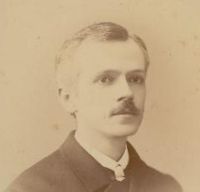 James Owen Dorsey,
Siouan Sociology
James Owen Dorsey,
Siouan Sociology
“ Social classes are undifferentiated. Any man can win a name and rank in the section, gens, phratry, tribe, or nation by bravery in war or by generosity in the bestowal of presents and the frequent giving of feasts. While there are no slaves among the Siouan tribes, there are several kinds of servants in civil, military, and religious affairs. ”
“ While the early population of the Siouan stock, when first the huntsmen crossed the Appalachians, may not be known, the lines of migration indicate that the people increased and multiplied amain during their long journey, and that their numbers culminated, despite external conflict and internal strife, about the beginning of written history, when the Siouan population may have been 100,000 or more. ”
“ The development of affectation and self-control among the Siouan tribesmen was undoubtedly shaped by warlike disposition, and their stoicism was displayed largely in war—as when the captured warrior went exultingly to the torture, taunting and tempting his captors to multiply their atrocities even until his tongue was torn from its roots, in order that his fortitude might be proved ”
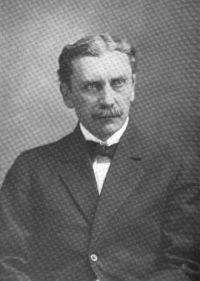 James Mooney,
The Ghost-dance religion and the Sioux outbreak of 1890
James Mooney,
The Ghost-dance religion and the Sioux outbreak of 1890
“ There is ground for believing that the true home of the whole Siouan stock is not in the west, or even in the central region, but along the south Atlantic slope. (See the author’s Siouan Tribes of the East.) The Sioux language has three well-marked dialects—the eastern or Santee, the middle or Yankton (including the Asiniboin in the north) , and the western or Teton. The tribe consists of seven great divisions, each of which again has or had subdivisions. Dorsey enumerates over one hundred in all. ”
“ Although the accultural condition of the Siouan survivors ranges from the essentially primitive status of the Asiniboin to the practical civilization of the representatives of several tribes, it is fair to consider the stock in a [pg 186] state of transition from barbarism to civilization; and many of the tribesmen are losing the characteristics of activity and somatic development normal to primitive life, while they have not yet assimilated the activities and acquired the somatic characteristics normal to peaceful sedentary life. ”
“ They were typical American barbarians, headed by hunters and warriors and grouped in shifting tribes led by the chase or driven by battle from place to place over their vast and naturally rich domain, though a crude agriculture sprang up whenever a tribe tarried long in one spot. No native stock is more interesting than the great Siouan group, and none save the Algonquian and Iroquoian approach it in wealth of literary and historical records ”
James Owen Dorsey,
Siouan Sociology
“ Among the tribes of the Siouan family the primary unit is the clan or gens, which is composed of a number of consanguinei, claiming descent from a common ancestor and having common taboos; the term clan implying descent in the female line, while gens implies descent in the male line. Among the Dakota, as among the ¢egiha and other groups, the man is the head of the family.Several of the Siouan tribes are divided into two, and one (the Osage) is divided into three subtribes. Other tribes are composed of phratries, and each subtribe or phratry comprises a number of gentes. ”
Harrison Williams, Legends of Loudoun
“ Modern scholarship inclines to place the origin of the great Siouan or Dakotan family possibly amidst the eastern foothills of the southern Alleghanies or at least as far east as Ohio, whence, after a long period, they probably were driven by the Iroquois and other enemies beyond the Mississippi. Being essentially nomadic, without permanent villages and relying on constant hunting for their food, following their game wherever it might lead, they necessarily ranged widely and covered broad areas. ”
James Owen Dorsey,
A Study of Siouan Cults
“ We can not say whether each of the colors (including spotted and striped) has a mystic significance in the Siouan mind. Perhaps further study may show that red (śa) and scarlet (duta, luta) have the same symbolic meaning, and rusty-yellow (ġi) may be an equivalent of yellow (zi) . [Pg 534] THE EARTH POWERS.§ 383. The Tunkan or bowlder, the Dakota name for the Earth powers, is also called the Lingam by Riggs ( § 132) , as if connected with a phallic cult (§§ 164, etc.) . ”
“ Since the advent of white men the characteristics of the Siouan Indians, like those of other tribes, have been somewhat modified, partly through infusion of Caucasian blood but chiefly through acculturation. With the abandonment of hunting and war and the tardy adoption of a slothful, semidependent agriculture, the frame has lost something of its stalwart vigor; with the adaptation of the white man's costume and the incomplete assimilation of his hygiene, various weaknesses and disorders have been developed ”
“ Fur robes and rush mats commonly served for bedding, some of the tribes using rude bedsteads. The buffalo-hunting prairie tribes depended largely for apparel, bedding, and habitations, as well as for food, on the great beast to whose comings and goings their movements were adjusted. Like other Indians, the Siouan hunters and their consorts quickly availed themselves of the white man's stuffs, as well as his metal implements, and the primitive dress was soon modified. ”
“ So the sports of the Siouan Indians were both diversional and divinatory, and the latter were highly organized in a manner reflecting the environment of the tribes, their culture-status, their belief, and especially their disposition toward bloodshed; for their most characteristic ceremonials were connected, genetically if not immediately, with warfare and the chase.Among many of the Siouan tribes, games of chance were played habitually and with great avidity, both men and women becoming so absorbed as to forget avocations and food, mothers even neglecting their children ”
James Owen Dorsey,
A Study of Siouan Cults
“ The Kan [s] e gens of the Osage has several names, Wind people, South-wind people, Those who light the pipes (in council) , and Fire people.The powers of the Earth and Water are interested in the preservation of life, and so we may consider them the patrons of peace. “Peace,” in Omaha, Ponka, and ┴ɔiwere, means “The land is good,” and “to make peace” is expressed by “to make the land good.” The words for “water” and “life” are identical in some of the Siouan languages, and they differ but slightly in others. ”
“ Then came war against the whites and the still more deadly smallpox, whereby the vigorous stock was checked and crippled and the population gradually reduced; but since the first shock, which occurred at different dates in different parts of the great region, the Siouan people have fairly held their own, and some branches are perhaps gaining in strength. SOME FEATURES OF INDIAN SOCIOLOGY As shown by Powell, there are two fundamentally distinct classes or stages in human society— (1) tribal society and (2) national society. National society characterizes civilization ”
“ Many of the Siouan Indians were adepts in the sign language; indeed, this mode of conveying intelligence attained perhaps its highest development among some of the tribes of this stock, who, with other plains Indians, developed pantomime and gesture into a surprisingly perfect art of expression adapted to the needs of huntsmen and warriors. ”
Charles Dalrymple Belgrave, Siwa: the oasis of Jupiter Ammon
“ The Siwans are town dwellers whose dominant principle has been a sort of communism, whereas the Arabs are nomads, who adopted patriarchalism as their method of rule. The Siwans fought on foot, the Arabs were essentially cavalry. There are sheikhs in Siwa, but they are more like the members of a town council, while the real Arab sheikh corresponds to the feudal lord of the Middle Ages. It is strange to find the Siwans, with such a definite, different scheme of living, existing in the midst of a desert whose Arab population regards them almost as foreigners. ”
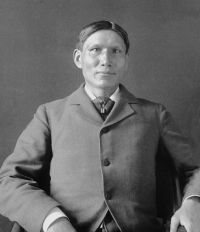 Charles A. Eastman,
The Indian To-day: The Past and Future of the First American
Charles A. Eastman,
The Indian To-day: The Past and Future of the First American
“ The great Siouan race occupied nearly all the upper valley of the Mississippi and Missouri rivers and their tributaries. North of them dwelt the Ojibways, an Algonquin tribe with an entirely different language. The Sioux nation proper originally occupied a vast territory, and in the middle of the nineteenth century they still held the southern half of Minnesota, a portion of Wisconsin and Iowa, all of the Dakotas, part of Montana, nearly half of Nebraska, and small portions of Colorado and Wyoming. ”
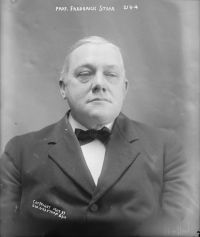 Frederick Starr,
American Indians
Frederick Starr,
American Indians
“ These are all Sioux proper, but there are many other tribes that speak languages that are related to the Sioux. Among these Siouan—but not Sioux—tribes are the Winnebagoes, Mandans, Ponkas, Assinaboines, Omahas, and Otoes. The Sioux are tall, finely built Indians, with large features and heavy, massive faces. They are a good type of the Plains Indians who until lately lived by hunting buffalo. There are now nearly thirty thousand true Sioux and about ten thousand Siouans of related tribes. ”
Charles Dalrymple Belgrave, Siwa: the oasis of Jupiter Ammon
“ Surely your story will stimulate interest not only in the archæologist, but in all who desire to trace the manners, customs and characteristics of present-day peoples to their original sources. Those Siwans of whom you make a special study are of all people perhaps the most interesting, for, living, as it were, on an island, in a sea of desert, they—like the Abyssinians on the east—have been less affected by the world-changes than those who inhabit the main highways of the great African continent. ”
“ Thus the American Indians, including the Siouan stock, are made up of families organized into clans or gentes, and combined in tribes, sometimes united in confederacies, all on a basis of kinship, real or assumed; and the organization is shaped and perpetuated by a series of devices pertaining to the plane of prescriptorial culture, whereby each member of the organization is constantly reminded of his position in the group. ”
“ Subsequently Gatschet discovered that the Biloxi Indians of the Gulf coast used many terms common to the Siouan tongues; and in 1891 Dorsey visited these Indians and procured a rich collection of words, phrases, and myths, whereby the Siouan affinity of these Indians was established. Meantime Mooney began researches among the Cherokee and cognate tribes of the southern Atlantic slope and found fresh evidence that their ancient neighbors were related in tongue and belief with the buffalo hunters of the plains ”
James Owen Dorsey,
A Study of Siouan Cults
“ Among the Siouan family of Indians there are societies, religious in character, which are distinguished by the name of some animal. Each society has a ritual composed of chants and songs to be sung during different parts of the ceremonies, having words describing in simple and direct terms the act which accompanies the music. ”
Various, Popular Science Monthly (1908)
“ The prehistoric Siouan people were neighbors in the Carolinas of the prehistoric Iroquois, and the two people more or less allied in language and having similar customs and the same opportunities for northward migration probably moved about simultaneously, both tribes crossing the mountains into the country where the waters flowed in the western direction, the Iroquois to the north of the Sioux. ”
“ Most of the Siouan men, women, and children were fine swimmers, though they did not compare well with neighboring tribes as makers and managers of water craft. The Dakota women made coracles of buffalo hides, in which they transported themselves and their householdry, but the use of these and other craft seems to have been regarded as little better than a feminine weakness. Other tribes were better boatmen ”
James Owen Dorsey,
A Study of Siouan Cults
“ And from that day the horse has been called by the Sioux wonderful dog, except when it has been called big dog, Shoon-ka tonka. These historical facts have satisfied us that the idea of the Great Spirit ascribed to the Indians of North America does not belong to the original theogony of the Sioux, but has come from without, like that (sic) of the horse and gun, and probably dates back only to their first hearing of the white man’s God. [90] Taku Wakan.—This is a general term, including all that is wonderful, incomprehensible, supernatural—what is wakan ”
Charles Dalrymple Belgrave, Siwa: the oasis of Jupiter Ammon
“ They have a number of purely local customs and practices which are entirely different to those which are prevalent in Egypt, or among the Arabs of the Western Desert. The Siwans are Mohammedans, and strictly religious in most of their observances, but in some of their habits one can trace a faint resemblance to rites that [208] have survived from former times, long before the people adopted their present religion. But most of the apparently meaningless practices are founded on the inherent fear of evil spirits, which are implicitly believed in by all the inhabitants. ”
Francis A. March, History of the World War, Volume 4…
“ Sympathy for Belgium and the popular aversion to Teutonic methods had left no doubt as to the duty of Siam. The motive of Siam had a curious fitness, though there was a certain quaintness in her expression of a desire to make, “the world safe for democracy.”The native name of Siam is Muang-Thai, which means the Kingdom of the Free. Siam is about as large as France, and has a population of about eight millions. Its people, who are of many shades of yellowish-brown, have descended into this corner of Asia from the highlands north of Burma and east of Tibet. ”
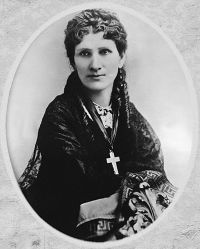 Anna Harriette Leonowens,
The English Governess at the Siamese Court
Anna Harriette Leonowens,
The English Governess at the Siamese Court
“ Jealous rulers became his willing vassals, not from fear of his power, but in admiration for his virtues. Malacca, Tenasserim, Ligor, Thavai, Martaban, Maulmain, Songkhla, Chantaboon, Phitsanulok, Look-Kho-Thai, Phi-chi, Savan Khalok, Phechit, Cambodia, and Nakhon Savan were all dependencies of Siam under his reign.In the year 1568 of the Christian era the Siamese territory was invaded and laid under tribute by a Birman king named Mandanahgri, who must have been a warrior of Napoleonic genius, for he extended his dominion as far as the confines of China. ”
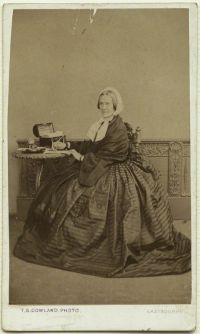 Favell Lee Mortimer,
Far Off; Or, Asia and Australia Described
Favell Lee Mortimer,
Far Off; Or, Asia and Australia Described
“ But though so barbarous to their enemies, the Siamese in some respects are better than most other heathen nations, for they treat their relations more kindly. They do not kill their infants, nor shut up their wives, nor cast out their parents. Yet they show their cruelty in this:—they often sell one another for slaves. They also purchase slaves in great numbers; and there are wild men in the mountains who watch Burmans and Karens to sell them to the great chiefs of Siam. It is the pride of their chiefs to have thousands of slaves crawling around them. ”