“ Groan nor laugh should be heard before a wreck." "Aye, sir," said Starbuck drawing near, "'tis a solemn sight; an omen, and an ill one." "Omen? omen?—the dictionary! If the gods think to speak outright to man, they will honorably speak outright; not shake their heads, and give an old wives' darkling hint.—Begone! Ye two are the opposite poles of one thing; Starbuck is Stubb reversed, and Stubb is Starbuck; and ye two are all mankind; and Ahab stands alone among the millions of the peopled earth, nor gods nor men his neighbors! ”
Starbuck
Definition and stakes
Hanoverhill Starbuck, a Canadian Holstein bull born in 1979, transformed dairy genetics through artificial insemination, fathering over 200,000 cows worldwide and contributing to extensive inbreeding. Its legacy extends beyond agriculture, as the name “Starbuck” appears in literature, notably in Herman Melville’s Moby-Dick, where the character Starbuck represents moral restraint amid the obsessive Captain Ahab.
Frederic Stimson’s First Harvests and Opie Read’s The Starbucks further examine the name’s significance in human stories, weaving themes of ancestry, identity, and aspiration. While the bull’s genetic impact reshaped dairy herds, its literary counterparts highlight its lasting symbolic power, demonstrating how a single name can connect biological and cultural domains.
Quotes about “Starbuck”
“ Steering as she had done, the wind had been somewhat on the Pequod's quarter, so that now being pointed in the reverse direction, the braced ship sailed hard upon the breeze as she rechurned the cream in her own white wake. "Against the wind he now steers for the open jaw," murmured Starbuck to himself, as he coiled the new-hauled mainbrace upon the rail. "God keep us, but already my bones feel damp within me, and from the inside wet my flesh. I misdoubt me that I disobey my God in obeying him!" ”
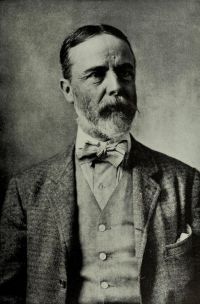 Frederic Jesup Stimson,
First harvests
(1888)
Frederic Jesup Stimson,
First harvests
(1888)
“ But was James Starbuck a cousin of clever, fashionable, refined Flossie? Starbuck did not know it. What, in active, progressive America, in the migrating America of the last fifty years, need a man know of his antecedents? They go for little in his life. Starbuck remembered his father well enough; and how he had struggled from pillar to post, from one frowzy city street to another, with the jaded, tawdry woman who was his wife; until one day, from a new and prosperous little city in the oil regions of Pennsylvania, he had gone, never to be seen or heard of after, by wife or child. ”