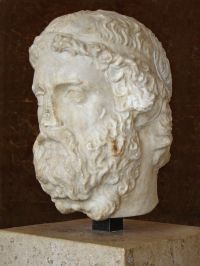
Stobaeus

Definition and stakes

1911 Encyclopædia Britannica, Volume 25… (1911)

“ The didactic aim of Stobaeus’s work is apparent throughout. The first book teaches physics—in the wide sense which the Greeks assigned to this term—by means of extracts. It is often untrustworthy: Stobaeus betrays a tendency to confound the dogmas of the early Ionic philosophers, and he occasionally mixes up Platonism with Pythagoreanism. ”
Source: Wikisource

John Francis Waller,  Imperial Dictionary of Universal Biography (1876)

“ Nothing is known of Stobæus except that he was a learned and laborious compiler of extracts from early Greek writers, chiefly philosophers and poets, many of whose works but for him would have been altogether lost. These extracts are digested under such heads as the following—"Concerning virtue," "Concerning prudence," "Concerning intemperance," "Concerning arrogance," "In praise of poverty," "That in marrying the ages of the parties should be considered," "Concerning laws and customs," &c. ”
Source: Wikisource

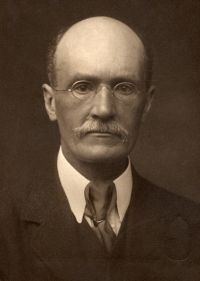
Portrait of Gilbert Murray Gilbert Murray,  Five Stages of Greek Religion

“ To bring back that note of Sophrosynê I will venture, before proceeding to the fourth-century Pagan creed, to give some sentences from an earlier Pagan prayer. It is cited by Stobaeus from a certain Eusebius, a late Ionic Platonist of whom almost nothing is known, not even the date at which he lived. [197:1] But the voice sounds like that of a stronger and more sober age.
'May I be no man's enemy,' it begins, 'and may I be the friend of that which is eternal and abides. May I never quarrel with those nearest to me
”
Source: Gutenberg

Get perspective with Kwize: daily news enlightened by great literature