Synod of Dort

Definition and stakes

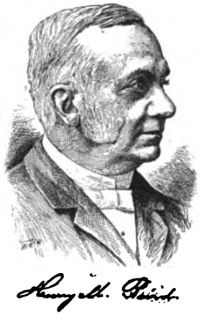
J. H. Kurtz,  Church History, Volume 3 (of 3…

“ The republican-Arminian party was conquered, Oldenbarneveldt being executed in 1619, Grotius escaping by his wife’s strategem. The Synod of Dort was convened for the purpose of settling doctrinal disputes. It held 154 sessions, from Nov. 13th, 1618, to May 9th, 1619. Invitations were accepted by twenty-eight theologians from England, Scotland, Germany, and Switzerland. Brandenburg took no part in it (§ 154, 3) , and French theologians were refused permission to go. Episcopius presented a clear and comprehensive apology for the Remonstrants, and bravely defended their cause before the synod. ”
Source: Gutenberg

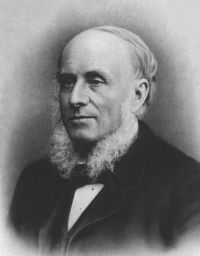
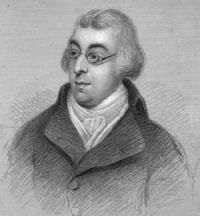
Portrait of Isaac Disraeli Isaac Disraeli,  Curiosities of Literature, Vol…

“ Such was the language of Thuanus, in a letter written in 1606;170 which indicates an approximation to toleration, but which term was not probably yet found in any dictionary. We may consider, as so many attempts at toleration, the great national synod of Dort, whose history is amply written by Brandt; and the mitigating protestantism of Laud, to approximate to the ceremonies of the Roman church; but the synod, after holding about two hundred sessions, closed, dividing men into universalists and semi-universalists, supralapsarians and sublapsarians! ”
Source: Gutenberg

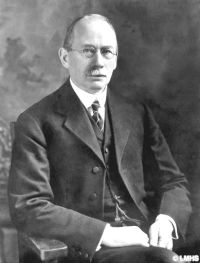
Portrait of Rufus M. Jones Rufus M. Jones,  Spiritual Reformers in the 16th & 17th Centuries

“ At the Synod of Dort, on April 24, 1619, the Remonstrants were declared guilty of falsifying religion and of destroying the unity of the Church, and were deposed from all their ecclesiastical and academic offices and positions. Two hundred were deposed from the ministerial office for life, and one hundred were banished. ”
Source: Gutenberg

Get perspective with Kwize: daily news enlightened by great literature