“ Then it ought, by all means, to resemble the Divine government. We do not mean a theocracy as it has been administered, the worst, perhaps, of all governments,—but it should be remarkable for its sacred regard to justice and right. ”
Theocracy
Definition and stakes
Theocracy, a system of governance in which divine authority or religious figures hold power, derives from the Greek theokratia, meaning "rule of God." Historically, it has been linked to divine direction in leadership, as observed by Flavius Josephus in his account of ancient Jewish governance. Thinkers such as Brigham Young viewed it as a just, divinely ordained structure, whereas Theodore Parker questioned its inflexibility, opposing it to democratic principles.
Samuel H. Kellogg underscored its foundation in scripture, portraying it as God’s rule rather than human governance. These viewpoints highlight theocracy’s dual nature—as both an idealized spiritual order and a debated political framework—reflecting the ongoing conflict between religious authority and secular rule.
Quotes about “theocracy”
 John Taylor of Caroline,
An Inquiry into the Principles and Policy of the Government of the United States
(1814)
John Taylor of Caroline,
An Inquiry into the Principles and Policy of the Government of the United States
(1814)
“ Theocracy must be the creed of one class, and atheism of the second. The advocates of good moral principles, such as truth, freedom of religion, knowledge, limitation of power and equal Fights, cannot be atheists; and the advocates of evil moral principles, such as fraud, force, ignorance, despotism and exclusive privileges, cannot be believers. ”
Samuel H. Kellogg, The Expositor's Bible: The Book of Leviticus
“ In the first place, it is imperative to remember that, if we accept the teaching of Scripture, we have before us in this history, not the government of man, but the government of God, a true theocracy. ”
 Brigham Young,
Journal of Discourses — Volume 6…
Brigham Young,
Journal of Discourses — Volume 6…
“ For your satisfaction, I will present some of my views concerning the kingdom of God, and leave the subject for others to elaborate. Erroneous traditions and the powers of darkness have such sway over mankind, that, when we speak of a theocracy on the earth, the people are frightened. The government of the "Holy Catholic Church," from which all the Protestant churches are offshoots, is professedly theocratic, though it is directly opposed to the theocracy described in the Bible. ”
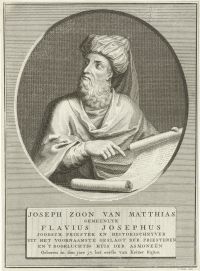 Flavius Josephus,
Selections From Josephus
Flavius Josephus,
Selections From Josephus
“ Some Aspects of Jewish Theology. Moses as Religious Educator Our Polity a Theocracy There is endless variety in the details of the customs and laws which prevail in the world at large. [To give but a summary enumeration:] [394] some peoples have entrusted the supreme power of government to monarchies, others to oligarchies, yet others to the masses. Our lawgiver, however, was attracted by none of these forms of polity, but gave to his constitution the form of what—if a forced expression be permitted—may be termed a “theocracy,” ascribing the sovereignty and majesty to God. ”
 Robert Green Ingersoll,
Lectures of Col. R. G. Ingersoll…
Robert Green Ingersoll,
Lectures of Col. R. G. Ingersoll…
“ Now, the first question is, whether this world shall be governed by God or man. Admitting that the being spoken of in the bible is God, He governed this world once. There was a theocracy at the start. That was the first government of the world. Now, how do you judge of a man? The best test of a man is, how does he use power? That is the supreme test of manhood. How does he treat those within his control? ”
 Theodore Parker,
The Collected Works of Theodore Parker
(1864)
Theodore Parker,
The Collected Works of Theodore Parker
(1864)
“ Elevate your calling still more; let its nobleness appear in you. Scorn a mean thing. Give the world more than you take. You are to serve the nation, not it you; to build the church, not to make it a den of thieves, nor allow it to apologize for your crime, or sloth. Try this experiment and see what comes of it. In all things govern yourselves by the eternal law of right. You shall build up not a military despotism, nor a mercantile oligarchy, but a State, where the government is of all, by all, and for all; you shall found not a feudal theocracy, nor a beggarly sect, but the church of mankind ”
James Truslow Adams, The Founding of New England (1921)
“ The new relations of the churches to one another, and the strengthened combination of the civil and ecclesiastical authorities, mark the high point attained by the theocracy in its organized opposition to liberty of thought. ”
Theodore Parker,
The Collected Works of Theodore Parker
(1863)
“ The theocracy got routed in many a well-contested fight; in this city of the Puritans, the Catholic, the Quaker, the Anabaptist, the Jew, and the Unitarian may worship or worship not, just as they will. ”
Brigham Young,
Journal of Discourses — Volume 6…
“ What do I understand by a theocratic government? One in which all laws are enacted and executed in righteousness, and whose officers possess that power which proceedeth from the Almighty. That is the kind of government I allude to when I speak of a theocratic government, or the kingdom of God upon the earth. It is, in short, the eternal powers of the Gods. What do the world understand theocracy to be? A poor, rotten government of man, that would say, without the shadow of provocation or just cause, "Cut that man's head off ”
 Orson Pratt,
The Kingdom of God, Part 1
Orson Pratt,
The Kingdom of God, Part 1
“ The kingdom of God is a theocracy. And as it is the only form of government which will redeem and save mankind, it is necessary that every soul should be rightly and thoroughly instructed in regard to its nature and general characteristics. ”
 Tomáš Garrigue Masaryk,
The Spirit of Russia
(1919)
Tomáš Garrigue Masaryk,
The Spirit of Russia
(1919)
“ Medievalism is characterised by the development of theocracy, the Roman in the west and the Byzantine in the east. Emperor and pope, emperor and patriarch, church and state, are the organs of political organisation. Theology is the basis and the associative link of social order. The throne rests upon the altar, and the altar supports the throne; state and church are one. Down to the present day, almost all states are theocratic. Theology, the doctrine of the church, is the official and political outlook on the world; ecclesiastical morality is official and political morality. ”
Benjamin Moore Norman, Rambles by Land and Water; or, Notes of Travel in Cuba and Mexico
“ Let us rather devoutly thank heaven that our fathers loved liberty more than power, and laid broad and deep the foundations of intelligence, virtue and religion,—not superstition, and a bigoted devotion to forms, or a blind [Pg 188] submission to ecclesiastical authority, but the religion which recognizes God as supreme, and all men as equal,—on which to raise the glorious superstructure of rational freedom. ”
 Leo XIII,
The Great Encyclical Letters of Pope Leo XIII
(1903)
Leo XIII,
The Great Encyclical Letters of Pope Leo XIII
(1903)
“ Let there be no question of fostering under this name of Christian Democracy any intention of diminishing the spirit of obedience, or of withdrawing people from their lawful rulers. Both the natural and the Christian law command us to revere those who, in their various grades are above us in the State, and to submit ourselves to their just commands. It is quite in keeping with our dignity as men and Christians to obey, not only exteriorly but from the heart, as the Apostle expresses it, for con- science, sake, when he commands us to keep our soul sub- ject to the higher powers. ”
Earl of Beaconsfield Benjamin Disraeli, Tancred; Or, The New Crusade
“ It seems to me that it cannot last, as nothing can endure, or ought to endure, that is not founded upon principle; and its principle I have not discovered. In nothing, whether it be religion, or government, or manners, sacred or political or social life, do I find faith; and if there be no faith, how can there be duty? Is there such a thing as religious truth? Is there such a thing as political right? ”
R. W. Boodle, Popular Science Monthly (1883)
“ In the same way we should argue, extending the terms, that before the essential point of government in the political and religious world, viz., order and morality, became distinctly conscious in the minds of men, their accidents, the divine state and the divine Church, came into being. ”
Baron John Emerich Edward Dalberg Acton Acton, The History of Freedom, and Other Essays
“ Be it yours to reconcile reason with faith, liberty with authority, politics with the Church. From the height of that triple majesty with which religion, age, and misfortune adorn you, all that you do and all that you say reaches far, to disconcert or to encourage the nations. ”
Leo XIII,
The Great Encyclical Letters of Pope Leo XIII
(1903)
“ As against this, Christian Democracy, by the fact that it is Christian, is built, and necessarily so, on the basic principles of divine faith, and provides for the betterment of the masses, with the ulterior object of avaihng itself of the occasion to fashion their minds for things which are everlasting. ”
Brigham Young,
Journal of Discourses — Volume 2…
“ In the sincere observances of the principles of true religion and virtue, we recognize the base, the only sure foundation of enlightened society and well-established government. In truth and by virtue of divine appointment we combat error, and seek to rend asunder the vail of darkness enveloping the human race. ”
Brigham Young,
Journal of Discourses — Volume 7…
“ I took truth for my text, salvation for my subject, and the whole world for my circuit, to go as far as I could and talk all I could about it. It takes every truth from every sect and party. What! in a civil capacity also? Yes. All law, all powers, all kingdoms, and all thrones,—in fine, all things are under the control of God. ”
Marvin R. Vincent, Amusement: A Force in Christian Training
“ Our only hope is in the work of the Christian church through all its agencies, social, ecclesiastical and educational, moulding out of the glorious material so abundantly at its disposal, a band of men who shall convert the seats of power into seats of righteousness, and make government and purity synonymous terms. ”
 Isaac Taylor,
Natural History of Enthusiasm
Isaac Taylor,
Natural History of Enthusiasm
“ Whether the religion for which the reformers suffered, "was from heaven or of men," is not our question; but whether it is not a religion of robust constitution, framed to endure, and to spread, and to vanquish the hearts of men? With the history of the fifteenth and sixteenth centuries in view, it is asked if Christianity be a system that must always lean upon ignorance, and craft, and despotism, and {245} which, when those rotten stays are removed, must fail and be seen no more? ”
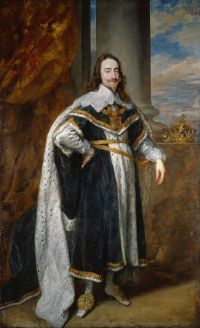 King of England Charles I,
Eikon Basilike
King of England Charles I,
Eikon Basilike
“ Rebuke those beasts of the people, and deliver Me from the rudenesse and strivings of the multitude.Restore, We beseech thee, unto Us, the freedoms of Our Councels and Parliaments, make Us unpassionately to see the light of Reason, and Religion, and with all order and gravity to follow it, as becomes Men and Christians; so shall We praise thy Name, who art the God of order and counsel.What man cannot, or will not represse, thy Omnipotent Justice can and will. ”
Brigham Young,
Journal of Discourses — Volume 13…
“ I can govern and control the Latter-day Saints, not by the iron hand, but by the principles of true government—the principles of our religion, which, in their very nature, are bound to make those who will be guided by them healthy, wealthy and wise. ”
 Arthur Schopenhauer,
The Essays of Arthur Schopenhauer…
Arthur Schopenhauer,
The Essays of Arthur Schopenhauer…
“ Faith is everywhere the support of the laws and the constitution, the foundation, therefore, of the social fabric, which could hardly hold together at all if religion did not lend weight to the authority of government and the dignity of the ruler. ”
 John Stuart Mill,
Considerations on Representative Government
(1861)
John Stuart Mill,
Considerations on Representative Government
(1861)
“ Religion remains; and here, at least, it may be thought, is an agency that may be relied on for lifting men's eyes and minds above the dust at their feet. But religion, even supposing it to escape perversion for the purposes of despotism, ceases in these circumstances to be a social concern, and narrows into a personal affair between an individual and his Maker, in which the issue at stake is but his private salvation. ”
 John Taylor,
Journal of Discourses — Volume 9…
John Taylor,
Journal of Discourses — Volume 9…
“ We have drawn in our traditions, as it were, like our mother's milk. Our education, our training and teaching in general, not merely in regard to religion, but upon every subject, have been in opposition to or a perversion of the pure principles of the kingdom of God. ”
George Iles, Popular Science Monthly (1885)
“ The history of Christianity, from the time of the apostles to that of Theodore Parker, manifests first the gradual evolution of authority, and then tells us how by abusing its power and becoming corrupt and arbitrary it incited the rebellion of bold and free men, who point by point have taken the citadels of assertion and dogma. Theology proves on examination to be no more than the views of Nature entertained by observers in the remote past. ”
Logan Mitchell, Religion in the Heavens; Or, Mythology Unveiled in a Series of Lectures
“ A truly wise and equitable government, so far from coalescing with the priesthood of any religion or superstition for mutual support against the justice of equal rights, would not allow itself to know anything whatever about theology and its train of distracting, misery-creating delusions. ”
Matthew Henry, Commentary on the Whole Bible… (1700s)
“ Religion is very much the strength and support of the civil government; it teaches subjects their duty, and so by it kings reign over them the more easily; it teaches kings their duty, and so by it kings reign as they ought; they decree justice, while they rule in the fear of God. Those rule well whom religion rules. ”
Baron Thomas Babington Macaulay Macaulay, Critical and Historical Essays…
“ We follow, therefore, the true course in looking first for the true idea, or abstract conception of a government, of course with allowance for the evil and frailty that are in man, and then in examining whether there be comprised in that idea a capacity and consequent duty on the part of a government to lay down any laws or devote any means for the purposes of religion,—in short, to exercise a choice upon religion. ”
Theodore Parker,
The Collected Works of Theodore Parker
(1875)
“ I know men who want such a minister, that will "preach the Gospel," and never apply the Christian religion to politics, to business, to society, to the life of the family or the individual, not even to the church An admirable gospel for scribes, and pharisees, and hypocrites! Glad tidings of great joy is it to the hunkers and stealers of men: "Religion nothing to do with politics ; the morality of Jesus not to be applied to the dealings of man ”
Reginald Lane-Poole, Illustrations of the History of Medieval Thought and Learning (1920)
“ In the following essay our attention will be mainly directed to these traces of independence, not so much in the domain of formal philosophy as in those regions where philosophy touches religion, where reason meets superstition, and where theology links itself with political theory. ”
John Morley and X, 1911 Encyclopædia Britannica (1911)
“ While men’s minds were in the theological state, political events, for example, were explained by the will of the gods, and political authority based on divine right. In the metaphysical state of mind, then, to retain our instance, political authority was based on the sovereignty of the people, and social facts were explained by the figment of a falling away from a state of nature. ”
Albion Winegar Tourgée, Bricks Without Straw: A Novel
“ Wherever they meet to worship, there they will meet to consult of their plans, hopes, and progress, as at once a distinct race and a part of the American people. Their religion is tinged with political thought, and their political thought shaped by religious conviction. ”
Thomas V. Cooper, American politics (non-partisan… (1892)
“ The government that maintains liberty of conscience as one of its fundamental principles, and under which Christianity is recognized as the common law, has just claims upon the Christian citizen for the vigilant exercise of all political rights. ”
T. W. Allies, The Formation of Christendom, Volume II
“ But if such pay obedience to the same commands and authorities, then are they even much more obedient to this supernal allotment, this divine mind and all-powerful God. So that this universal world is to be considered one commonwealth of gods and men.” “Law is the supreme reason, implanted in nature, which commands all things that are to be done, and prohibits their contraries.” “The radical idea of right I derive from nature, under whose guidance we have to draw out the whole of this subject-matter.” ”
baron d' Paul Henri Thiry Holbach, Good Sense
“ The dogmas, the ceremonies, the morals, and the virtues, prescribed by every Religion, are visibly calculated only to extend the power or augment the emoluments of the founders and ministers of these Religions. ”
Various, The Atlantic Monthly, Volume 05…
“ The conservative and the reformer, the king and the radical, the priest and the heretic, the man of affairs and the man of letters, have taken their seats, side by side, on the scholars' benches, before the same teacher, and, after listening to his large discourse, have discussed among themselves the questions in religion, in philosophy, in morals, politics, or history, which his words suggested or explained. ”
John Taylor,
Journal of Discourses — Volume 9…
“ No, only those that are set apart and inspired and dictated by the Almighty, and who rely upon the arm of Jehovah, and who by their humility, faith and obedience, call down the blessings of the Lord. True there are those who are capable of understanding political principles to some extent, but even that is very little indeed, when we consider government as viewed by man and then as revealed by the Almighty. ”
 Charles William Eliot,
Popular Science Monthly
(1873)
Charles William Eliot,
Popular Science Monthly
(1873)
“ Religion is the supreme human interest, government is the supreme human organization; therefore, government ought to take care for religion, and a Christian government should maintain distinctively Christian religious institutions. ”
Victoria C. Woodhull, Freedom! Equality!! Justice!!! These Three…
“ In conclusion, therefore, let me urge every soul who desires to be truly Christian to no longer separate Christianity from politics, but to make it the base upon which to build the future political structure. ”
