The History of the Decline and Fall of the Roman Empire

Definition and stakes

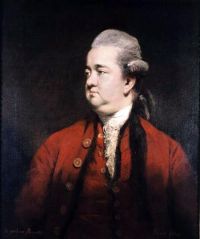
Portrait of Edward Gibbon Edward Gibbon The History of the Decline and Fall of the Roman Empire

But the empire of the Romans filled the world, and when the empire fell into the hands of a single person, the world became a safe and dreary prison for his enemies. The slave of Imperial despotism, whether he was condemned to drag his gilded chain in rome and the senate, or to were out a life of exile on the barren rock of Seriphus, or the frozen bank of the Danube, expected his fate in silent despair.
Source: Gutenberg

Portrait of Edward Gibbon Edward Gibbon History of the Decline and Fall of the Roman Empire…

Prosperity ripened the principle of decay; the causes of destruction multiplied with the extent of conquest; and as soon as time or accident had removed the artificial supports, the stupendous fabric yielded to the pressure of its own weight. The story of its ruin is simple and obvious; and instead of inquiring why the Roman empire was destroyed, we should rather be surprised that it had subsisted so long. The victorious legions, who, in distant wars, acquired the vices of strangers and mercenaries, first oppressed the freedom of the republic, and afterwards violated the majesty of the purple.
Source: Gutenberg

Portrait of Edward Gibbon Edward Gibbon History of the Decline and Fall of the Roman Empire…

The arms of the republic, sometimes vanquished in battle, always victorious in war, advanced with rapid steps to the Euphrates, the Danube, the Rhine, and the Ocean; and the images of gold, or silver, or brass, that might serve to represent the nations and their kings, were successively broken by the iron monarchy of Rome.
The rise of a city, which swelled into an empire, may deserve, as a singular prodigy, the reflection of a philosophic mind. But the decline of Rome was the natural and inevitable effect of immoderate greatness.
Source: Gutenberg

Get perspective with Kwize: daily news enlightened by great literature