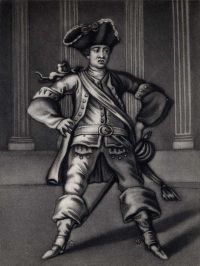
“ Recitation rather than impersonation would be generally aimed at by the actors.Thomas Betterton was the son of one of the cooks of King Charles I. He was born in Tothill Street, Westminster, about 1635, eighteen years after the death of Burbage. He seems to have received a fair education; indeed, but for the disturbing effect of the Civil War, he would probably have been brought up to one of the liberal professions. He was, however, apprenticed to a bookseller, who, fortunately for Betterton, took to theatrical management. ”
Thomas Betterton
Definition and stakes
Thomas Betterton (1635–1710) was a leading actor and theatre manager of Restoration England, celebrated for his adaptability and impact on stagecraft. Born to a royal cook, he ascended from an apprenticeship to prominence, excelling in Shakespearean roles and introducing theatrical advancements such as movable scenery. Contemporary writers like Sir Henry Irving commended his precise delivery style, while Charles Lamb observed his 50-year career coinciding with the height of Stuart drama.
Thomas De Quincey expressed regret over the limited historical accounts of his life, yet his influence persists through his managerial skill and partnerships with playwrights such as Dryden. Betterton’s career reflected the era’s artistic aspirations, connecting tradition with innovation until his last performance in 1710.
Quotes about “Thomas Betterton”
“ Those of us who understand and appreciate the artistic Temperament, will readily agree with the worthy Clerk when he said that it cannot be judged by ordinary Standards. The long and successful Careers of Thomas Betterton and of Mistress Saunderson his Wife testify to the Fact that their Art in no way suffered, while their Souls passed through the fiery Ordeal of Passion and of Sorrow ”
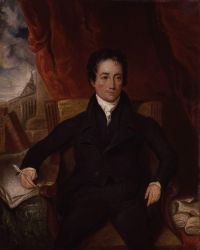 Charles Lamb,
The Works of Charles and Mary Lamb…
“ Line 9. Betterton or Booth. Thomas Betterton, born probably in 1635, acted for the last time in 1710, the year in which he died. Barton Booth (1681-1733) left the stage in 1728. Betterton was much at the Little Theatre in Lincoln's Inn Fields; also at Sir John Vanbrugh's theatre in the Haymarket.Line 11. Quin. James Quin (1693-1766) of Drury Lane and Covent Garden, Garrick's great rival, famous as Falstaff. His last appearance was in 1753.Line 12. Garrick. Garrick's Drury Lane, in which Lamb saw his first play, was that built by Sir Christopher Wren in 1674. ”