Thomas Campbell

Definition and stakes

William H. Elson,  Junior High School Literature, Book 1

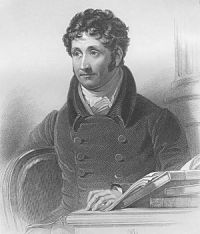
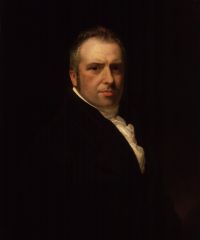
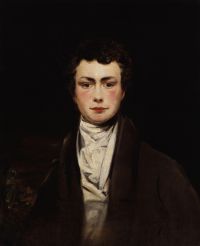
“ Thomas Campbell (1777-1844) was a popular Scottish poet. He was born in Glasgow, his father being a prominent merchant of that city. At an early age Campbell began to write poetry, and at twenty-one had published “The Pleasures of Hope,” a poem that was received with much favor. He excelled in war poetry, his “Hohenlinden”, “The Battle of the Baltic”, and “Ye Mariners of England” being the most widely read. His ballads “Lochiel” and “Lord Ullin’s Daughter” are the best known. ”
Source: Gutenberg

J. Cuthbert Hadden,  Thomas Campbell

“ Campbell said this made a stronger impression upon him than if she had spoken in a strain of the loftiest laudation; nay, he declared it to have been one of the principal incidents in his life that gave him confidence in his own powers. Telford was even more enthusiastic. ‘I am absolutely vain of Thomas Campbell,’ he says in a letter to Alison. ‘There never was anything like him—he is the very spirit of Parnassus. Have you seen his “Lochiel”? He will surpass everything ancient or modern—your Pindars, your Drydens, and your Grays. ”
Source: Gutenberg

The Modern Scottish Minstrel, Volume 2

“ A temple to love is this bosom of mine;
Then smile on thy victim, Louisa, for ever,
I 'll kneel at thine altar, sweet Flower of the Tyne.
[Pg 255] THOMAS CAMPBELL.
Thomas Campbell, author of the "Pleasures of Hope," was descended from a race of landed proprietors in Argyleshire, who claimed ancestry in Macallummore, the great head of clan Campbell, and consequent propinquity to the noble House of Argyle. Alexander Campbell, the poet's father, had carried on a prosperous trade as a Virginian merchant, but had suffered unhappy embarrassments, at the outbreak of the American war.
”
Source: Gutenberg

Get perspective with Kwize: daily news enlightened by great literature