Thomas Henderson

Definition and stakes

Thomas Gilray and Dugald Macfadyen,  1911 Encyclopædia Britannica, Volume 13… (1911)

“ Early in 1645 Henderson was sent to Uxbridge to aid the commissioners of the two parliaments in negotiating with the king; but nothing came of the conference. In 1646 the king joined the Scottish army; and, after retiring with them to Newcastle, he sent for Henderson, and discussed with him the two systems of church government in a number of papers. Meanwhile Henderson was failing in health. He sailed to Scotland, and eight days after his arrival died, on the 19th of August 1646. He was buried in Greyfriars churchyard, Edinburgh; and his death was the occasion of national mourning in Scotland. ”
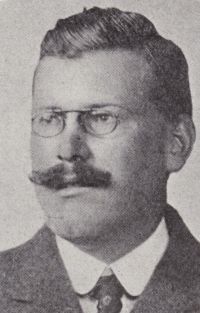
Source: Wikisource

Thomas Finlayson Henderson,  Dictionary of National Biography… (1886)

“ He was called to the bar in 1635, and after his marriage in the same year to Alice, eldest daughter of Anthony Abdy, alderman of London, took a house in Charterhouse Yard, and began to practise law with considerable success, until, in his own words, 'the drums and trumpets blew his gown over his ears.' In accordance with his father's advice, he sold his chambers in the Temple on the outbreak of the civil war, and his wife dying in 1647, he removed with his family to his father's house at Skreens. ”
Source: Wikisource

Thomas Finlayson Henderson,  Dictionary of National Biography… (1912)

“ Impressionist and emotional, Henley's criticism represents artistic sensibilities that are exceptionally keen. In painting he proposed to ignore any qualities except those strictly pictorial, and sculpture he pronounced to be ‘wholly a matter of form, surface and line.’ His literary sympathies were restricted by peculiarities of temperament, but realist and humorist as well as poet, he was an expert critic of those forms of literature that deal primarily with concrete human nature. ”
Source: Wikisource

Get perspective with Kwize: daily news enlightened by great literature