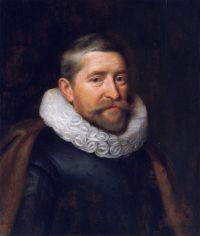
Thomas Villiers

Definition and stakes

Andrew Bisset,  Notes on the Anti-Corn Law Struggle (1884)

“ There are among the Mitchell Papers some letters from Sir Thomas Villiers, created Lord Hyde in 1756, and Earl of Clarendon in 1776, to Sir Andrew Mitchell, his successor at the Court of Berhn as the representative of England, which show that this member of the elder branch of the family of Villiers of Brooksley, was a man of a totally different character from either the first or the second Duke of Buckingham of the name of Villiers. ”
Source: Wikisource

Henry James Robinson,  Dictionary of National Biography… (1899)

“ Temple Leader (who alone survives) . Encouraged by such men and anxious to take service under Canning and Huskisson, Villiers attempted to enter parliament at the general election in 1826. In the summer of that year he accompanied his second brother, Thomas Hyde, into Yorkshire, and, while the elder brother won a seat at Hedon, Charles Villiers made a desperate but unsuccessful fight for the representation of Kingston-upon-Hull. ”
Source: Wikisource

Mrs. A. T. Thomson,  The life and times of George Villiers…

“ Buckingham, on his way, stopped an instant to speak to Sir Thomas Fryer, one of his Colonels, who was a short man--so that, in order to hear his reply, the Duke bent down his head somewhat. Fryer then drew back, and, at that moment, Felton, striking across the Colonel’s arm, stabbed Buckingham a little above the heart. The knife was left in the body; the Duke, with a sudden effort, drew it out, and exclaiming, “The villain has killed me,” pursued the assassin out of the parlour into the hall or antechamber, where he sank down, and, falling under a table, drew a deep breath, and expired. ”
Source: Gutenberg

Get perspective with Kwize: daily news enlightened by great literature