Tupac Amaru II

Definition and stakes

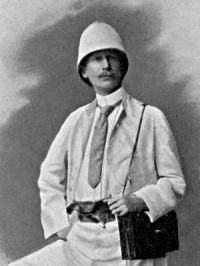
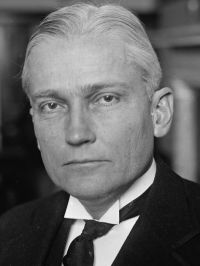
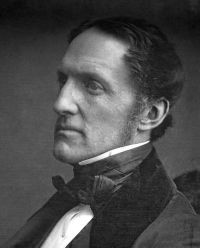
Portrait of William Henry Giles Kingston William Henry Giles Kingston,  Manco, the Peruvian Chief

“ From among their dusky lines arose a forest of waving banners, long lances, and battle-axes, tossing to and fro, and glittering in the rays of the noonday sun which shone down upon their heads. At intervals might be seen rich panoplies of feather work and lofty plumes, marking the post of some leading cacique, or Inca noble. Some way to the right, on a rising ground, rose the magnificent canopy under which the Inca Tupac Amaru was to be found, surrounded by his generals and nobles. ”
Source: Gutenberg

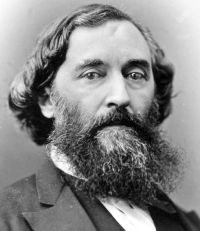
Portrait of Aimé Bonpland Aimé Bonpland,  Personal Narrative of Travels to the Equinoctial Regions of America…

“ When Tupac-Amaru, who believed himself to be the legitimate heir to the empire of the Incas, made the conquest of several provinces of Upper Peru, in 1781, at the head of forty thousand Indian mountaineers, all the whites were filled with alarm. The Hispano-Americans felt, like the Spaniards born in Europe, that the contest was between the copper-coloured race and the whites; between barbarism and civilization. Tupac-Amaru, who himself was not destitute of intellectual cultivation, began with flattering the creoles and the European clergy ”
Source: Gutenberg

W. H. Koebel,  South America

“ It was on November 4, 1780, that Tupac-Amaru, by which name he was now universally known, made his first move. Gathering some trusty men about him, he captured a Spanish corregidor, Arriaga, and, charging that official with offences against the Indians, caused him to be executed. On this the Indians flocked to their new defender's standard, and he was soon at the head of 6,000 men. Tupac-Amaru now determined on an extensive campaign. After an attack on Cuzco, he marched with 60,000 Indians to besiege La Paz itself, while the isolated Spanish forces were overwhelmed in all directions. ”
Source: Gutenberg

Get perspective with Kwize: daily news enlightened by great literature