White (chess)

Definition and stakes

Charlotte Boardman Rogers,  How to Play Chess (1907)

“ The student must learn to play with both the White and the Black men, thus being able to play a game of defence or attack. In most books on the subject of Chess, it is generally understood that the student plays with the White men, but this is a mistake, for when he comes to lay aside his textbook and play with someone else, he may draw the Black men which puts him at a disadvantage, and he is likely to make moves that are favorable to his opponent with the idea that the White men must win. He is, also, liable to move a White man by mistake and then he must pay the penalty of a false move. ”

Source: Wikisource

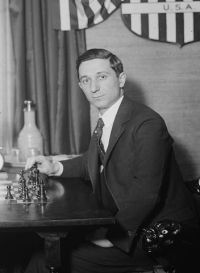
Portrait of José Raúl Capablanca José Raúl Capablanca,  Chess Fundamentals

“ It remains to find out if the advantage obtained is sufficient to win. White not only has a passed Pawn, but his King is in a commanding position in the centre of the board ready to support the advance of White's Pawns, or, if necessary, to go to Q B 5, or to move to the right wing in case of danger. Besides, White holds the open file with one of his Rooks. Altogether White's position is superior and his chances of winning are excellent. ”
Source: Gutenberg

Portrait of José Raúl Capablanca José Raúl Capablanca,  Chess Fundamentals

“ White, according to the principles already laid down, develops his pieces as fast as possible, but in so doing he also tries to hinder his opponent's development, by applying pressure wherever possible. He tries first of all to control the centre, and failing this to obtain some positional advantage that will make it possible for him to keep on harassing the enemy. He only relinquishes the initiative when he gets for it some material advantage under such favourable conditions as to make him feel {78}assured that he will, in turn, be able to withstand his adversary's thrust ”
Source: Gutenberg

Get perspective with Kwize: daily news enlightened by great literature