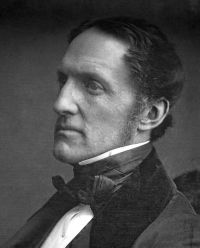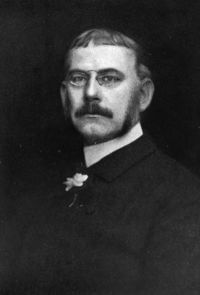
William Prescott

Definition and stakes

Portrait of Harry Thurston Peck Harry Thurston Peck William Hickling Prescott

Prescott's eulogists have so studiously ignored his weaknesses as to leave us with no clear-cut impression of the actual man. They have unwisely smoothed away so much and have extenuated so much in their halting and ambiguous phrases, as to create a picture of which the outlines are far too faint. Apparently, they wish to draw the likeness of a perfect being, and to that extent they have made the subject of their encomiums appear unreal. One cannot understand how truly lovable the actual Prescott was, without reconstructing him in such a way as to let his faults appear beside his virtues.
Source: Gutenberg

Portrait of Harry Thurston Peck Harry Thurston Peck William Hickling Prescott

No writer was ever less given to literary posing. It is, indeed, an extraordinary fact that although Prescott was occupied for ten whole years in preparing his Ferdinand and Isabella, during all that time not more than three persons outside of his own family knew that he was writing a book. His friends supposed that his hours of seclusion were occupied in general reading and study. Only when a formal announcement of the history was made in the North American Review in 1837, did even his familiar associates begin to think of him as an author.
Source: Gutenberg

Portrait of Harry Thurston Peck Harry Thurston Peck William Hickling Prescott

His widely recognised ability brought him wealth, so that he lived in liberal fashion, in a home whose generous appointments and cultivated ease created an atmosphere that was rare indeed in those early days, when narrow means and a crude provincialism combined to make New England life unlovely. Prescott was not only an able lawyer, the worthy compeer of Dexter, Otis, and Webster—he was a scholar by instinct, widely read, thoughtful, and liberal-minded in the best sense of the word.
Source: Gutenberg

Get perspective with Kwize: daily news enlightened by great literature