“ The doubtfully efficient machine sent on dangerous work, the unsilenced batteries and high-explosive barrage, the hundreds of dead men lying out in the open, the "Game [Pg 231] cock's" pilot dying slowly there in the trampled mud of the dug-out under the flickering candles' light were all part of the Sequel—a sequel, of which the aircraft strikers had never thought, to a strike of which the dead and dying men had never even heard. ”
Air strike
Definition and stakes
The theme of “air strike” has been addressed by authors such as Moyers S. Shore, H. G. Wells, Herbert George Wells, Boyd Cable and Various. It is often associated with terms like bomb, artillery, aircraft, airplane and gun.
Quotes about “air strike”
H. A. Jones, Sir Walter Raleigh and the Air History…
“ To strike from the air you must strike quick and strike ceaselessly. The attack was arranged so that two machines should arrive over the retreating enemy every three minutes. In addition a formation of six machines was sent over every half-hour. The attack started at 8 o’clock in the morning. At noon it was all over. The road is bordered by steep ravines. No cover for a rabbit. There was no escaping the pitiless rain of machine-gun bullets poured on to the enemy from a low height, or the bombs which soon reduced the head of the column to chaos. ”
Moyers S. Shore, The Battle for Khe Sanh
“ The majority of the sorties, however, were flown by U. S. Marine, Navy, and Air Force crews. Their mission was to "destroy enemy forces in the SCOTLAND ... TAOR, interdict enemy supply lines and base areas, ... and provide maximum tactical ... air support to friendly forces." Generally, the type of strike fell into one of three categories: close air support, B-52 Arc Light strikes, or radar-controlled bombing. [49] (138) Close air support missions were utilized against pinpoint targets in proximity of friendly troops. ”
 George Allan England,
The Air Trust
“ But Flint and Waldron still survived. Though the very earth shook and trembled with the roar of bombs, the crumbling of massive walls, the rattle of volley-fire and the crashing of the terrible grenades that mowed down hundreds as they spread their poisonous gas abroad—though the shriek of projectiles, the thunder of the air-ship guns now sweeping the sky in blind endeavor to shatter the attackers all swelled the tumult to a frightful storm of terror and of death; they still lived, cowered and cringed there in the bomb-proof steel-and-concrete of the inner laboratories. ”
George Allan England,
The Air Trust
“ Blood of the mangled trainman, blood that the Carpenter shed!"For your sake! For the world's sake, this!" he cried, and hurled another thanatos. "If ever war of liberation was holy, this is that war!"Suddenly, through all the turmoil of shattering explosions, tossing air-currents and drifting, acrid smoke, he became conscious of a sudden, swift-flying pursuer.By the light of the burning Plant, down there somewhere in the vapors of the thunderous Falls, he saw a hawk-like 'plane that swooped toward him with incredible velocity, savage and lean and black. ”
Robert Henry Reece, Night Bombing with the Bedouins
“ An aeroplane can operate far back of the enemy lines, both in the day and at night; enemy troops in transport can be bombed: railway stations, sidings, etc., damaged; transports of all kinds delayed; and ammunition dumps, when [Pg 10] located, can be blown up. In fact, military targets of all sorts can be attacked from the air that cannot be reached in any other way. The very foundation of a nation's strength in war, its industry, can be attacked from the air and, if attacked on a large enough scale, can be destroyed. ”
 Franklin D. Roosevelt,
State of the Union Addresses
“ I cannot tell you when or where the United Nations are going to strike next in Europe. But we are going to strike--and strike hard. I cannot tell you whether we are going to hit them in Norway, or through the Low Countries, or in France, or through Sardinia or Sicily, or through the Balkans, or through Poland--or at several points simultaneously. But I can tell you that no matter where and when we strike by land, we and the British and the Russians will hit them from the air heavily and relentlessly. ”
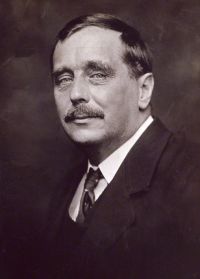 Herbert George Wells,
Washington and the Riddle of Peace
(1922)
“ The powers we have considered will therefore push their air equipment on a quite different scale; they will be bound to deliver their chief blows with it; we may certainly reckon on the biggest long-range airplanes possible, on the largest bombs and the deadliest contents for them. We may certainly reckon that, within three or four hours of a declaration of war between France and England, huge bombs of high explosive, or poison gas, or incendiary stuff, will have got through the always ineffectual barrage and be livening up the streets of Paris and London. ”
C. E. W. Bean, Letters from France
“ Single British aeroplanes have been coming and going since the bombardment started. I have not seen any German plane. The distant landscape is becoming fainter. The flashes of our guns can be seen at intervals all over the slopes immediately below us, and their blast is clearly shown by the film of smoke and dust which hurries into the air. The haze makes a complete screen between us and the battle. ”
Various, Astounding Stories, June, 1931
“ But I saw stabbing flames that struck upward from the ground to make a wall of sharp, fiery spears, and I knew that every darting flame was launching a projectile from our anti-aircraft guns.The skies were filled with the red aircraft of the enemy, but their way was an avenue of hell where thousands of shells filled the air with their crashing explosions. There were torpedoes, the unmanned airships whose cargo was death, and they were guided to their marks despite the inferno that raged about the red ships above. ”
Laurence Yard Smith, The Romance of Aircraft
“ Once those tons of explosives have been released and the noise of their dreadful havoc has aroused the anti-aircraft gunners of the enemy, those bombing planes will find the earth an uninviting sort of region and they will be glad to spring into the protecting silence and darkness of the upper air. And this they can do easily, for, rid of their load, they possess unusual climbing powers. ”
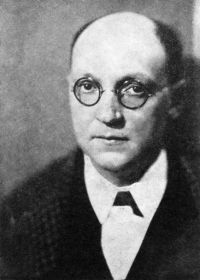 Georges Duhamel,
The New Book of Martyrs
“ When the air was pure, we heard it vibrate with the life of aeroplanes and echo to their contests. The dry throb of machine-guns, the incessant scream of shrapnel formed a kind of crackling dome over our heads. The German aeroplanes overwhelmed the environs with bombs which gave a prolonged whistle before tearing up the soil or gutting a house. One fell a few paces from the ward where I was operating on a man who had been wounded in the head. ”
“ Then the two Trichords, splintered and rent and gaping with explosive-bullet wounds, with their ammunition completely expended, their oil and petrol tanks running dry, turned for home, leaving their fourteen enemies scattered wide and low in the air, or piled in splintered smoking wreckage along the ground below the line of their flight. The fight with the fourteen had run without a break for three-quarters of an hour. ”
James Norman Hall, High Adventure: A Narrative of Air Fighting in France
“ The view, from the air, of a heavy bombardment, or of an infantry attack under cover of barrage fires, is a truly terrible spectacle, and in the air one has a feeling of detachment which is not easily overcome.Yet it must be overcome, as I have said, and cannot say too many times for the benefit [188] of any young airman who may read this journal. During an offensive the air swarms with planes. They are at all altitudes, from the lowest artillery réglage machines at a few hundreds of metres, to the highest avions de chasse at six thousand meters and above. ”
“ But we are dealing with the immediate future, and an uncertain period may elapse before aircraft can combine with their superior power of movement the radius of action, reliability and hitting power of the other weapons. In pointing out the decisiveness of an air blow at the enemy nation’s nerve system, we pre-supposed two conditions; first, a superior air force; second, a centralized objective such as a highly-developed industrial state offers. The European nations and Japan afford such a target to air attack, but not so a country as vast as the United States ”
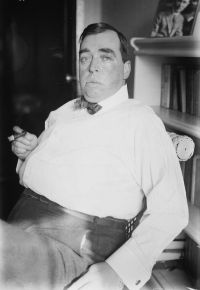 Irvin S. Cobb,
Paths of Glory: Impressions of War Written at and Near the Front
“ A yell of exultation rose from the watching Germans, who knew that an explosion close to an aeroplane is often sufficient, through the force of air concussion alone, to crumple the flimsy wings and bring it down, even though none of the flying shrapnel from the bursting bomb actually touch the operator or the machine. ”
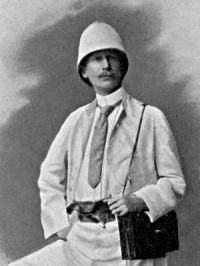 George Chetwynd Griffith,
The Angel of the Revolution: A Tale of the Coming Terror
“ The air-ships, flying hither and thither a few hundred feet above the house-tops, like spirits of destruction, sent their shells into their crowded masses and wrought the most awful havoc of all with their frightful explosives, blowing hundreds of men to indistinguishable fragments at every shot, while from the windows of every house that was not in ruins came a ceaseless hail of missiles from every kind of firearm, from a magazine rifle to a shot-gun. ”
“ But hard fighting was going on, and the line was getting badly hammered, so that every balloon which could get up was in the air, and every observer was hunting for hostile battery positions, directing the fire of our guns on to them, and doing all they could to lessen the shell-fire that was pouring down on our infantry in their scanty trenches. At times a swirl of mist or cloud came down and shut off the view altogether from the balloons ”
James Norman Hall, High Adventure: A Narrative of Air Fighting in France
“ A few days before I had been watching without emotion the bombardment of a German plane. I had seen it twisting and turning through the éclatements, and had heard the shells popping faintly, with a sound like the bursting of seed-pods in the sun.My feeling was not that of fear, exactly. It was more like despair. Every airman must [136] have known it at one time or another, a sudden overwhelming realization of the pitilessness of the forces which men let loose in war. In that moment one doesn't remember that men have loosed them. He is alone, and he sees the face of an utterly evil thing. ”
 H. G. Wells,
A Short History of the World
“ First the Zeppelin and then the bombing aeroplane carried war over and past the front to an ever- increasing area of civilian activities beyond. The old distinction maintained in civilized warfare between the civilian and combatant population disappeared. Everyone who grew food, or who sewed a garment, everyone who felled a tree or repaired a house, every railway station and every warehouse was held to be fair game for destruction. The air offensive increased in range and terror with every month in the war. At last great areas of Europe were in a state of siege and subject to nightly raids. ”
C. A. Rose, Three years in France with the Guns…
“ One thing certain was that we had almost complete control of the air and both out-numbered and out-witted the enemy to a marked extent. It was most unpleasant to hear the noise of the hostile planes drawing nearer, for one could not mistake the beat made by the German machines. The amount of bombing experienced by us was quite bad enough in all truth, but we used to smile when contemplating what our foes must be suffering at the hands of our Airmen, as truly it was ten times worse. ”
Charles Amory Beach, Air Service Boys Flying for Victory…
“ At a given signal some of their mates would make a hostile demonstration in front to chain the attention of the gunners, while others would creep up so close from the rear that they would be able to get both men.Of course this meant that the venturesome [51] fliers would be taking additional risks. When that machine-gun should start to pepper their plane they were likely to be struck by one or more of the shower of missiles coming hissing up like enraged hornets. What matter, when they were accepting chances just as desperate every minute of the time they remained aloft? ”
“ The attack was a little late, as we heard after from prisoners—perhaps the Night Bombers, and their upsetting of road and rail transport timetables with high-explosive bombs and showering machine-guns, had some word in that lateness—and our fire caught it in the act of deploying. And when such a weight of guns as was massed on that front catches solid battalions on the roads, or troops close-packed in trenches, the Lord ha' mercy on the men they catch. ”
“ If they are not bombed out of existence, air-attack will at least force them to disperse and take cover so frequently as to slow up their rate of advance to a snail’s pace, while days of bombing by hostile aircraft will hardly be a tonic for their moral. ”
H. G. Wells,
The War in the Air
“ The world's gone mad. Our fleet beat the Americans the night we got disabled, that's clear. We lost eleven—eleven airships certain, and all their aeroplanes got smashed. God knows how much we smashed or how many we killed. But that was only the beginning. Our start's been like firing a magazine. Every country was hiding flying-machines. They're fighting in the air all over Europe—all over the world. The Japanese and Chinese have joined in. ”
George Chetwynd Griffith,
The Angel of the Revolution: A Tale of the Coming Terror
“ The aerostats have stationed themselves at great elevations over the ramparts of fortresses and the bivouacs of armies, and have rained down a hail of dynamite, melinite, fire-shells and cyanogen poison-grenades, which have at once put guns out of action, blown up magazines, rendered fortifications untenable, and rent masses of infantry and squadrons of cavalry into demoralised fragments, before they had the time or the opportunity to strike a blow in reply. ”
Stephen Lee McFarland, A Concise History of the U.S. Air Force (1997)
“ In Germany airmen sought to restore mobility to the battlefield, joining aircraft and tanks to create blitzkrieg warfare. In America airmen strove for the coup de grace―strategic bombing directly against the vital centers of a nation's war-making capability. ”
William Perry Brown, Our Pilots in the Air
“ Hurry up!" both aviators kept repeating to their own advancing air fleet. "No time to waste! Let's get at 'em. They're going to bomb our front lines."Almost immediately a number of fast triplanes forged on ahead of the rest at a speed which a year before would have been deemed impossible. Joining the two weary airmen who had been up all night, yet were still full of the battle hunger, they swept low down and straight at the bombing planes, now beginning to drop their deadly explosives along the lines of advancing infantry. But only for an instant, as it were, did they go uninterrupted. ”
George Bell, Speech Opposing Area Bombing (1944)
“ Are they alive not only to the vastness of the material damage, much of which is irreparable, but also to the harvest they are laying up for the future relationships of the peoples of Europe as well as to its moral implications? The aim of Allied bombing from the air, said the Secretary of State for Air at Plymouth on January 22, is to paralyze German war industry and transport. I recognize the legitimacy of concentrated attack on industrial and military objectives, on airfields and air bases, in view especially of the coming of the Second Front. ”
Charles Amory Beach, Air Service Boys Flying for Victory (1920)
“ After delivering his fire Tom swept off to one side so as not to interfere with another bomber who might occupy a higher level, and be advancing to the attack. Presently when the turn of the air service boys came again they would be ready to send down the second "bundle of concentrated destructiveness"; and later on there might be a "clean-up call" that would exhaust the stock carried by each plane. ”
H. G. Wells,
A year of prophesying
(1925)
“ I am naturally disposed to doubt—then probably the air warfare which will dominate it will be a warfare conducted with machines far below the quality of the best contemporary knowledge, and by men below the highest attainable standard. It may be, therefore, a clumsy war, as needlessly destructive as the great war; and the lumbering big aeroplane, with its tons of explosive, in search for targets of military significance, will incidentally smash up all sorts of precious things. But the less clumsy air-warfare is the less it will do that. ”
 John Galsworthy,
Addresses in America, 1919
(1919)
“ We may all [98] disarm completely, and yet—so long as there are flying-machines and high explosives—remain almost as formidably destructive as ever. So difficult to control, so infinite in its possibilities for evil and so limited in its possibilities for good do I consider this exploitation of the air that, personally, I would rejoice to see the nations in solemn conclave agree this very minute to ban the use of the air altogether, whether for trade, travel, or war; destroy every flying-machine and every airship, and forbid their construction. ”
Related terms
Authors who wrote about “air strike”
Moyers S. ShoreH. G. WellsHerbert George WellsBoyd CableVarious B. H. Liddell HartGeorge Allan EnglandGeorge Chetwynd GriffithH. A. JonesFranklin D. RooseveltGeorges DuhamelLaurence Yard SmithC. E. W. BeanJames Norman HallIrvin S. CobbC. A. RoseWilliam Perry BrownRobert Henry ReeceGeorge BellCharles Amory Beach
H. G. WellsHerbert George WellsBoyd CableVariousB. H. Liddell HartGeorge Allan EnglandGeorge Chetwynd GriffithH. A. JonesFranklin D. RooseveltGeorges DuhamelLaurence Yard SmithC. E. W. BeanJames Norman HallIrvin S. CobbC. A. RoseWilliam Perry BrownRobert Henry ReeceGeorge BellCharles Amory Beach