Annual plant

Definition and stakes

A. A. Crozier,  The Cauliflower

“ Everything depends on good plants and an early start in the spring, for we raise two crops the same season, and an early frost on our unripe seed is sure to ruin the crop. Now, to set the plants out and make them grow from the start, a line is stretched along one of these flat ridges, a boy goes along, and with a three-foot marker marks the spots for the plants; a man follows with a hoe and makes a hole, about the size of a quart dish, to receive each plant. ”

Source: Gutenberg

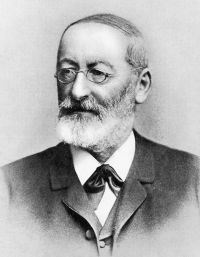
Portrait of L. H. Bailey L. H. Bailey,  Beginners' botany (1921)

“ True annuals reach old age the first year. Plants which are normally perennial may become annual in a shorter-season climate by being killed by frost, rather than by dying naturally at the end of a season of growth. They are climatic annuals. Such plants are called plur-annuals in the short-season region. Many tropical perennials are plur-annuals when grown in the north, but they are treated as true annuals because they ripen sufficient of their crop the same season in which the seeds are sown to make them worth cultivating, as tomato, red pepper, castor bean, cotton. ”
Source: Gutenberg

Ellen Eddy Shaw,  The Library of Work and Play: Gardening and Farming

“ Why not plant some seed which will produce plants that come up year after year? Why not have some hardy perennials and some self-sowing annuals? Poppy and cornflower sow themselves. These are annuals. Think of the perennials, which come year after year to welcome us. I think you should have hardy matter in your gardens. Peonies come up year after year, iris takes care of itself, helianthus or perennial sunflower bobs up each year.
"George asked me one day, what I meant when I spoke of herbaceous plants. A herbaceous plant is one with a non-woody stem, as geraniums.
”
Source: Gutenberg

Get perspective with Kwize: daily news enlightened by great literature