Biblical canon

Definition and stakes

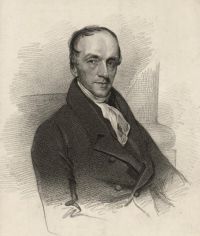
Portrait of Richard Watson Richard Watson,  A Biblical and Theological Dictionary

“ The first argument to prove that no canonical book has been lost, is derived from the watchful care of providence over the sacred Scriptures. Now, to suppose that a book written by the inspiration of the Holy Spirit, and intended to form a part of the canon, which is the rule of faith to the church, should be utterly and irrecoverably lost, is surely not very honourable to the wisdom of God, and in no way consonant with the ordinary method of his dispensations, in regard to his precious truth. ”
Source: Gutenberg

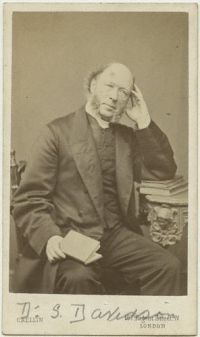
Portrait of George Q. Cannon George Q. Cannon,  Journal of Discourses — Volume 22…

“ Of course we see around us in Christendom any number of churches which profess to be the churches of Christ, the members of which deny present communication from God, who say that revelation is no longer needed; that the canon of scripture is full, that all the revelations that God had to give to men he has given, and that they are embodied in the Old and New Testament. ”
Source: Wikisource

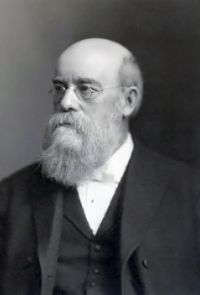
Portrait of Thomas Henry Huxley Thomas Henry Huxley,  Lectures and Essays

“ And yet the decision of these questions is fundamental, for as the limits of the canonical scriptures vary, so may the dogmas deduced from them require modification. Christianity is one thing, if the fourth Gospel, the Epistle to the Hebrews, the pastoral Epistles, and the Apocalypse are canonical and (by the hypothesis) infallibly true; and another thing, if they are not. As I have already said, whoso defines the canon defines the creed. ”
Source: Gutenberg

Get perspective with Kwize: daily news enlightened by great literature