Biological regeneration

Definition and stakes

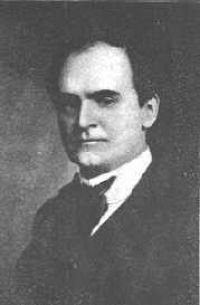
Portrait of Oscar Hertwig Oscar Hertwig,  The Biological Problem of To-day…

“ Finally, to explain the phenomena of regeneration, it is assumed that in the complicated cases where large parts of the body, like the head, the tail, or a bone, can be replaced after accidental loss, the cells with this power of regeneration contain, in addition to the determinants proper to them, supplementary determinants, which contain the germs needed for regeneration of the lost parts. ”
Source: Gutenberg

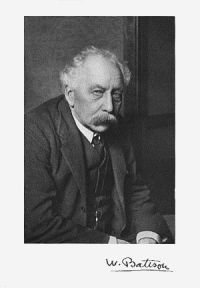
Portrait of Ernst Haeckel Ernst Haeckel,  The Wonders of Life: A Popular Study of Biological Philosophy

“ When, however, we make a comprehensive survey of the interesting field of regeneration processes, we discover a continuous series [104] of development from the simplest repair of plasm in the unicellular protists to the sexual generation of the higher histona. The sperm-cells and ova of the latter are redundant growth-products, which have the power of regenerating the whole multicellular organism. But many of the higher histona have also the capacity to produce new individuals by regeneration from detached pieces of tissue, or even single cells. ”
Source: Gutenberg

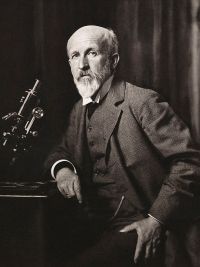
Portrait of Ernst Haeckel Ernst Haeckel,  The Wonders of Life: A Popular Study of Biological Philosophy

“ The variations in the size of this fraction are the cause of all change in the life-expression of every organism. When the biotone increases, and the metabolism quotient becomes more than one, we have growth; when, on the other hand, it falls below one, and the biotone decreases, we have atrophy, and finally death. New biogens are constructed in regeneration. In generation or reproduction groups of biogens (as germ-plasm) are released from the parent in consequence of redundant growth, and form the foundation of new individuals. ”
Source: Gutenberg

Get perspective with Kwize: daily news enlightened by great literature