Castrum

Definition and stakes

Various,  The Antiquarian Magazine & Bibliographer…

“ We must guard against the idea that such prefix was ever the “Roman name” itself, used in apposition to “ceaster.”
To resume, then, we have seen that there is no ground for supposing “castrum” to have ever formed part of the “Roman names” of those cities whose modern names end in “Chester,” &c. From this it has followed that the terminal in question is the result and badge of the English invasion, representing the English word “ceaster,” the invaders’ term for a walled town, and not the equivalent of a mere castrum, though etymologically derived from it in the first instance.
”
Source: Gutenberg

W. F. Rawnsley,  Highways and Byways in Lincolnshire

“ For the town has grown round a Roman “Castrum,” and the church is actually planted in the centre of the walled camp. A portion of the solidly grouted core of their wall shows on the southern boundary of the churchyard, and bits of it still exist to the east and west just beyond the churchyard boundary, and also a little further from the church on the north. Even the well which the Roman soldiers used, one of many springs coming out of the chalk, for Caistor is on the slope of the Wold, is still in use to the south-east of the church, and was included within the walls of the “Castrum.” ”
Source: Gutenberg

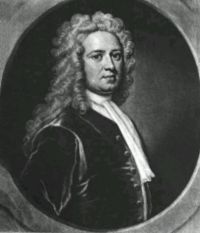
Portrait of William Stukeley William Stukeley,  Itinerarium Curiosum (Centuria I) (1776)

“ I found it to be a Roman castrum to guard the sea-coasts, probably against the Saxon rovers: it is a piece of very high ground, partly natural, partly raised by Roman labour, overlooking the wide extended marshes, perhaps in those times covered with salt water, at least in spring tides. There are two artificial tumuli, one very high, called Cock-hill. In St. Mary’s church-yard, now demolished, Roman coins have been found. I saw a very fair and large Antoninus Pius in brass, cos. iiii. in possession of Tho. Linny. In the yards and gardens about the town they frequently dig up bodies. ”
Source: Gutenberg

Get perspective with Kwize: daily news enlightened by great literature