“ A huge daily casualty-list is a very levelling—indeed, binding—influence, especially in such a community; there was not a girl in the chorus at the Imperial who had not an interest, actual or prospective, in that casualty-list. ”
Casualty list
Definition and stakes
The theme of “casualty list” has been addressed by authors such as United States. Department of the Army, G. le M. Gretton, Sherwood Eddy, Edmund John Kennedy and Sir Hugh Charles Clifford. It is often associated with terms like soldier, death, war, wound and battle.
Quotes about “casualty list”
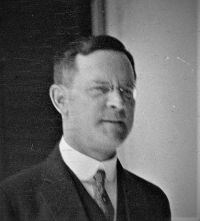 Sherwood Eddy,
With Our Soldiers in France
“ France as a whole has lost even more heavily, while Germany's casualty list during the great battles of the Somme and in Flanders has averaged 200,000 a month. When our own relatives are at the front, and our own boys are in the line, we realize what these statistics mean. In Germany alone the number of men killed now totals far over 1,000,000. Think of the many millions of mothers and wives in the nations of Europe scanning that crowded page of the newspaper, with several thousand names on the casualty list every day, each looking to see if her boy's name is there. ”
Edmund John Kennedy, With The Immortal Seventh Division
“ In Casualty Clearing and Base Hospitals there are, of course, always a number of sick to be visited, and this work falls within the region of ordinary civilian hospital work. In many cases where a man is first hit and he is not in a too collapsed condition, his first thought is of home; and a painful anxiety is often evinced by the sufferer to get a message through, describing his condition, before his name appears in the casualty list ”
Anonymous, The History of the Prince of Wales' Civil Service Rifles
“ It became a habit at one time among some troops in the Division to estimate the amount of work done by a unit by the number of casualties suffered, but although a heavy casualty list certainly indicates a “bloody” time, it does not follow that a unit which suffers few or no losses has done nothing. ”
Sir Hugh Charles Clifford, The Gold Coast Regiment in the East African Campaign
“ It was about as severe a test as any to which a body of native troops could be subjected, but the Regiment passed splendidly through the ordeal, the severity of which may be judged from the following casualty list.During this day—December 15th, 1916—the Regiment sustained no less than 140 casualties. It lost 2 officers killed and 7 wounded; 1 British non-commissioned officer wounded; 26 soldiers killed and 87 wounded; and 5 gun and ammunition carriers killed and 12 wounded,—approximately 15 per cent. of the men engaged, and nearly 50 per cent. of the officers. ”
D. Thomas Curtin, The Land of Deepening Shadow: Germany-at-War
“ The German casualty lists to the end of 1916 total 4,010,160, of which 909,665 have been killed or died of wounds. My investigations in Germany lead me to put the German killed or died of wounds at 1,200,000, and the total casualties at close to 5,000,000. If we assume that 50 per cent. of all wounded return to the front and another 25 per cent. to service in the interior, we must also consider in computation of man-power that the casualty lists do not include the vast numbers of invalided, and the sick, which almost balance those that return to the front. ”
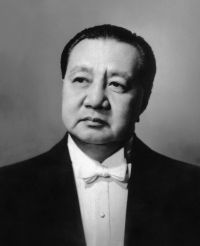 Elpidio Quirino,
Fourth State of the Nation Address
“ The casualty total is roughly 900, with 350 killed and 550 wounded. There are approximately 1,500 men in our army hospitals. For those who unselfishly and heroically gave their lives, for their widows and orphans, I bespeak your heartfelt support and assistance. ”
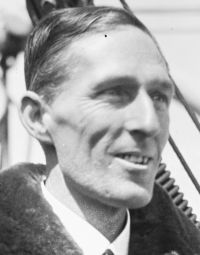 Philip Gibbs,
Now It Can Be Told
“ To onlookers there were some of the signs of victory on that day of September 25th—of victory and its price. I met great numbers of the lightly wounded men, mostly “Jocks,” and they were in exalted spirits because they had done well in this ordeal and had come through it, and out of it—alive. They came straggling back through the villages behind the lines to the casualty clearing—stations and ambulance-trains. Some of them had the sleeves of their tunics cut away and showed brown, brawny arms tightly bandaged and smeared with blood. ”
 Theodore Parker,
The Collected Works of Theodore Parker
(1863)
“ Considering the sickness and accidents that have happened in the pre- sent year, and others which may be expected before the troops reach home, I may set down the total number of deaths on the American side, caused by the war, at 15,000, and the number of wounded men at 4000. Suppose the army on the average to have consisted of 50,000 men for two years, this gives a mortality of fifteen per cent, each year, which is an enormous loss even for times of war, and one seldom equalled in modern warfare. ”
Thomas W. Adams, An Account of the Battle of Wilson's Creek
“ Wounded men everywhere. Crawling about, delirious with pain and agony; lying prone and almost motionless, staring up into the blue sky, dying slowly and making no sign; shrieking, groaning, cursing, praying, imploring help, begging for a bandage, for water, lying quietly, laughing even,—wounded men everywhere. In hospitals, under trees, in tents, in houses, in stables, with surgeons probing and cutting and carving and sawing and clumsily bandaging; in ambulances jolting off towards Springfield; limping along to hide and escape another hurt—wounded men everywhere. ”
Mrs. Georgie Sheldon, Threads gathered up (1887)
“ It was a shocking casualty, and even those who escaped unhurt were so badly shaken up and so unnerved by the sight of the dead, the dying, and the sufferings of the wounded, that they dropped exhausted and almost helpless the moment the necessity for action was over, and all who could be removed had been taken out of the wreck. ”
American National Red Cross, The American Red Cross Bulletin… (1909)
“ Towards the close of the day, when the twilight shadows were creeping over this vast field of carnage, more than one French officer, more than one French soldier wandered here and there, seeking some missing friend or compatriot, beside whom, when found, he knelt endeavoring to restore him to consciousness, to staunch the flow of blood, to dress the terrible wounds, to bind his handkerchief around a fractured limb or to vainly seek for water to quench the agonizing thirst. ”
George B. Guild, A brief narrative of the Fourth Tennessee Cavalry Regiment…
“ As stated before, I have taken extra pains to see and write to men of all the companies to obtain a list of the killed and wounded and those that died of disease during the war. I have been able to get a fair list of the killed in most of the companies ”
First Geneva Convention (1968)
“ As soon as possible each belligerent shall forward to the authorities of their country or army the marks or military papers of identification found upon the bodies of the dead, together with a list of names of the sick and wounded taken in charge by him. ”
Matthew Luckiesh, Artificial Light: Its Influence upon Civilization
“ This was at the rate of about 250,000 per year, which included casualties in battle, at sea, and from sickness, wounds, and accidents. Every one has felt the magnitude of this rate of casualties because either his home or that of a friend was blighted by one or more of these tragedies in the nineteen months. ”
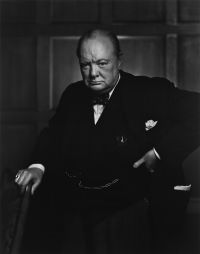 Winston Leonard Spencer Churchill,
The Few
(1940)
“ The British casualties in the first 12 months of the Great War amounted to 365,000. In this war, I am thankful to say, British killed, wounded, prisoners and missing, including civilians, do not exceed 92,000, and of these a large proportion are alive as prisoners of war. Looking more widely around, one may say that throughout all Europe, for one man killed or wounded in the first year perhaps five were killed or wounded in 1914-15. ”
United States. Department of the Army, Health Service Support in a Nuclear…
“ Section 1 introduces the guide and presents background and medical planning considerations. Section 2 provides information on the methodology used to develop the estimates of fatalities, casualties, and effectiveness of individuals remaining in the unit. Section 3 explores the use of the casualty prediction tables based on combat effectiveness decrements and estimates of the number of casualties categorized by insult level. ”
Sir Charles Alexander Gordon, Recollections of Thirty-nine Years in the Army
“ In the hospitals upwards of 20,000 sick and wounded; mortality in those establishments greater than on the field271 of battle; pourriture among the wounded prevailing to an alarming extent.305 The health of besieged had become impaired by semi-starvation; hands, feet, and ears were chapped and painful. These were among the conditions in which our great festival was celebrated; affectionate thoughts wafted towards those from whom no communication had reached us since the unhappy day of Chatillon. ”
Wilbur F. Gordy, Stories of Later American History
“ If we count those who were slain on the field of battle and those who died from wounds, disease, and suffering in wretched prisons, the loss of men was equal to seven hundred a day during the four long years of the war. ”
 Rheta Childe Dorr,
A soldier's mother in France
(1918)
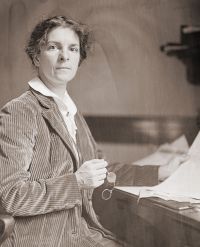
“ About wounded men in general, I want to say that the great majority are only slightly injured. They are all conscientiously treated, even small scratches being dressed carefully, because every wound is an infected wound and if neglected might cause death. But most of the casualties are able to walk back to their next base, the field or evacuation hospital. Those who are seriously wounded are transported in ambulances. ”
 Dinah Maria Mulock Craik,
A Life for a Life, Volume 1 (of 3…
“ Speaking of the statistics of mortality in the army, Doctor Urquhart surprised us by stating how small a percentage—bless me, I am beginning to talk like a blue-book—results from death in battle and from wounds. And strange as it may appear, the mortality in a? campaign, with all its fatal chances, is less than in barracks at home. He has long suspected this, from the accounts of the men, and having lately, from clear data, ascertained its accuracy, intends urging it at the Horse Guards, or failing there, in the public press,—that the causes may be inquired into and remedied. ”
 John S. C. Abbott,
Napoleon Bonaparte
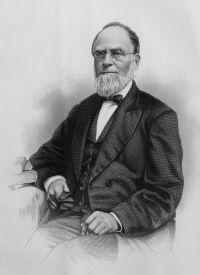
“ The multitude of the wounded was so great, that notwithstanding the utmost exertions of the surgeons, hour after hour of the long night lingered away, while thousands of the wounded and the dying bit the dust in their agony. ”
Sarah A. Palmer, The Story of Aunt Becky's Army-Life (1867)
“ We have twenty-five hundred wounded men in now, some with arms and legs off, and the most frightful mutilations. A captain and a corporal have died to-day. How our grave-yard fills up with the hero-dust. I have worn out my feet, as I did at Fredericksburg, for so many are wounded through the mouth, that all they eat has to be fed them by our hands. I had a letter from home, but hardly had time to be glad over it. ”
James Norman Hall, Kitchener's Mob: Adventures of an American in the British Army
“ I remember that march in the light of our later experiences, in the light of the official report of the total British casualties at Loos: sixty thousand British lads killed, wounded, and missing. Marching four abreast, a column of casualties miles in length. I see them plodding light-heartedly through the mud as they did on that gray September day, their faces wet with the rain, "an' a bloke standin' by the side of the road would think they was a-go'n' to a Sunday-school picnic." ”
Willard W. Glazier, Peculiarities of American Cities
“ Twelve persons were found dead, some of them bruised, discolored, and covered with blood, and others apparently suffocated to death. The list of injured was very much larger—how much will probably never be known, since many, assisted by their friends, returned to their homes without reporting their hurts. ”
Lord Ernest Hamilton, The First Seven Divisions
“ The advance at first was slow and cautious. When an army has for fourteen days been systematically falling back before an enemy, the only casualties within its ken are its own. It may be assumed—and with every right—that there are also killed and wounded among the pursuing force. But they are never seen. Only khaki-clad figures fill the field ambulances; only khaki-clad figures are left behind in the hospitals, and in the cemeteries and roadside trenches. The ever-swelling roll of "missing" is all on one side. ”
Robert Mackenzie, America: A history
“ On the Northern side, two million seven hundred thousand men bore arms at some period of the war. Of these there died in battle, or in hospital of wounds received in battle, ninety-six thousand men. There died in hospital of disease, one hundred and eighty-four thousand. Many went home wounded, to die among the scenes of their infancy. ”
Sarah A. Palmer, The Story of Aunt Becky's Army-Life (1867)
“ Hundreds of wounded lay around in every stage of exhaustion, waiting for transportation to Washington. I shall never forget the pale faces grimmed even then with the powder-smoke; eyes hollow, telling of long and intense agony, and patches of gore staining the uniform which bore the marks of swamp and thicket. ”
Sir James W. Barrett, The Australian Army Medical Corps in Egypt
“ The belligerents shall keep each other mutually informed of any internments and changes, as well as of admissions into hospital and deaths among the wounded and sick in their hands. They shall collect all the articles of personal use, valuables, letters, etc., which are found on the field of battle or left by the wounded or sick who have died in the medical establishments or units, in order that such objects may be transmitted to the persons interested by the authorities of their own country. ”
 Joseph Warren Keifer,
Slavery and four years of war
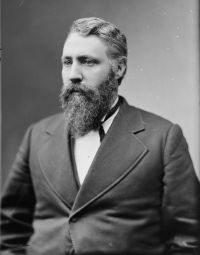
“ A soldier on the line of battle sees his comrades fall, indifferently generally, and continues to discharge his duty. The wounded get to the rear themselves or with assistance and are seen no more by those in battle line. Some of the medical staff in a well organized army, with hospital stewards and attendants, go on the field to temporarily bind up wounds, staunch the flow of blood, and direct the stretcher- bearers and ambulance corps in the work of taking the wounded to the operating surgeons at field-hospital. The dead need and generally receive no attention until the battle is ended. ”
 Theodore Roosevelt,
The Rough Riders
(1899)
“ If a man was shot through the heart, spine, or brain he was, of course, killed instantly; but very few of the wounded died—even under the appalling conditions which prevailed, owing to the lack of attendance and supplies in the field-hospitals with the army. ”
 Mrs. Humphry Ward,
Fields of Victory
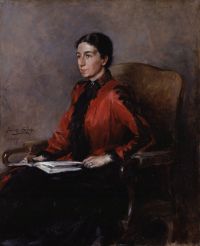
“ But through four long years scarcely a family in Great Britain and the Dominions that possessed men on the fighting fronts—and none were finally exempt except on medical or industrial grounds—but was either in mourning for, or in constant fear of death for one or more of its male members, whether by bullet, shell-fire or bomb, or must witness the return to them of husbands, brothers, and sons, more or less injured for life. The total American casualties are 264,000. ”
Sherwood Eddy,
With Our Soldiers in France
“ More than 6,000,000 lie wounded today in the military hospitals, not to speak of several times that number who have been patched up and sent back into the line to face death again, or have been rejected as unfit for further service, often left crippled or maimed, blinded, or deformed for life. ”
Sir Cusack P. Roney, Rambles on Railways
“ It appears also that 1866 exhibits a better report in this respect than any year since 1861, but it must not be forgotten that in American accidents [185] “persons wounded” means only those who were not “killed outright” at the time of an accident. The great hulk of the wounded die subsequently, and should in reality be included among the killed. Persons who only suffer from minor wounds and injuries are not reported. ”
Sir Charles Alexander Gordon, Recollections of Thirty-nine Years in the Army
“ The extent to which sickness prevailed within the city had become alarming. Accommodation and other necessities for the suffering were severely taxed; for although regular combats between the opposing forces were not frequent, the results from collisions of daily occurrence, and of almost continuous fire from the batteries of the enemy, were a large influx of wounded men. ”
Richard B. Irwin, History of the Nineteenth Army Corps
“ The proportion of killed and mortally wounded, already unusually heavy, was increased by the exposure and privations of the long day, while many, whom it was impossible to find or reach during the night, succumbed sooner or later during the next forty-eight hours. ”
Andrew Wynter, Curiosities of Civilization
“ We had during the last six months of the war a mortality among our sick not much more than among our healthy Guards at home, and a mortality among our troops in the last five months two-thirds only of what it is among our troops at home. ”
True Stories of the Great War, Volume 4…
“ But as I came nearer to them, saw them sitting there, with on one side of them the white coaches of the ambulance train and on the other, anchored close in, the great white hospital ship with its broad band of green, I knew these were wounded men sent home from France. The slightly wounded men, they call them. ”
