 Anatole France,
Thaïs
(1890)
Anatole France,
Thaïs
(1890)
“ Brother Paphnutius, I am but a miserable sinner, but I have found, in my long life, that the cenobite has no foe worse than sadness. ”
Anatole France,
Thaïs
(1890)
“ Brother Paphnutius, I am but a miserable sinner, but I have found, in my long life, that the cenobite has no foe worse than sadness. ”
P. V. N. Myers, A General History for Colleges and High Schools…
“ About the close of the fourth century the cenobite system was introduced into Europe, and in an astonishingly short space of time spread throughout all the western countries where Christianity had gained a foothold. Monasteries arose on every side, in the wilds of the desert and in the midst of the crowded city. The number that fled to these retreats was vastly augmented by the disorder and terror attending the invasion of the barbarians and the overthrow of the empire in the West. ”
S. Baring-Gould, The Lives of the Saints, Volume 01…
“ The cenobitical life superseded rapidly, and almost completely, the life of solitaries. Scarcely any man became a solitary until after having been a cenobite, and in order to meditate upon God during the last years of his life. Custom has, therefore, given the title of monks to cenobites alone. ”
 Harry Leon Wilson,
The Lions of the Lord: A Tale of the Old West
Harry Leon Wilson,
The Lions of the Lord: A Tale of the Old West
“ The Bishop and Keaton came up. They brought with them the makeshift coffin. They had cut a log, split it, and stripped off its bark in two half-cylinders. They led him to the other side of the wagon, out of sight. Then they placed the strips of bark around the body, bound them with hickory withes, and over the rough surface the women made a little show of black cloth. For the burial they could do no more than consign the body to one of the waves in the great billowy land sea about them. They had no tombstone, nor were there even rocks to make a simple cairn. ”
Samuel Langhorne Clemens, Sketches by Mark Twain (1879)
“ We have got to move or be content to see our effects wasted away and utterly destroyed. Now, you will hardly believe it, but it is true, nevertheless, that there isn't a single coffin in good repair among all my acquaintance—now that is an absolute fact. I do not refer to low people who come in a pine box mounted on an express waggon, but I am talking about your high toned, silver mounted burial-case, your monumental sort, that travel under black plumes at the head of a procession and have choice of cemetery lots—I mean folk like the Jarvises, and the Bledsoes and Burlings, and such. ”
 Isabella Lucy Bird,
Chinese pictures: notes on photographs
(1900)
Isabella Lucy Bird,
Chinese pictures: notes on photographs
(1900)
“ In such cases, where the friends are able, every care is taken of them, incense being daily burned before them. It was no uncommon thing for Mrs. Bishop, on her journey in Sze Chuan, to have to sleep in a room where a coffin was stored, waiting the day of its interment, incense burning and other religious rites being daily performed in front of it. To prevent mischief owing to the retention of bodies above ground for so long a time, the coffins are built of very thick wood, the bodies are placed in lime, the joints of the coffin are cemented, and the whole covered with varnish. ”
 Catharine Maria Sedgwick,
A New England Tale
(1822)
Catharine Maria Sedgwick,
A New England Tale
(1822)
“ Poor Bet was sure to follow in every funeral procession, and sometimes she would thrust herself amidst the mourners, and say, "the dead could not rest in their graves, if they were not followed there by one true mourner." She has been seen to spring forward when the men were carelessly placing the coffin in the grave with the head to the east, and exclaim, "are ye heathens, that ye serve the dead thus? ”
 Alexandre Dumas,
Camille (La Dame aux Camilias)
Alexandre Dumas,
Camille (La Dame aux Camilias)
“ When the coffin was uncovered the inspector said to the grave-digger: “Open it.” They obeyed, as if it were the most natural thing in the world. The coffin was of oak, and they began to unscrew the lid. The humidity of the earth had rusted the screws, and it was not without some difficulty that the coffin was opened. A painful odour arose in spite of the aromatic plants with which it was covered. “O my God, my God!” murmured Armand, and turned paler than before. Even the grave-digger drew back. A great white shroud covered the corpse, closely outlining some of its contours. ”
Paul Ambroise Bigandet, The Life or Legend of Gaudama, the Buddha of the Burmese…
“ When the people are poor and cannot afford to buy gold for the above purpose, a piece of yellow cloth is considered as the most suitable substitute. The body, thus attired, is laid in a very massive coffin, made, not with planks, but of a single piece of timber hollowed in the middle for receiving the earthly frame of the deceased. A splendid cenotaph, raised in the centre of a large building erected for the purpose, is prepared to support a large chest wherein the coffin is deposited. ”
 Charles Lamb,
The Works of Charles Lamb in Four Volumes…
Charles Lamb,
The Works of Charles Lamb in Four Volumes…
“ The coffin nothing but a few naked planks coarsely put together,—the want of a pall (that decent and well-imagined veil, which, hiding the coffin that hides the body, keeps that which would shock us at two removes from us) , the colored coats of the men that are hired, at cheap rates, to carry the body,—altogether give the notion of the deceased having been some person of an ill life and conversation, some one who may not claim the entire rites of Christian burial,—one by whom some parts of the sacred ceremony would be desecrated if they should be bestowed upon him. ”
 James George Frazer,
Popular Science Monthly
(1885)
James George Frazer,
Popular Science Monthly
(1885)
“ Special precautions are also taken by the Chinese during the actual passage of the funeral; in addition to the usual banging of gongs and popping of crackers, an attempt is made to work on the cupidity of the demons. With this view bank-notes are scattered, regardless of expense, all along the road to the grave. The notes, I need hardly observe, are bad, but they serve the purpose, and, while the ingenuous demons are engaged in the pursuit of these deceitful riches, the soul of the dead man, profiting by their distraction, pursues his way tranquilly behind the coffin to the grave. ”
Various, The Catholic World, Vol. 01, April to September…
“ On such occasions friends and relatives flock from afar to the "funeral baked meats;" for a handsome banquet forms an essential part of the otherwise melancholy details. From twenty to thirty bearers convey the corpse to its last abode, amid the deafening discord of drums, cymbals, and tom-toms. The procession moves with slow and measured step, and on the coffin is placed a shell filled with water, which enables the master of the ceremonies to ascertain that the coffin is borne with becoming steadiness. Mourning is worn for twenty-seven months for a father, mother, or husband ”
 Washington Irving,
The Sketch-Book of Geoffrey Crayon
Washington Irving,
The Sketch-Book of Geoffrey Crayon
“ Preparations were made to deposit the coffin in the earth. There was that bustling stir, which breaks so harshly on the feelings of grief and affection; directions given in the cold tones of business; the striking of spades into sand and gravel; which, at the grave of those we love, is, of all sounds, the most withering. The bustle around seemed to waken the mother from a wretched revery. She raised her glazed eyes, and looked about with a faint wildness. As the men approached with cords to lower the coffin into the grave, she wrung her hands, and broke into an agony of grief. ”
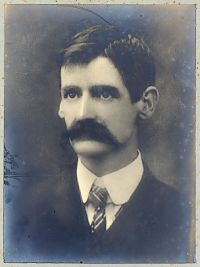 Henry Lawson,
The Union Buries Its Dead
(1893)
Henry Lawson,
The Union Buries Its Dead
(1893)
“ Presently someone said: “There’s the Devil.” I looked up and saw a priest standing in the shade of the tree by the cemetery gate. The hearse was drawn up and the tail-boards were opened. The funeral extinguished its right ear with its hat as four men lifted the coffin out and laid it over the grave. The priest—a pale, quiet young fellow—stood under the shade of a sapling which grew at the head of the grave. He took off his hat, dropped it carelessly on the ground, and proceeded to business. I noticed that one or two heathens winced slightly when the holy water was sprinkled on the coffin. ”
Alexandre Dumas,
Celebrated Crimes (Complete)
“ Quennebert conducted his interesting bride to the altar, she hung with ornaments like the shrine of a saint, and, beaming all over with smiles, looked so ridiculous that the handsome bridegroom reddened to the roots of his hair with shame. Just as they entered the church, a coffin, on which lay a sword, and which was followed by a single mourner, who from his manners and dress seemed to belong to the class of nobles, was carried in by the same door. The wedding guests drew back to let the funeral pass on, the living giving precedence to the dead. ”
P. L. Jacob, Military and religious life in the Middle Ages and at the period of the Renaissance (1870)
“ Thus, all the coffins which contained the bodies of martyrs, nobles, prelates, or kings, were exposed to the view of the faithful, and served for tombs, so that these illustrious persons were not, in the true sense of the term, interred. The stone chest in which the body was placed being both a coffin and a funeral monument, was not hidden beneath a tombstone, but remained visible in a church—not in a sepulchral cave, but above ground, often, indeed, raised upon columns. ”
“ Thought the teacher to himself: “The jewels with which they adorn the dead on their journey shine by night. Perhaps there are gems in the coffin!” And greed awoke in his heart, and he forgot that a coffin is a resting-place of the dead and should be respected. He took up a large stone, broke the cover of the coffin, and bent over to look more closely. And there in the coffin lay a youth. His face was as white as paper, he wore a mourning turban on his head, his body was wrapped in hempen garments, and he wore straw sandals on his feet. ”
James Greenwood, Stirring scenes in savage lands (1865)
“ The burial generally takes place the day after death. As many friends as can be present in time attend. Every one brings a present; and the day after the funeral, these presents are all so distributed again as that every one goes away with something in return for what he brought. Formerly, the body was buried without a coffin, except in the cases of chiefs; but now it is quite common to cut off the ends of some canoe belonging to the family, and make a coffin of it. ”
P. L. Jacob, Military and religious life in the Middle Ages and at the period of the Renaissance (1870)
“ At present we have considered only the different modes of burial during the Middle Ages, but we may now proceed to speak of the coffin and the tomb. No work of art is more curious, or fuller of historical and picturesque information, than the funeral monuments of all ages. But it must be remembered that there is a marked distinction between the coffin and the tomb, one being the receptacle of the dead, the other only a monument raised to mark the spot of ground in which the coffin has been interred. ”
Joseph Cullen Ayer, A Source Book for Ancient Church History
“ In the following passage Basil points out the advantages of the cenobitic life over the solitary or hermit life. It is condensed as indicated. Questio VII. Since your words have given us full assurance that the life [i.e., the cenobitic life] is dangerous with those who despise the commandments of the Lord, we wish accordingly to learn whether it is necessary that he who withdraws should remain alone or live with brothers of like mind who have placed before themselves the same goal of piety. ”
 Louisa May Alcott,
The Mysterious Key and What It Opened
Louisa May Alcott,
The Mysterious Key and What It Opened
“ Standing in the tomb where the air was close and heavy, the pale glimmer of the lantern showed piles of moldering coffins in the niches, and everywhere lay tokens of decay and death. The man drew his hat lower over his eyes, pulled the muffler closer about his mouth, and surveyed the spot with an undaunted aspect, though the beating of his heart was heard in the deep silence. Nearest the door stood a long casket covered with black velvet and richly decorated with silver ornaments, tarnished now. ”
Sarah A. Palmer, The Story of Aunt Becky's Army-Life (1867)
“ I found with infinite search a scrap of lumber, and a rude coffin was made for him also. When it was finished, and we went to lay the body within it, what was my horror to find it gone! I hastened to the graveyard, resolved to have it exhumed in case of burial, and found them standing beside the remains, about to offer up a prayer for his repose. I said, "What is a prayer to a promise?" when the Chaplain argued that others had no coffins—it was unwise to establish such precedents, and he wished to conclude the ceremony as quickly as possible. ”
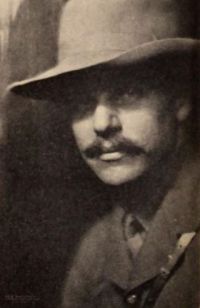 E. Alexander Powell,
Where the Strange Trails Go Down
E. Alexander Powell,
Where the Strange Trails Go Down
“ If the relatives are too poor to afford the expenses incident to cremation, they bury the body, but exhume it for burning when their financial condition permits. On the day of the cremation, which is usually fixed by an astrologer, the remains are transferred from the jar to a wooden coffin and carried with much pomp to the meru, or place of cremation. When the deceased is of royal or noble blood the meru is frequently a magnificent structure, sometimes costing many thousands of dollars, built for the purpose and torn down when that purpose has been served. ”
Joseph Anderson, Scotland in Pagan Times; The Iron Age
“ In the district of Morvan, says M. Jules Chevrier, the peasants even in our own days continue the custom of using funeral vases. They throw upon the coffin, when it is lowered into the grave, a porringer or some such dish of earthenware which had been ordinarily used by the defunct; and in certain parts of La Bresse they still throw into the grave the holy water vessel which had stood at the feet of the defunct previous to the ceremony of inhumation. ”
“ The day is fine and a ride to the out-of-town cemetery pleasant, and (to them) inexpensive; they whose eyes scarce rested with interest on the living form, gaze ceremoniously and curiously on the dead; the widow’s tears are counted, the mourning dresses of herself and children scrutinized; the prayer that always falls so immeasurably short of what critical ears demand, is said; a great silence—then a rustling—bustling—whispering—then the coffin is borne past the widow, who sees it through a mist of tears ”
Leigh North, Predecessors of Cleopatra
“ The face on the coffin was often a likeness, and the coffin was painted inside and out with figures of protecting gods. Another coffin, more coarsely made and with less of detail in its paintings, was placed over the first to preserve it. A lady’s coffin sometimes contained spoons with female heads and various toilette articles, mirrors, pins and cases for henna, stibium and other cosmetics, while miniature figures, the little “ushebti,” like troops of slaves, mounted guard. ”
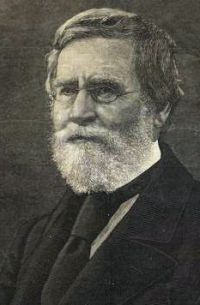 Jacob Abbott,
Rollo on the Rhine
Jacob Abbott,
Rollo on the Rhine
“ As soon as he got to the bottom of the stairs, he passed along a narrow passage way between two rows of open coffins, placed close together side by side, and in each coffin was a dead man, his flesh dried to a mummy, his clothes all in tatters, and his face, though shrivelled and dried up, still preserving enough of the human expression to make the spectacle perfectly horrid. ”
Hugo Blümner, The Home Life of the Ancient Greeks
“ There were various ways of burying the dead. If they were placed in a grave it was customary to make use of a coffin, which was let down into the grave by the bearers. We see this represented on the vase picture, Fig. 110. Two men, who look like barbarian slaves or men of the lower classes, are standing in the grave and holding up their hands in order to receive the coffin, which is carefully let down by two men of similar appearance; on the right and left stand weeping women. ”
 Louise Jordan Miln,
When We Were Strolling Players in the East
Louise Jordan Miln,
When We Were Strolling Players in the East
“ At the front of the funeral procession walk the noisy, musicless musicians; then come men (they may be friends, they may be coolies) bearing the insignia of the dignity of the dead, if he had any. Next walk more men carrying figures of animals, idols, umbrellas, and blue and white streamers. After them come men carrying pans of perfume. Just before the coffin walk bonzes—Chinese priests. Over the coffin a canopy is usually carried. The casket is borne by about a score of men. Immediately after the coffin walk the children of the deceased. ”
 James Branch Cabell,
The Cords of Vanity: A Comedy of Shirking
James Branch Cabell,
The Cords of Vanity: A Comedy of Shirking
“ Oh, their coffins lie everywhere beneath our feet, thick as raisins in a pudding, whithersoever we tread. Yet every one of these poor relics was once a boy or a girl, and wore a body that was capable of so much pleasure! To-day, unused to gain the fullness of that pleasure, and now not ever to be used, they lie beneath us, in their coffins, these white, straight bodies, like swords untried that rust in the scabbard. ”
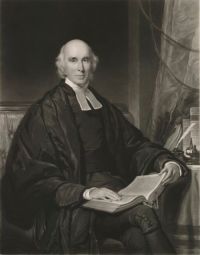 John Kenrick,
Roman Sepulchral Inscriptions
John Kenrick,
Roman Sepulchral Inscriptions
“ In case of the death of one who had paid his subscription regularly, three hundred sesterces were allotted for his funeral expenses, out of which, however, fifty were to be set apart for distribution at the cremation of the body. The funeral was to be a walking one. If any one died more than twenty miles from Lanuvium, and his death was announced, three delegates from the college were to repair to the place where he had died to perform his funeral, and render an account to the people. ”

