
“ The scrambling system, called the "cipher." And finally there's the key: secret stuff you feed into the cipher along with the cleartext to make ciphertext. It used to be that crypto people tried to keep all of this a secret. Every agency and government had its own ciphers and its own keys. The Nazis and the Allies didn't want the other guys to know how they scrambled their messages, let alone the keys that they could use to descramble them. ”
Ciphertext
Definition and stakes
The theme of “ciphertext” has been addressed by authors such as Cory Doctorow. It is often associated with terms like cipher, cryptography, alphabet, encryption and message.
Quotes about “ciphertext”
Helen Gaines, Elementary cryptanalysis (1939)
“ Even a basically weak cipher, in the hands of an expert, can be made to serve its purpose; and the strongest can be made useless when improperly used.In the present text, we are likely to be found looking at ciphers largely from a military angle, which, apparently, has a more general interest than any other. In time of war, the cryptographic service, that is, the encipherment and transmitting service, is suddenly expanded to include a large number of new men, many of whom know nothing whatever of cryptanalysis, or the science of decryptment. ”
Helen Gaines, Elementary cryptanalysis (1939)
“ But, before leaving the simple for the complex, we must not overlook the celebrated key-phrase cipher, which discards the idea of multiple substitutes in favor of multiple originals! This cipher, shown in Fig. 79, is said to have been used for serious purposes. Its only difference from the ordinary simple substitution lies in the nature of the cipher alphabet, which must be a plaintext sentence, or phrase, containing the necessary 26 letters. The mysterious pronouncement, “One who has passed on is among us,” is the earliest example of which the writer has any recollection ”
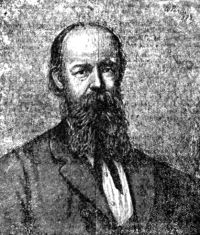 John Eglington Bailey,
1911 Encyclopædia Britannica
(1911)
John Eglington Bailey,
1911 Encyclopædia Britannica
(1911)
“ CRYPTOGRAPHY (from Gr. κρύπτος, hidden, and γράφειν, to write) , or writing in cipher, called also steganography (from Gr. στεγάνη, a covering) , the art of writing in such a way as to be incomprehensible except to those who possess the key to the system employed. The unravelling of the writing is called deciphering. Cryptography having become a distinct art, Bacon (Lord Verulam) classed it (under the name ciphers) as a part of grammar. Secret modes of communication have been in use from the earliest times. ”
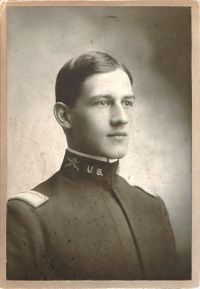 Parker Hitt,
Manual for the Solution of Military Ciphers
Parker Hitt,
Manual for the Solution of Military Ciphers
“ Other tables, such as frequency of initial and final letters of words, might be of value but the common practice is to put cipher text into groups of five or ten letters each and eliminate word forms. This is almost a necessity in telegraphic and radio communication to enable the receiving operator to check correct receipt of a message. He must get five letters, neither more nor less, per word or he is sure a mistake has been made. There is little difficulty, as a rule, in restoring word forms in the deciphered message. ”
Helen Gaines, Elementary cryptanalysis (1939)
“ Even book cipher, notably secure, however unwieldy in use, has been decrypted because of the encipherer’s very human tendency to use a substitute more than once rather than search for a new one among the hundreds at his disposal.In book cipher, any agreed book, or other written or printed document, will serve as a key-volume, so long as it is one that is sure to be at hand when wanted. Words, or letters, can then be represented by a series of numbers usually indicating: page, (column) , line, serial position. One letter or one word may thus have a substitute such as 20-1-4-32. ”
Parker Hitt,
Manual for the Solution of Military Ciphers
“ If the whole of a telegraphic or radio message is in cipher, it is highly probable that the preamble, “place from,” etc., are in an operators’ cipher and are distinct from the body of the message. As these operators’ ciphers are necessarily simple, an attempt should always be made to discover, by methods of analysis to be set forth later, the exact extent of the operator’s cipher and then to decipher the parts of the messages enciphered with it.In military messages, we almost invariably find the language of the text to be that of the nation to which the military force belongs. ”
 Howard Roger Garis,
Larry Dexter, Reporter; Or, Strange Adventures in a Great City
Howard Roger Garis,
Larry Dexter, Reporter; Or, Strange Adventures in a Great City
“ Two heads are better than one, any day.”Larry puzzled over the paper for several minutes, but was obliged to admit that the more he looked at it the more of a puzzle it became.“What sort of a cipher is it, anyhow?” he asked. “What is a cipher? I’ve often heard of them, but I never saw one before.”“A cipher is merely a message from one person to another,” said Mr. Newton. “It is written in such a way as to prevent any third person, in whose hand it may fall, from learning the contents. Each of the persons in the secret has a key to the cipher. ”
Helen Gaines, Elementary cryptanalysis (1939)
“ The subject which we are about to study is the analysis and solution of cipher, though not including code, which is a very special form of cipher demanding something more than elementary knowledge; nor shall we enter at all into the subject of invisible inks, certainly a most important aspect of secret writing, but belonging to the province of chemistry rather than to that of cryptanalysis. Cipher machines, also, are not within our present scope. ”
Parker Hitt,
Manual for the Solution of Military Ciphers
“ In other words, the average man, when he sits down to evolve a cipher, has nothing to improve upon; he invents and there is no one to tell him that his invention is, in principle, hundreds of years old. The ciphers of the Abbé Tritheme, 1499, are the basis of most of the modern substitution ciphers.In view of these facts, no message should be considered indecipherable. Very short messages are often very difficult and may easily be entirely beyond the possibility of analysis and solution, but it is surprising what can be done, at times, with a message of only a few words. ”
Helen Gaines, Elementary cryptanalysis (1939)
“ Any one of the multiple-alphabet ciphers may change keys at each new group instead of with each consecutive letter. As a rule, this kind of encipherment is never found except in connection with very simple ciphers, and the intact plaintext groups, each one standing on its own key-line, are readily discovered by the decryptor who takes the precaution of cutting out a segment from his cryptogram and “running down the alphabet,” first treating the original letters and then, if necessary, their complements. ”
French Strother, Fighting Germany's Spies
“ Now code should not be confused with cipher. When some Hindus in New York, subsidized by Berlin, wished to write their plans to some other Hindus in San Francisco, concerning their [135] common purpose of fomenting revolution against British rule in India, they wrote out messages that consisted entirely of groups of Arabic numerals.Those messages were in cipher.To any one but an expert, many code messages look simple and harmless, and cipher messages usually look unintelligible and suspicious. Yet, oddly enough, the cipher messages are by far the easier to make out. ”
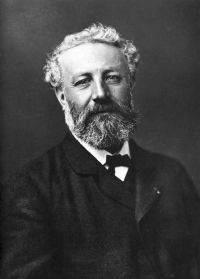 Jules Verne,
Eight Hundred Leagues on the Amazon
Jules Verne,
Eight Hundred Leagues on the Amazon
“ On what principle had these letters been arranged? He who held the paper was alone able to tell. With such cipher language it is as with the locks of some of our iron safes—in either case the protection is the same. The combinations which they lead to can be counted by millions, and no calculator’s life would suffice to express them. Some particular “word” has to be known before the lock of the safe will act, and some “cipher” is necessary before that cryptogram can be read. He who had just reperused the document was but a simple “captain of the woods.” ”
Parker Hitt,
Manual for the Solution of Military Ciphers
“ The Playfair cipher may be recognized by the following points: (a) It is a substitution cipher, (b) it always contains an even number of letters, (c) when the cipher is divided into groups of two letters each, no group consists of the repetition of the same letter as SS or BB, (d) there will be recurrence of pairs throughout the message, following in a general way, the frequency table of digraphs of pairs, (e) in short messages there may be recurrence of cipher groups representing words or even phrases, and these will always be found in long messages. ”
Helen Gaines, Elementary cryptanalysis (1939)
“ Colonel Parker Hitt, in his Manual for the Solution of Military Ciphers, shows the same series of letters written into forty different blocks, always beginning at one of the four corners.Rectangular transposition, when used as cipher and not simply as a puzzle, requires that one dimension of the oblong be fixed, the other dimension being entirely dependent on the length of the message to be conveyed. In the figure, the pre-arranged width of the block, called its key-length, was 5, and the filling of the block required 8 complete units. ”
Parker Hitt,
Manual for the Solution of Military Ciphers
“ To be successful in solving transposition ciphers, one should constantly practice reading backward and up and down columns, so that the common combinations of letters are as quickly identified when seen thus as when encountered in straight text. Combinations like EHT, LLIW, ROF, DNA, etc., should be appreciated immediately as common words written backward.A study of the table of frequency of digraphs or pairs is also excellent practice and such a table should be at hand when a transposition cipher is under consideration. ”
Various, Graham's Magazine, Vol. XIX, No…
“ Experience shows that the most cunningly constructed cryptograph, if suspected, can and will be unriddled.An unusually secure mode of secret intercommunication might be thus devised. Let the parties each furnish themselves with a copy of the same edition of a book—the rarer the edition the better—as also the rarer the book. In the cryptograph, numbers are used altogether, and these numbers refer to the locality of letters in the volume. For example—a cipher is received commencing, 121-6-8. ”
Helen Gaines, Elementary cryptanalysis (1939)
“ Here, however, the reconstruction of the key simultaneously with the identification of substitutes is a very important adjunct to solving; the cipher-alphabet, being pure plaintext, can often be built up long in advance of solution. It might be added that this cipher, with or without word-divisions, is readily distinguished from all others by the make-up of its frequency count, which, as a rule, consists chiefly of the high-frequency letters in unusual numbers. ”
Helen Gaines, Elementary cryptanalysis (1939)
“ When this cipher is used for puzzle purposes, as we find it in our newspapers and popular magazines, the substitutes (which are invariably letters of the alphabet) may be chosen at random, and the cryptograms must follow certain arbitrary rulings which are designed to make them “fair”: Word-divisions and punctuation must follow religiously those of the original text; a certain minimum of length must be provided; no letter may act as its own substitute; foreign words are not permissible ”
Parker Hitt,
Manual for the Solution of Military Ciphers
“ If the enemy can get a fine wire within one hundred feet of a buzzer line or within thirty feet of a telegraph line, the message can be copied by induction. Messages passing over commercial telegraph lines, and even over military lines, can be copied by spies in the offices. On telegraph lines of a permanent nature it is possible to install high speed automatic sending and receiving machines and thus prevent surreptitious copying of messages, but nothing but a secure cipher will serve with other means of communication. ”
Parker Hitt,
Manual for the Solution of Military Ciphers
“ A message may be re-enciphered two or more times using a different key word each time or it may be enciphered by one method and re-enciphered by another method, using the same or a different key word. Complicated cipher systems requiring the memorizing of, or reference to, numerous rules have been devised for special purposes. Such systems usually fail utterly if there are any errors in transmission and it will be seen later that such errors are very common. ”
Parker Hitt,
Manual for the Solution of Military Ciphers
“ Whenever a frequency table can be prepared, [17] such a table will give the best evidence for this purpose.All work in enciphering and deciphering messages and in copying ciphers should be done with capital letters. There is much less chance of error when working with capitals and, with little practice, it is just about as fast. An additional safeguard is to use black ink or pencil for the plain text and colored ink or pencil for the cipher. A separate color may be used for the key when necessary. ”
Various, Graham's Magazine, Vol. XIX, No…
“ Thus the location of each cipherical letter must be considered in connexion with the character itself, in order to determine its exact signification.We say that some pre-concerted order of this kind is necessary, lest the cipher prove too intricate a lock to yield even to its true key. But it will be evident, upon inspection, that our correspondent at Stonington has inflicted upon us a cryptograph in which no order has been preserved; in which many characters, respectively, stand, at absolute random, for many others. ”
Helen Gaines, Elementary cryptanalysis (1939)
“ A key-word, treated in the same way, is repeated often enough to pair one key-number with each message-number, and the final cryptogram is formed by adding these pairs of numbers. Decipherment, of course, will be the subtraction of key-numbers from the finished cryptogram and the resubstitution of letters. We have, then, another periodic cipher, not essentially different from those already seen. Any number in the checkerboard can become a key, to be applied periodically at some given interval, and thus may govern one of the 25 possible cipher alphabets. ”
Helen Gaines, Elementary cryptanalysis (1939)
“ Charles I of England is said to have used a cipher alphabet in which letters were represented by a series of dots, placed in certain positions with reference to the line of writing. An endless number of queer symbols is met with in fiction, such as the use of the little dancing men by Sir Arthur Conan Doyle. Cipher alphabets of the nature mentioned do not produce ciphers in any way different from those produced by substitution with letters and numbers ”
Helen Gaines, Elementary cryptanalysis (1939)
“ The term cipher implies a method, or system, of secret writing which, generally speaking, is unlimited in scope; it should be possible, using any one given cipher, to transform any plaintext whatever, regardless of its length and the language in which it is written, into a cryptogram, or single enciphered message. ”
Arthur J. Rees, The Mystery of the Downs
“ The old man has worked on what is called the keyword cipher, which is the most difficult of all ciphers to discover. This system consists of various arrangements, more or less elaborate, of tables of letters, set down in the form of the multiplication table, and from the table agreed upon messages are constructed whose solution depends on the use of some preconcerted keyword. The most scientific adaptation of this principle was constructed by Admiral Sir Francis Beaufort. In his system the letters of the alphabet are set down one under another from A to Z, then A is added to the line. ”
Parker Hitt,
Manual for the Solution of Military Ciphers
“ After having decided that a cipher belongs to the transposition class, it remains to decide on the variety of cipher used. As, by definition, a transposition cipher consists wholly of characters of the original message, rearranged according to some law, we may, in general, say that such a cipher offers fewer difficulties in solution than a substitution cipher. A transposition cipher is like a picture puzzle ”
Helen Gaines, Elementary cryptanalysis (1939)
“ Decryptment, too, can parallel that of the Vigenère: The period of a cryptogram can be found through repeated sequences, or, in their absence, through repeated single numbers, and individual frequency counts can be taken on the several alphabets of the period. If the arrangement of letters in the checkerboard is that of the figure, or any other strictly alphabetical one to which the order of the numbers can be adjusted, these frequency counts will all follow the graph of the normal alphabet, with allowance made for the missing letter. ”
Parker Hitt,
Manual for the Solution of Military Ciphers
“ The office work on a cipher under examination should be done on paper of a standard and uniform size. Printed forms containing twenty-six ruled lines and a vertical alphabet are convenient and save time in preparation of frequency tables. Any new cipher methods which are found to be in use by the enemy should, when solved, be communicated to all similar offices in the Army for their information. ”
