“ Egg production is undoubtedly the most promising and profitable branch of the poultry industries. The chief reason that this is true is to be found in the fact that the most difficult feature in chicken growing is the rearing of young stock through the brooding period. Now, as the eggs laid by a hen are worth several times the value of her carcass, it stands to reason that once we succeed in rearing pullets, egg farming must be the most profitable business to engage in. ”
Egg production
Definition and stakes
The theme of “egg production” has been addressed by authors such as Edward Corning, Milo Hastings, Richard Kearton, Woman's Institute of Domestic Arts and Sciences and John H. Robinson. It is often associated with terms like hen, chicken, fertility, poultry and water.
Quotes about “egg production”
Edward Corning, The Corning egg farm book by Corning himself (1912)
“ In Spring eggs run strongly fertile, and in every way Nature seems to lend herself to successful hatching, and the starting of the young chick properly on its journey.The man, however, who is operating an egg farm, and has made contracts for the delivery of a continuous supply of eggs to exacting customers, cannot well afford to wait until these months to hatch in, for it is necessary for him to have a large number of pullets reaching maturity and beginning to lay, [77] before his last year’s pullets reach the moulting period and stop egg production. ”
“ Upon the whole, I think that the present case of the trap-nest method of increasing egg production stands very much as it is has always stood, being a commendable thing for small breeders who could afford the time, but not practical in a large way, except at experiment stations. ”
Various, Popular Science Monthly (1910)
“ It is further shown that there is no evidence that the selective breeding practiced has improved the strain in respect to egg production. On the contrary, the data show that (a) the mean egg production has diminished during the experiment; (b) the variability in egg production has remained unchanged, and (c) in the last years of the experiment relatively slight environmental changes caused very marked changes in the flock productiveness. ”
James P. Boyd, Triumphs and Wonders of the 19th Century…
“ The breeder’s art has been most successfully brought to bear in stimulating the function of egg production. Not many years ago, an average yield of 125 to 150 eggs annually from the hens of even a small flock was considered all that it was possible to obtain, but at present there are varieties which may be relied upon to produce more than 200 eggs annually. ”
Edward Corning, The Corning egg farm book by Corning himself (1912)
“ Over and over again it is stated in articles that large quantities of animal food and rich meals in the mash are very stimulating and wear the hen out. This is a great mistake. When the hen is being supplied [146] with the proper ingredients for a large egg production she is not being stimulated, but rather helped and sustained in the natural way.“Egg Foods” Kill LayersOn the market, to-day, is found an ever increasing number of preparations advertised as “egg foods”; “foods” warranted to produce eggs without fail and in record breaking quantities. ”
Lewis Wright, 1911 Encyclopædia Britannica (1911)
“ Feeding and Egg-production.—These aspects of poultry culture are closely connected, and in both such advances have been made as almost amount to a revolution. The breeders of the United States have led the way, and, though it had first been taught in England, were the first to practise generally the systematic breeding, year after year, from the best layers only. It had always been known that some hens would lay from 150 to 200 eggs in a year whilst many did not exceed 100, and some laid much less. ”
Edward Corning, The Corning egg farm book by Corning himself (1912)
“ We started to feed our breeding pens with mustard in the Mash just at the time we desired them to come into eggs, and they responded at once. That is to say, after the Mash containing mustard had been fed to them for about a week, the egg output increased daily, and not only did it increase, but the high marks [150] which were reached were steadily maintained. Four thousand layers have been fed mustard in their Mash daily, and after months of this feeding the flocks have never been in better health, and the egg production has never been equaled even on The Corning Egg Farm. ”
Edward Corning, The Corning egg farm book by Corning himself (1912)
“ If fed in sufficient quantities to actually stimulate the egg organs of the hen it must in a short time kill her, but if it should not have this effect, it certainly does put her in such a condition that she is worthless as a layer. It must be constantly borne in mind that the production of eggs is not a question of stimulation, but is the putting of the hen into a perfect condition of health, keeping her in that condition, and supplying her with foods which are egg making substances, and which nourish her completely, and allow a surplus to be turned into eggs. ”
Edward Corning, The Corning egg farm book by Corning himself (1912)
“ If a dish of putrid beef were placed on the table before people they would shrink back in horror, yet they will eat eggs which have been produced by hens which have been fed on these identical ingredients, apparently entirely oblivious of the fact that the hen performs no miracle in the production of an egg, but simply manufactures the egg from the materials, whatever they may be, which she gathers into her system. ”
“ They appear to be vigorous when young, but running about as they do with other hens, any comparison as to egg production is mere guesswork. The ordinary farm poultry could be greatly improved by a more careful selection of eggs for setting. Eggs with soft shells, with a ring or crust on the shells, or with an uneven or rough surface, should be rejected. Very large eggs containing a double yolk are frequently set in hope of producing a very large chicken, two chickens, or a curious monstrosity. Such eggs very rarely hatch. ”
Various, Popular Science Monthly (1912)
“ Egg production involves certain definite and rather severe metabolic demands, which under wild conditions will not always, or even often be met. Further, as has been especially emphasized by Herrick, egg-laying in wild birds is simply one phase of a cyclical process. If the cycle is not disturbed in any way the egg production is simply the minimum required for the perpetuation of the race. If, however, the cycle is disturbed, as, for example, by the eggs being removed from the nest as fast as they are laid, a very considerable increase in the total number of eggs produced will result. ”
Woman's Institute of Domestic Arts and Sciences, Woman's Institute Library of Cookery…
“ That eggs as an article of food are growing in importance is indicated by the fact that their production has come to be a large and widely distributed industry. Owing to the private consumption and sale of eggs, an accurate statement of the number of eggs produced is difficult to give. Still, in a report, the United States Bureau of Agriculture estimated the value of the yearly egg production at something more than three million dollars, with an allowance of about 210 eggs, or 17-1/2 dozen, per capita each year, or 4 eggs a week for each person. ”
“ The number of eggs, size and color of eggs, rapid growth, ready fattening powers, quality of meat and general characteristics, are all matters of inheritance, and if proper means are taken to select the desirable individuals all such characteristics can be changed at the will of the breeder. It is a fact, however, often overlooked, that the more traits for which one selects, the slower will be progress. For illustration: If in breeding for egg production, one-half the good layers are discarded for lack of fancy points, the progress will be just half as rapid. ”
“ The tests of pullets hatched from hens are better signs of the hen's value as a breeder than is her own record. It has been surmised that a hen which lays heavily will not lay eggs containing vigorous germs. So far as the writer's experience has gone, the laying of infertile eggs is a family or individual trait not particularly related to the number of eggs laid. When we have bred from the best layers and have raised our average egg yielder to a higher level, the question arises as to whether the strain will permanently maintain the high yield or drop back to the former rate of production. ”
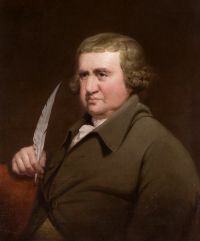 Erasmus Darwin,
The Botanic Garden, a Poem in Two Parts…
Erasmus Darwin,
The Botanic Garden, a Poem in Two Parts…
“ The analogy between seeds and eggs has long been observed, and is confirmed by the mode of their production. The egg is known to be formed within the hen long before its impregnation; C.F. Wolf asserts that the yolk of the egg is nourished by the vessels of the mother, and that it has from those its arterial and venous branches, but that after impregnation these vessels gradually become impervious and obliterated, and that new ones are produced from the fetus and dispersed into the yolk. ”
 Edward J. Wickson,
One Thousand Questions in California Agriculture Answered
Edward J. Wickson,
One Thousand Questions in California Agriculture Answered
“ Too much green feed, especially green feed that springs from wet, soggy ground, will sometimes make the eggs watery. Or if you are feeding more mash feed than dry grain, it will have that tendency. Some people claim that the feed a hen eats does not affect the egg at all; but if it does not, why do eggs differ in color and quality? Eggs that are laid by hens fed wholly on wheat, or the by-products of wheat, such as bran, shorts or middlings, all have a pale yolk. ”
Mrs. Lance Rawson, Australian enquiry book of household and general information… (1894)
“ Almost every hen-wife has her own special way of preserving her surplus eggs. For my own part I have tried several, but always found that the most simple was the best. Here are one or two sent me from an egg and poultry district:—Make a pickle of 1 bushel of stone lime, 4 lbs. of coarse salt, and about 60 gals, of water. Slake the lime first with a little of the water, and when all is mixed leave it till the lime has settled and the solution is clear. Draw off the water very carefully into a cask, or whatever you mean to put the eggs in. ”
John H. Robinson, Our Domestic Birds: Elementary Lessons in Aviculture
“ For hundreds of years it had been quite a common practice to preserve eggs in various ways. By packing them in salt, or in salt brine, or in limewater, eggs may be kept in very good condition for several months, and sometimes for nearly a year. As limed and pickled eggs were regularly sold in the markets, every dealer in eggs at once saw the possibilities of cold storage as a factor in the market egg trade. Wherever there was a storage house, dealers began to buy eggs when prices were low, and store them to sell when prices were high. ”
published by the National Geographic Society, The National Geographic Magazine…
“ Through increased attention to poultry on farms, it is possible to add quickly and materially to the food supply. Because of the importance of an increased supply of eggs, under present exigencies, farmers should not market hens of the egg breeds, such as the leghorns, which are less than three years old, or of the larger breeds which are less than two years old. ”
Frank Schloesser, The Cult of the Chafing Dish (1904)
“ Eggs! Although farming in England may spell ruin, poultry almost always pays, and if intelligently and economically managed, one rarely hears of the failure of a poultry-farm. We import a vast number of millions of eggs annually (many of which come to a deservedly unrighteous end in villainous omelettes) , but it would be easy, with capital, initiative, and incubators, to produce them one and all in Great Britain and make the egg trade a national industry. ”
Edward Corning, The Corning egg farm book by Corning himself (1912)
“ Hens improperly fed lay eggs not only often unpalatable, but that are carriers of disease. The hen’s productive organs are so constructed that bacteria which she may take into her crop with impure food are passed into the egg. ”
David Miller, Garden Pests in New Zealand
“ The average number of eggs produced has been estimated at from 1,500 to 2,000 per female; at first the eggs are white, but prior to hatching they turn a deep orange-red. Development is slow, the adult state being reached about three months after time of hatching; egg laying commences about five weeks after maturity, and continues for a period of about six weeks. There is only one generation each year, and all stages may be met with on the one plant ”
 William A. Alcott,
Vegetable Diet: As Sanctioned by Medical Men…
William A. Alcott,
Vegetable Diet: As Sanctioned by Medical Men…
“ Eggs, when not fresh, are more or less liable to disease. I might even say more. When not fresh, they are diseased. On this point we have the testimony of Drs. Willich and Dunglison. The truth is, that the yolk of the egg has a strong tendency to decomposition, and this decomposing or putrefying process begins long before it is perceived, or even suspected, by most people. There is much reason for believing that a large proportion of the eggs eaten in civic life,—except when we keep the poultry ourselves,—are, when used, more or less in a state of decomposition. ”
Various, The Atlantic Monthly, Volume 10…
“ What is common to all eggs and essential to them all is that which corresponds to the yolk in the bird's egg. But their later mode of development, the degree of perfection acquired by the egg and germ before being laid, the term required for the germ to come to maturity, as well as the frequency and regularity of the broods, are all features varying with the different kinds of animals. There are those that lay eggs once a year at a particular season and then die ”
comte de Georges Louis Leclerc Buffon, Buffon's Natural History, Volume 03…
“ Their internal organization is such that they derive nourishment from the lymph, the matrix of the hen, and by which they form the white membranes, and at last the shell. The egg therefore has a kind of life and organization, a growth, expansion, and a form which it assumes by its own powers. It does not live like an animal, nor vegetate like a plant, nor is possessed of the power of reproduction; nevertheless it grows, acts externally, and is organized. ”
Marcus Porcius Cato, Roman Farm Management: The Treatises of Cato and Varro
“ To preserve eggs they should be rubbed with fine salt or soaked for three or four hours in brine, and then cleaned off or packed in chaff or straw. Care should be taken to set eggs only in uneven numbers. The keeper can tell whether an egg is fertile or not four days after it is set, by holding it to the light, when he should throw it out if it is found to be empty and substitute another for it. ”
Edward Corning, The Corning egg farm book by Corning himself (1912)
“ An egg being eighty per cent. water, consider the effect on eggs produced by the farmers’ flocks, where the water supply is mainly pools in the barn yard, which receive the drainage from the manure piles, and where the principal food supply is scratched out of manure heaps, consisting of undigested grain that has already passed through another animal.A hen must have a large proportion of animal food to lay well, and to produce rich, nutritious eggs. ”
Rhea C. Scott, Home labor saving devices (1917)
“ A small number of hens, if managed with system and care, will produce a large number of chickens at a very small cost.Care must be taken in the selection of the eggs to be used for hatching purposes. Select well-formed eggs which are regular in shape and size and which are neither too large nor too small. They should come from healthy hens of one breed and should be smooth and of one color. Eggs must be kept in a dry, cool place and at a temperature of from fifty to sixty degrees Fahrenheit. The fertility of an egg weakens with age ”
 Mary Rogers Miller,
The Library of Work and Play: Outdoor Work
Mary Rogers Miller,
The Library of Work and Play: Outdoor Work
“ When eggs are cheap and plenty is the time when it will pay to preserve some for winter use. Remember, though, that no amount of preserving, or cold storing will make a fresh egg out of an old egg. As infertile eggs keep better than fertile ones, it is well to separate the laying hens from the roosters when the hatching season is over. ”
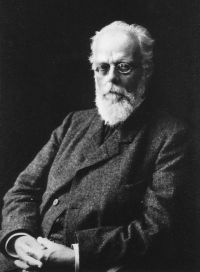 August Weismann,
Essays Upon Heredity and Kindred Biological Problems
August Weismann,
Essays Upon Heredity and Kindred Biological Problems
“ In Moina, for instance, forty large food-cells are necessary for the formation of a resting egg, while a summer-egg only requires three. And Düsing is aware of these facts, and quotes them. How can the formation of resting eggs depend upon the effects of poor nutrition when food is most abundant at the very time of their formation? In all those species which inhabit lakes, sexual reproduction occurs towards the autumn, and in such cases the resting eggs are true winter-eggs, destined to preserve the species during the winter. ”
Edward Corning, The Corning egg farm book by Corning himself (1912)
“ SANITARY,—because of the clean, fresh air housing and best quality of pure food and water. People are learning the necessity of investigating the source from which Eggs come more carefully than milk or water, as it is now known that Eggs can be a greater carrier of disease than either milk or water. ”
Related terms
Authors who wrote about “egg production”
Edward Corning Milo Hastings
 Richard KeartonWoman's Institute of Domestic Arts and SciencesJohn H. RobinsonHugh PiperDavid MillerKate V. Saint MaurMary Rogers MillerLewis Wright
 John Stuart MillFrank SchloesserAugust WeismannVarious
 Charles DarwinMarcus Porcius CatoRhea C. Scott
 Bram Stoker
 Harvey Washington WileyErasmus Darwin
Milo HastingsRichard KeartonWoman's Institute of Domestic Arts and SciencesJohn H. RobinsonHugh PiperDavid MillerKate V. Saint MaurMary Rogers MillerLewis WrightJohn Stuart MillFrank SchloesserAugust WeismannVariousCharles DarwinMarcus Porcius CatoRhea C. ScottBram StokerHarvey Washington WileyErasmus Darwin