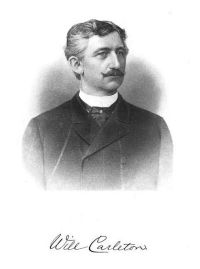
“ For I am an equestrian— A very fair equestrian— With bugle blast of melody and unassuming song; And all the thrilling ecstacy of horsemanship I feel, Although the nag I ride upon was bred of burnished steel. But his impatience urges me to swifter gait than you, And so I wish you pleasure, sir, and bid a kind adieu. [Pg 156] Good-morning, Mr. Racer, you've a trotter that is fine; I never would disparage him, or say too much of mine; Your horse is full of mettle, sir, and bravely draws his load; It must be pure deliciousness to speed him on the road. ”
Equestrian
Definition and stakes
Equestrianism, encompassing horse riding, driving, and vaulting, spans practical, recreational, and competitive domains, from polo to therapeutic riding. Historically rooted in warfare and labor, it has evolved into a global sport, celebrated in Olympic disciplines like dressage and show jumping. Authors like Will Carleton captured its excitement, while Evelyn Raymond illustrated its dangers, and Samuel de Champlain compared equestrian gatherings to masquerades.
Washington Irving contrasted equestrians with fur traders, highlighting their vigor, and Theodore Hoe Mead emphasized the significance of mastery. Literature portrays equestrianism’s duality: a combination of expertise, cultural significance, and lasting human-animal collaboration, reflecting its enduring appeal across time and societies.
Quotes about “equestrian”
Evelyn Raymond, The Little Lady of the Horse (1898)
“ The small equestrian had lost her control of her animal,—if control she had ever had,—and he had taken fright or become suddenly vicious; keeping just so far in advance of the pursuer as to avoid capture, and dancing upon his hind legs between whiles, in a manner inimical to any rider’s safety and doubly dangerous to one so young as she who still clung to her saddle, her fingers clasping the pommel in the rigidity of fear. ”
Lydia Huntley Sigourney,
Scenes in my Native Land
(1845)
“ Yet notwithstanding the apparent perils of the route, it is sometimes chosen as an equestrian excursion, even by young ladies, whose fair forms, in this graceful exercise, amid those wild solitudes, have a striking effect, and carry the mind back to the days of chivalry. ”
Samuel de Champlain,
Voyages of Samuel De Champlain…
“ The picturesque dress of the workmen, with their clean white frocks and linen tights; the horses in great numbers mantled in their showy salt-bags, winding their way on the narrow platforms, moving in all directions, turning now to the right hand and now to the left, doubling almost numberless angles, here advancing and again retreating, often going two leagues to make the distance of one, maintaining order in apparent confusion, altogether presented to the distant observer the aspect of a grand equestrian masquerade. ”
Washington Irving,
The Adventures of Captain Bonneville…
(1837)
“ The equestrian exercises, therefore, in which they are engaged, the nature of the countries they traverse, vast plains and mountains, pure and exhilarating in atmospheric qualities, seem to make them physically and mentally a more lively and mercurial race than the fur traders and trappers of former days, the self-vaunting "men of the north." A man who bestrides a horse must be essentially different from a man who cowers in a canoe. ”
Theodore Hoe Mead, Horsemanship for Women (1887)
“ Possibly more than one young equestrian, remembering the exhilaration of some morning ride, the quickened appreciation, the redoubled enjoyment of the beauties of nature, and of the charm of congenial companionship, will be ready to echo the sentiment. It is only true, however, even approximately, when the rider controls all the forces of the horse, and it is the object of the present article to put this perfect control within the reach of every one willing to take the time and trouble to acquire it, for not daring, but calmness, not strength, but perseverance, are the qualities requisite. ”
Rollo Springfield, The Horse and His Rider
“ All equestrian nations ride with the bended leg, or as it is commonly termed, short, simply because experience has taught them its advantages. The English jockies, fox-hunters, and steeple-chasers, who get the utmost speed out of their horse, who teach him to traverse, and assist him over the most tremendous leaps, all ride short. The South American Indians—men who live and die, as it were, on the backs of their horses—the Moors of the coast of Barbary—and the Bedouin Arabs of the Desert, all ride short. ”
Joan Conquest, Leonie of the Jungle
“ Men shouted and waved their topees, or shouted and performed equestrian gymnastics, and the jockeys en masse cursed their masters' presence, and the more or less mythical value of their respective mounts. ”
O. S. Pratt, The Horse's Friend
“ My friend, a full consideration of gratitude has timely and most heartily determined your large class to offer this El-Dorado-headed cane. Sir, we recognize you as the greatest equestrian educator in the world. Your humble servant is proud of his recent acquisition. You have enabled the palsied old man to ride in safety; you allow the old lady to drive minus the fear of a broken neck; the young lady or horse-loving master can now indulge saddle pleasures, knowing the animal thoroughly subdued by some member of your class. ”
Mayne Reid,
The Headless Horseman: A Strange Tale of Texas
“ When a man is seen mounted on a horse’s back, seated firmly in the saddle, with limbs astride in the stirrups, body erect, and hand holding the rein—in short, everything in air and attitude required of a rider; when, on closer scrutiny, it is observed: that there is something wanting to complete the idea of a perfect equestrian ”
Washington Irving,
Bracebridge Hall
(1822)
“ The squire's equestrian system has been attended with great success, for his sons, having passed through the whole course of instruction without breaking neck or limb, are now healthful, spirited, and active, and have the true Englishman's love for a horse. ”
Theodore Ayrault Dodge,
Patroclus and Penelope: A Chat in the Saddle
“ But the School-rider has this in equal degree with the uneducated horseman, coupled with a feeling of control and power and ability to perform which the mere man on horseback never attains. Moreover, all the powers of the School-rider's horse are within the grasp of his hand; and that the powers of the high-strung steed of the average equestrian are all too often resident mainly in the animal itself is shown by the chapter of accidents daily reiterated in the news-columns. ”
H. L. de Bussigny, Hand-book for Horsewomen
“ A lady's equestrian education can not be considered complete until she can make her horse leap any obstacle which is reasonable, considering her age and experience and the capacity of her horse. When her seat has become flexible and firm at the walk, trot, and gallop, when she is mistress of her horse in changes of direction, of gait, and of feet, the teacher should allow her to leap a hurdle not less than two nor more than three feet high. ”
Clive Phillipps-Wolley,
Sport in the Crimea and Caucasus
“ Here, too, the English equestrian meets with a novelty in the pace of his horse, which has been taught to go at a kind of amble called ‘enokod,’ at which pace the beast travels about twelve miles an hour with very little fatigue to the rider. Very few of the horses trot properly, and if they do, and you attempt to rise to the trot as men do in England, you meet with so much banter that you are inclined to wish that they did not. ”
Henry L. de Bussigny, Equitation (1922)
“ So long as the horse remains at rest with his four limbs perpendicular, the state of equilibrium can be demonstrated. But with the horse in action, only the eye of the spectator or the equestrian tact of the rider, through his seat, can detect it. The spectator can see the four legs leave the ground and return, two by two, diagonally at walk, trot, and movement backward. ”
Jules Jacoulet, Notes on equitation and horse training (1910)
“ The history of equitation reaches back to remotest antiquity. The horse has always been used in combat, and here we find the origin or, more properly speaking, the cause of the equestrian art. If man had utilized the horse merely to cover long distances or to bear burdens, sufficient training for the purpose would have been an easy matter. But when he decided to fight from the horse's back he was obliged to develop a complete and logical system of steps in training and handling. ”
active 1866-1874 Robert Henderson, The Barb and the Bridle
“ In like manner the fair equestrian, with a little practice, can learn to count the time of her horse's canter to herself, and regulate the action of her hand accordingly.The pupil must throw plenty of life into her riding, and, while she sits easily and flexibly as regards her whole figure on the saddle, should keep the horse equally upon his mettle. In a riding school he requires more calling upon than when out of doors, and more "pressing up," as it is technically called ”
Anonymous, The Young Lady's Equestrian Manual
“ Many young ladies, however, feel a delicate repugnance to passing through the ordeal of a riding-school; some, again, do not reside in situations, where the benefit of a teacher’s directions can be procured; while others, erroneously flatter themselves, that they are in possession of every needful acquirement, as regards equestrianism, when they have discovered how to retain a seat on the saddle, and guide [22] a horse by means of the bridle. ”
Samuel C. Wayte, Graceful Riding: A Pocket Manual for Equestrians
“ Waite, an experienced professor of the art, has given us a hand-book, in which will be found a great variety of instruction, by which the equestrian will receive such directions for the management of his horse, under a variety of circumstances, as must prove of great value to him. ”
Henry L. de Bussigny, Equitation (1922)
“ Without the least doubt it is possible to flex de pied ferme, without the help of the legs. I recognize, however, a difficulty, and to meet this I have advised placing the horse near a wall when the lateral position is being taught, in order that the presence of the barrier may help to keep the haunches straight. We have to consider, also, that the great masters of the art, because of their equestrian tact, are able to omit from their own training the work on foot. ”
active 1866-1874 Robert Henderson, The Barb and the Bridle
“ But to clear a wide jump, it should be remembered that the horse must not only go a good pace on it, but he must be allowed to extend his head and neck the instant he takes off. If this is neglected, the fair equestrian, in attempting a water jump, will inevitably find herself in the brook. ”
“ Equestrians, too, are caracolling through streets and squares, clothed in bright ponchos, and their small, spirited steeds decked in shining trappings, with heavy Gothic-shaped spurs, half the weight of the riders. ”
George Dodd,
The History of the Indian Revolt and of the Expeditions to Persia…
“ The horseman, when he adopts the equestrian system, accomplishes from twelve to twenty miles a day: sending on his servants one march or day in advance, with tent, bedding, tent-furniture, canteen, &c., in order that they may have a meal ready for the traveller by the time he arrives. They daily buy fodder, fowls, eggs, milk, rice, fruit, or vegetables at the villages as they pass through; the traveller, if a sportsman, aids the supply of his larder with snipe, wild-fowl, quail, partridges, hares, jungle-cocks, or bustard ”
Emerson Hough,
The Red Book Magazine, Volume 37…
(1921)
“ From my place toward the head of the park, where the bridle-path enters, I easily can see the throng of equestrians, sometimes fifty or more, every day. Most of them are awkward; some are fat; some are self-conscious; many are overdressed. Three-fourths of them are out for display, many of the remaining one-fourth out for exercise, and most of the residue out for anything but riding. ”
Various, The Continental Monthly, Vol. 4…
“ Within a quarter of a century much improvement has taken place in the system of equestrianism under which the cavalry riders of Europe are instructed. Years ago, the long stirrups, such as our dragoons for the most part ride with, were taken up some inches by the riding masters of the British and other foreign services. ”
Will James, Smoky, the cow horse (1926)
“ The stable man let her have the horse once and noticing what good care she'd took of him, figgered her as another steady customer for the old horse. With her and the grey haired man showing up every day he allowed how that would be enough work for him, and none of the other equestrians ever got a chance to set on that horse from then on. ”
John G. Edgar, The Boy Crusaders: A Story of the Days of Louis IX
“ As the lads became more expert they tilted at each other with blunt lances, practised riding at the ring, and learned to excel as equestrians by riding in a circle, vaulting from their steeds in the course of their career, and mounting again while they galloped. ”
Anonymous, The Young Lady's Equestrian Manual
“ As his fore quarters ascend, the lady is to advance forward; the back being bent inward, and the head kept upright and steady. A moment before the horse’s hind legs quit the ground, the body should be inclined backward; the rider taking care not to bear heavily on the reins, lest the horse force her hand, and pull her forward on his neck, or over his head, as he descends. When the leap is cleared, the rider should bring the horse together, if at all disunited, and resume her usual position. ”
John Gustavus Lemaistre, A rough sketch of modern Paris (1803)
“ The equestrians sit on the necks of their horses, and turn out their toes, by way of imitating our manner of riding; and the grooms who attend them, whom they call “des jockés,” are dressed like our postilions; that is to say, in short waistcoats, richly laced with gold and silver, with a cap, ornamented in the same manner, and without any coat. ”
Henry L. de Bussigny, Equitation (1922)
“ Rearing will probably be caused by fingering in wrong tempo; the croupade by beginning too early the alternate effect of the legs, so that the signal to lift one biped comes before the other is back on the ground, and there is a brief interval when both are on the ground. Do not expect to secure a perfect walk of manege until after you have trained two or three horses. Be satisfied at first with a few steps at the gait, and occasional changes of direction. The great point is to perfect your own equestrian tact. When that is done, all your difficulties are easily surmounted. ”
Albert D. Richardson,
The Secret Service, the Field, the Dungeon…
“ When in-door diversions failed, the correspondents amused themselves by racing their horses, which were all fresh and excitable. That region, abounding in hills, ravines, and woods, is peculiarly seductive to reckless equestrians desiring dislocated limbs or broken necks. ”
Theodore Ayrault Dodge,
Patroclus and Penelope: A Chat in the Saddle
“ It is the general impression among men who ride to hounds, and still more among men who pretend to do so, that leaping is the ultima thule of equestrianism; and that a man who can sit a horse over a four-foot hurdle has graduated in the art of horsemanship. ”
Armando Palacio Valdés,
The Fourth Estate, vol. 2
“ The horses of our equestrians, in the pride of their beautiful breed and their bright, shining backs, caracoled incessantly, which ostentatious display of their muscular power in the morning light raised clouds of dust. The work-girls who were making their way to the hermitage grew impatient, and chaffed the riders more from vexation at the dust than from fear of the horses ”
James Inglis, Our New Zealand Cousins (1887)
“ The roads were awful, as I have said, but equestrianism is the favourite mode of progression here. Every youngster has his horse, and is usually followed by a motley retinue of dogs, who wage incessant vendetta against the ubiquitous rabbits. ”
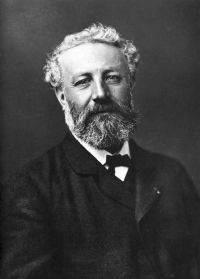
Jules Verne,
Kéraban the Inflexible
(1887)
“ They are excellent guardians of the boundaries committed to their charge, and are justly esteemed the best equestrians in the world, as well in the hunting down of the chronically rebellious mountaineers, as in the jousts and tourneys in which they prove themselves accomplished cavaliers. ”
Anonymous, The Young Lady's Equestrian Manual
“ Let the pupil walk the horse forward in a straight line, and at a slow rate, supporting his head in such a manner as to make him keep time in the beats of his pace; but not holding the reins so tight as to impede the measurement of his steps, or to make him break into a trot on being slightly animated. The hand should be so held, that it may delicately, but distinctly, feel, by the operation of the horse’s mouth on the reins, every beat of his action. If he do not exert himself sufficiently, he should be somewhat animated. ”
Anonymous, The Young Lady's Equestrian Manual
“ In some of the schools, a pupil is often directed to ride without the stirrup, and, with her arms placed behind her, while the master holds the long rein, and urges the horse to various degrees of speed, and in different directions, in order to settle her firmly and gracefully on the saddle,—to convince her that there is security without the stirrup,—and to [48] teach her to accompany, with precision and ease, the various movements of the horse. ”
Anonymous, The Young Lady's Equestrian Manual
“ All such motions of the body, the hands, the legs, and the whip, as either indicate the rider’s wishes, or, in some degree, assist the horse to fulfil them, are, in the art of riding, denominated aids; and those movements of the rider which tend to save the animal from disuniting himself, or running into danger, may, properly enough, be classed under the same title: while such as act for the preservation of the rider, against the attempts of the horse, when headstrong or vicious, are termed defences. ”