Manege

Definition and stakes

Henry L. de Bussigny,  Equitation (1922)

“ The walk of manege is the highest proof of the state of equilibrium, and you must learn to feel the horse under you flexing all its joints, developing its power, and cadencing its walk with a great but calm ardor, slow and high. When a horse has attained to the walk of manege, in complete equilibrium, every feat of the scientific equitation becomes possible both to rider and to steed. ”
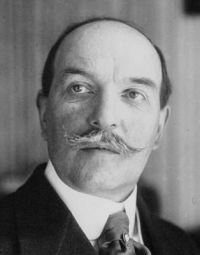
Source: Wikisource

Donald Walker,  Walker's manly exercises (1855)

“ The general art of riding, sometimes called manège riding, to distinguish it from its modifications in road-riding, hunting, racing, &c., teaches us to place every part of the body so that it can act upon the horse in every emergency, shows the effect of all the aids or modes of guiding him, and enables us to render him obedient to the slightest touch. By never suffering the ascendancy to be transferred to the horse, by in general preventing him from making all his speed, and by exhausting him the sooner the more he exerts himself without permission, it bestows upon the rider perfect security. ”
Source: Gutenberg

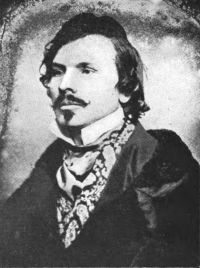
Portrait of Henry Bordeaux Henry Bordeaux,  The woollen dress (1912)

“ It is an irresistible fascination, a necessity. Above my two wings, I possess the infinite. The air surrounds me, bathes me, caresses me, as this water does our boat. I forget the noise of the motor, the buzzing of the propeller. Energy clamours within me. My wings shift about, like extended arms, to ensure control. A horseman is no more one with his living mount than I am with my machine. ”
Source: Gutenberg

Get perspective with Kwize: daily news enlightened by great literature