Fetlock

Definition and stakes

W. H. Maxwell,  The Field Book: or, Sports and pastimes of the United Kingdom

“ The fetlock, as it is termed, is found in all horses, especially in those of the northern breed, and from its position is an admirable guard against thorns, furze, flints, or other bodies, to which the pastern, without it, is so much exposed. The only excuse for this foolish practice is, that it is customary, and makes a horse look clean about the legs; and this notion is carefully preserved, and impressed upon the minds of those inexperienced in horses, by the men employed to operate on the occasion. ”
Source: Gutenberg

Theodore Hoe Mead,  Horsemanship for Women (1887)

“ The shank of the fore-leg, then, or the part between the knee and fetlock, corresponds to the hand, and the hoof and pastern to the fingers; while the shank of the hind-leg, or the part between hock and fetlock, corresponds to our foot, the hoof and pastern being the toes. The horse may thus be said to walk upon the tips of his fingers and toes, and it will readily be seen why the leg weakens in proportion as the pastern and shank lengthen. ”
Source: Wikisource

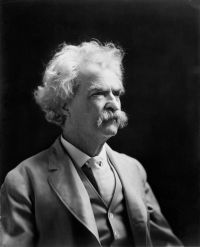
Portrait of Mark Twain Mark Twain,  A Double Barrelled Detective Story

“ In the morning the pair carried fuse, drills, and the powder-can to the shaft; it was now eight feet deep, and to get into it and out of it a short ladder was used. They descended, and by command Fetlock held the drill—without any instructions as to the right way to hold it—and Flint proceeded to strike. The sledge came down; the drill sprang out of Fetlock’s hand, almost as a matter of course.
“You mangy son of a nigger, is that any way to hold a drill? Pick it up! Stand it up! There—hold fast. D—you! I’ll teach you!”
”
Source: Gutenberg

Get perspective with Kwize: daily news enlightened by great literature