Funerary brass

Definition and stakes

H. R. Wilton Hall,  Social Life in England Through the Centuries

“ They do not all belong to the thirteenth century, as this kind of memorial of the dead was used during several centuries—in fact, well on into Queen Elizabeth's reign, at the end of the sixteenth century. The oldest brass in England, showing a man in armour, is in Surrey, in Stoke D'Abernon church. Brasses are very valuable, as they show us the kinds of armour and dress worn in particular centuries. ”
Source: Gutenberg

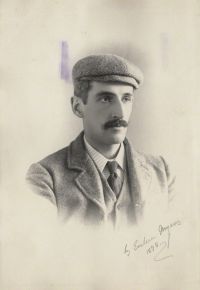
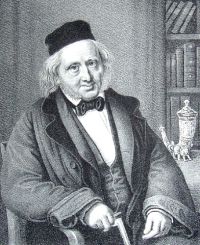
Portrait of Louis Figuier Louis Figuier,  Primitive Man

“ The fusion and casting of bronze does not perplex them any more than working in tin. They are in the habit of casting various utensils in brass or bronze, such as candlesticks, bells, brackets, &c. The crucible which they use in melting brass is nothing but a hole dug in the earth and filled up with burning charcoal, the fire being kept up with the help of their bellows, the nozzle of which is lengthened so as to open into the middle of the charcoal. On this furnace they place their portable crucible, which is a kind of earthen ladle provided with a handle. ”
Source: Gutenberg

British Association for the Advancement of Science,  Handbook of Birmingham

“ While the steel is soft the die is cut out with steel cutting tools and finished by gravers, previous to the final polishing. The die sinkers of Birmingham make dies for the following purposes, among others: buttons, military ornaments, brassfoundry, plated wares, tea trays and tin work, gun work and small iron work, medals and coins, jewellery, seals for wax and paper embossing, brass dies for paper wrappers and bands, as used in the wholesale linen trades; needles, papers, etc., wheels and rolls for ornamenting metal tubes or sheets. ”
Source: Gutenberg

Get perspective with Kwize: daily news enlightened by great literature