Guard (American football)

Definition and stakes

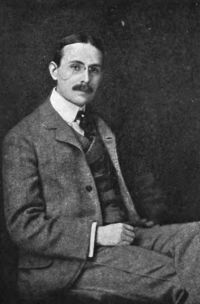
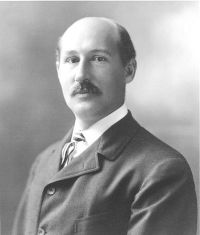
Portrait of Walter Camp Walter Camp,  American Football

“ In this class of play a guard should remember that if he can lay a hand upon the runner before he reaches the line he can spoil the advance to a certainty, for no runner can drag a heavy guard up into and through an opening. It is like dragging a heavy and unwieldy anchor. A guard can afford to, and must sometimes, tackle high. Not that he should, in the open, ever go at the shoulders, but in close quarters he often has no time to get down low, and must make the best of taking his man anywhere that the opportunity offers. ”

Source: Gutenberg

Portrait of Walter Camp Walter Camp,  American Football

“ The position of guard, while it requires less agility than that of tackle, can never be satisfactorily filled by a man who is slow. Many a coach makes this mistake and fails to see his error until too late to correct it. I remember once seeing upon a minor team a guard who weighed at least 190 pounds replaced by a man of 155, and the latter actually filled the position—greatly to my astonishment, I confess—in excellent fashion. This does not at all go to prove that weight is of no value in a guard. ”
Source: Gutenberg

Portrait of Walter Camp Walter Camp,  American Football

“ As regards the relations between the tackle and guard, they are best defined by saying that the guard expects to receive the assistance of the tackle in all cases requiring agility, while in cases requiring weight the guard is equally ready to lend assistance to the tackle.
When his own side has the ball, the tackle has far more than the end to do. In fact, the tackle has the most responsible work of any man along the line, having more openings to make, and at the same time the blocking he has to perform is more difficult.
”
Source: Gutenberg

Get perspective with Kwize: daily news enlightened by great literature