“ Luckily the chap kept his nerve, and between snow flurries they could see him working hard trying to get the wheels on again. An expert teleferica lineman can, with luck, occasionally put a pair of wheels back on the track alone; but unless one understands exactly how to take [Pg 270] his weight off the basket by hanging over the cable the job is as hopeless as trying to lift yourself by your boot-straps. ”
Quotes about “lineman”
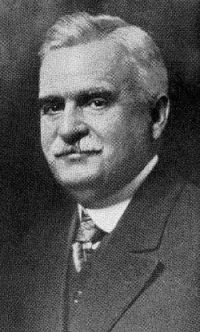 Charles De Lano Hine,
Letters from an Old Railway Official…
Charles De Lano Hine,
Letters from an Old Railway Official…
“ We need an expert at the top as chief telegraph and telephone officer to tell us all how to do it. The volume of business will usually warrant making him a line officer with the rank and title of assistant general manager. He should not deal directly with operators and linemen any more than a general superintendent under normal conditions should instruct an individual conductor or a chief engineer communicate direct with a section foreman. The integrity of the division as an operating unit should be respected. ”
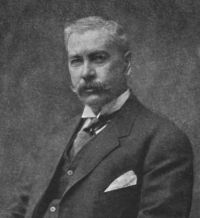 Cy Warman,
The Express Messenger, and Other Tales of the Rail
(1897)
Cy Warman,
The Express Messenger, and Other Tales of the Rail
(1897)
“ The brave station agent is an old man now, and one of his legs is shorter than the other,—the one that was shot that night. The baby, having recovered from her severe tussle with colic and paregoric, is now one of the most charming women in a Western city. The conductor of the soldier train is at this writing a general superintendent of a well-known railway. ”
James O. Fagan, Confessions of a Railroad Signalman
“ He has every opportunity to observe just how trainmen of all classes obey the rules and the signals. Add to this opportunity to become conversant with the practical side of railroad life, the knowledge that is derived from attending to the correspondence of a superintendent and the general work of the office. This includes supervision of pay-rolls, the hiring and examination of men, the investigation of accidents, the tracing of trouble of every description, and the handling and movements of both freight and passenger trains. ”
Charles De Lano Hine,
Letters from an Old Railway Official to His Son…
“ For conductor have a coming trainmaster, not afraid to pull off his coat to help adjust a scale or to unload a keg of track spikes. Have an ambitious brakeman for train clerk, whose records would replace requisitions and waybilling. For pilot use the superintendent, the trainmaster, the chief dispatcher, the master mechanic, the road foreman, the division engineer, or the supervisor. Have as many as possible of those last named accompany the train and give the division a rigid inspection. Pretty soon you would find the general superintendent frequently hitching his car to this train. ”
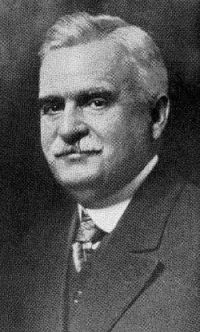 Charles DeLano Hine,
Letters from an old railway official…
(1912)
Charles DeLano Hine,
Letters from an old railway official…
(1912)
“ So the division linemen usually report directly to the superintendent of telegraph. They often stay around division headquarters until the chief dispatcher is able to jar them loose and get them out on the road. Then they go to the scene of trouble, look wise and get the section foreman to dig the hole and do most of the work. Why not, therefore, hold the section foreman responsible for ordinary wire repairs in the first place? Let every section house have a pair of climbers, a wire cutter and pliers with whatever simple outfit may be necessary. ”
William Addleman Ganoe, The English of military communications (1918)
“ You intend to sign your order yourself and you want copies sent to Lieutenants Kingsley and Lawrence, and to Brigade Generals Black, Dare, Evans, Colonel File, Major Glad, Captain Hume and your staff. You want your trains to follow your main body in order from front to rear: field trains, ammunition columns, supply columns, field hospitals, medical reserve, and pack train. You feel that the man in command of your signal corps should arrange to have radio connection between your independent cavalry and the advance guard. ”
J. H. Morgan, Leaves from a Field Note-Book
“ Their waggons are known as "transports of delight," and they can supply you with anything from a field-dressing to a toothbrush, [Pg 282] and from an overcoat to a cake of soap. And as the Q.M.G. is concerned with goods, the A.G. is preoccupied with men. He makes up drafts as a railway transport officer makes up trains, and can tell you the location of every unit from a brigade to a battalion. Also, he and his deputy assistants make up casualty lists. ”
Charles DeLano Hine,
Letters from an old railway official…
(1912)
“ The staff is supplementary to the line as equity is supplementary to law. The staff officer is the playwright. The line officer is the actor. The actor is usually too much absorbed with the technique of his art to write new plays. The line officer, as such, seldom originates new methods, because he is too close to his everyday problems of administration to cultivate perspective. The ideal staff officer has had experience in the line. The line with a railroad—its fighting force, so to speak—is the operating department. ”
Charles DeLano Hine,
Letters from an old railway official…
(1904)
“ Certain special work, such as the construction of buildings, of a telegraph line, of a road, may be put under a staff officer reporting directly to headquarters and exempted from the orders of the local commander of troops. We do the same when we put certain construction work under our engineers working independently of the superintendent. In an emergency all officers, men and material come under the control of the senior line officer present. ”
G. le M. Gretton, The Campaigns and History of the Royal Irish Regiment…
“ In orders of February 22, 1901, appeared the following instructions for officers and men travelling by train.“1. A commander is to be detailed in each truck in which there are troops.2. Officers travelling with troops are to be distributed throughout the train: they are not all to travel together in one truck.3. The men are to keep their ammunition on, and their rifles beside them. The rifles are not to be stacked in a corner of the truck.4. The men in the rear truck are to be mounted as a guard with a sentry, and magazines charged. ”
Charles King, Campaigning with Crook, and Stories of Army Life
“ Far out on the slopes our horses answer with eager hoof and neigh; with springy steps the men hasten out to bridle their steeds, and, vaulting on their backs, ride in by companies to the line. The bustle of saddling, the snap of buckle and whip of cinch, succeeds, then "Lead into line" is heard from the sergeant's lips. Officers ride slowly along their commands, carefully scrutinizing each horse and man. Blanket, poncho, overcoat, side-line, lariat, and picket-pin, canteen and haversack, each has its appropriate place and must be in no other. ”
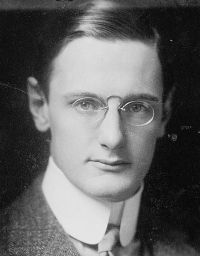 Ralph Pulitzer,
Over the Front in an Aeroplane…
Ralph Pulitzer,
Over the Front in an Aeroplane…
“ For the amenities of a trip to the front require that in theory the stranger should pay his prearranged respects to all those in command from the General of the Army, through the General of the Army Corps, down through the General of Division, to the Colonel of the Regiment he happens to be visiting. ”
A. K. Astbury, British Railways (1951)
“ You know these men, or men very like them – the guard, the engine driver and the fireman; they represent a whole army of experienced railwaymen whom we trust so confidently every time we travel by train. ”
Charles DeLano Hine,
Letters from an old railway official…
(1904)
“ While speaking of military organization, let me impress upon you that in the army the line always commands the staff. A staff officer cannot command troops except by express direction of the President. Enlisted men and junior officers must show a staff officer the respect due his rank, just as our conductor is respectful to the division freight agent, but when it comes to taking orders, that is another question. ”
 George A. Birmingham,
A Padre in France
George A. Birmingham,
A Padre in France
“ The prospect was not a pleasant one; but I knew that R.T.O.’s are not infallible. Sometimes they have not the dimmest idea where trains are going. I left the office and wandered about the station until I found the officer in command of the train. He was a colonel, and I was, of course, a little nervous about addressing a colonel. But this colonel had kindly eyes and a sorrowful face. He looked like a man on whom fate had laid an intolerable burden. ”
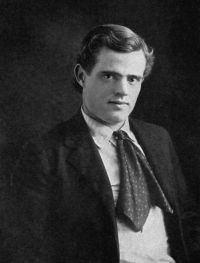 Jack London,
Michael, Brother of Jerry
(1917)
Jack London,
Michael, Brother of Jerry
(1917)
“ A crew, a brave crew, all youngsters, all of us, fore and aft, no man was forty, a mad, gay crew. The captain was an elderly gentleman of twenty-eight, the third officer another of eighteen, the down, untouched of steel, like so much young velvet on his cheek. ”
 Harry Leon Wilson,
The Boss of Little Arcady — The Book of Colonel Potts
Harry Leon Wilson,
The Boss of Little Arcady — The Book of Colonel Potts
“ She whose heart cried out for the distinction of train-boy, conductor, engineer, brakeman, or fireman, in the order named, had been forced into the only degrading post in the game—a mere passenger without voice or office in those delicate feats of administration. ”
Warren Lee Goss, Jed's Boy: A Story of Adventures in the Great World War
“ The officers of the modern [54] company, while on a war footing are: One captain, three first lieutenants, two second lieutenants, one first sergeant, one mess sergeant, one supply sergeant, twelve sergeants, thirty-three corporals, four mechanics, four cooks, two buglers, and 192 privates. One of the first lieutenants is the captain’s assistant; the others each command one of its four platoons of men.The transportation equipment of a regiment is more elaborate than is generally known. ”
Charles De Lano Hine,
Letters from an Old Railway Official…
“ True individuality about which men prate the most is that which is understood the least. Our Army and Navy are insisting that before being staff officers, all officers, except surgeons and chaplains, must first learn to handle men by serving in the line; that crystallization in the staff must be prevented by periodic rotation to definite tours of duty in the line. The railway of the future will probably carry extra numbers of line officials in the various grades that some may be available for detail to the staff, that we may better co-ordinate our studying and our working activities. ”
Various, Punch, or the London Charivari…
“ What regiment is Billy in, did you say, Sir? Why, he got no regiment. Ain't I been telling you, Sir, 'Puffing Billy' is what our golfers here call the little train what used to run six times a day from the town to the links. Just see what the paper says, Sir. I don't be much of a reader, but hark ye to this: 'I wish also to place on record here the fact that the successful solution of the problem of railway transport would have been impossible had it not been for the patriotism of the railway companies at home. ”
Willard Grosvenor Bleyer, How To Write Special Feature Articles
“ One of the new recruits is given charge of the form ticket issued by the railway expressly for the Government; is told that when meal-time comes he can get off the train with the others and for fifty cents buy a big pail of hot coffee for the bunch at the station lunch-room. Then the corporal takes them all down to the train, tells them briefly but plainly what is expected in the way of conduct from a soldier, and winds up with the admonition: "And, boys, remember this first of all; the first duty of a soldier is this: do what you're told to do, do it without question, and do it quick. ”
William Duane, A military dictionary
“ The foot guards enjoy the privilege of ranking, from the ensign, one step higher than the line. A lieutenant, for instance, ranks as captain, and can purchase as such into any marching regiment without having waited the regulated period; and a captain, having the brevet rank of lieutenant colonel, may leap over all the majors of the line, by getting appointed to a marching regiment. The promotions of the guards, among themselves, are, however, extremely slow; and the only indemnification they have must beat the expence of the line. ”
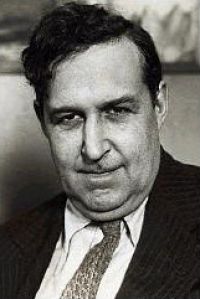 Heywood Broun,
The A. E. F.: With General Pershing and the American Forces
Heywood Broun,
The A. E. F.: With General Pershing and the American Forces
“ A man who was a first lieutenant when the army came to France told us: "A first lieutenant is supposed to know everything and do everything; a captain is supposed to know everything and do nothing, and a major is supposed to know nothing and do nothing." ”
Charles De Lano Hine,
Letters from an Old Railway Official to His Son…
“ To come down to a congested yard among a lot of discouraged men blocked in without room to sidetrack a handcar is like sitting down to a train sheet with most of the trains tied up for orders. In either case let the right man take hold and in a few minutes the men involved will tell you who it is has assumed charge. Without realizing it and without knowing why, they redouble their efforts; things begin to move, and the incident goes down in the legends of the division to be the talk of the caboose and the roundhouse for years to come. ”
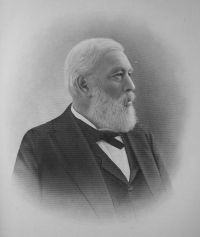 Orange Jacobs,
Memoirs of Orange Jacobs
Orange Jacobs,
Memoirs of Orange Jacobs
“ She was sitting in the wagon with the reins in her hand and a pistol in her lap, during all the excitement and uproar. As I passed up and down the train, I saw the Colonel, either at the rear or on the side of the wagons, away from the yelling Indians. The last time I passed the wagon, the Colonel stuck his head out from the opposite side and asked, "What are you going to do, Captain?" I said, "Fight, sir, if necessary." The young lady, looking at him, exclaimed: "Yes, sir; fight if necessary. Get on the other side of the wagon; be a man!" ”
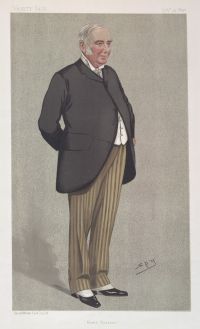 George Findlay,
The Working and Management of an English Railway
(1889)
George Findlay,
The Working and Management of an English Railway
(1889)
“ As regards the highest positions, at the time when railways were a new feature in the social life of the country, and their promoters looked around them for men suitable to direct their operations and control the large, number of persons engaged in working them, they found none who, in their opinion, at that time, were so suitably as officers who had retired from the army and navy, it being supposed that their acquaintance with discipline and the habits of command they had acquired in the pursuit of their former avocations, would stand them in good stead in their novel career. ”
James O. Fagan, Confessions of a Railroad Signalman
“ The mere fact that one has had a varied and lifelong experience as an engineman or a conductor would be only partially significant. But a man who has been a telegraph operator and towerman for twenty-seven years and part of the time chief clerk to a railroad superintendent has certainly some claims to an all-round knowledge of his subject. ”
Jacob D. Cox, Military Reminiscences of the Civil War…
“ Railway officers insist upon absolute sobriety in locomotive engineers; but if there be one employment in which such coolness of head is more absolutely essential than in another, I believe it is in commanding troops in the field. ”
 Sir James Emerson Tennent,
Belgium, Vol. 2 (of 2)
(1841)
Sir James Emerson Tennent,
Belgium, Vol. 2 (of 2)
(1841)
“ The officers, who are always lounging about the railroad stations, are much the same, and with their savage mustachios, fierce black locks, and breasts padded out till they look like pouter pigeons, they strongly remind us of the military air of the riding-master at Astley’s. ”
Portal:United States Congress, United States Statutes at Large (1845)
“ And be it further enacted, That the quartermaster general be authorized to appoint a principal wagon-master and as many wagon-masters as he may judge necessary for the service of the army, not exceeding one to each brigade, whose duty shall be, under the direction of the quartermaster general or any of his deputies, to provide and conduct the wagons and other means of transport necessary and proper for the military service of the United States. ”
 Oscar Devereaux Micheaux,
The Conquest; the Story of a Negro Pioneer
(1913)
Oscar Devereaux Micheaux,
The Conquest; the Story of a Negro Pioneer
(1913)
“ Every member of a train crew, whether porter, brakeman or conductor, must carry a book of rules; more as a matter of form than to show to passengers as Knight had done. A trainman should, and does, depend more on his judgment than on any set of rules, and permits the rule to be stretched now and then to fit circumstances. ”
Railway Adventures and Anecdotes…
“ A guard of a railway train, upon the late occasion of a hitch, which detained the passengers for some time, gave himself so much importance in commanding them, that one old gentleman took the wind out of his sails by calling him to the carriage door, and saying, “May I take the liberty, sir, of asking you what occupation you filled previous to being a railway guard?” ”
 Rudyard Kipling,
Traffics and Discoveries
Rudyard Kipling,
Traffics and Discoveries
“ He likes the two-months’ ‘heef’ in his first year, and five bob a week is something to go on with between times.” “Do they follow their trade while they’re in the Line?” I demanded. “Why not? How many well-paid artisans work more than four days a week anyhow? Remember a Linesman hasn’t to be drilled in your sense of the word. He must have had at least eight years’ grounding in that, as well as two or three years in his Volunteer battalion. He can sleep where he pleases. He can’t leave town-limits without reporting himself, of course, but he can get leave if he wants it. ”
