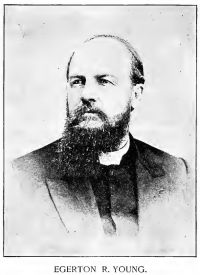
The concept of "rank" denotes the dimension of the vector space spanned by a matrix's columns or rows, reflecting its structural complexity and independence. In linear algebra, it measures the system's nondegeneracy, while in societal contexts, authors like Jean-Jacques Rousseau framed it as a status conferring honor, Egerton Ryerson Young evoked military imagery of structured advancement, and William Anderson critiqued its transient social value.
These viewpoints, ranging from education to military hierarchy, highlight rank's dual role as both a mathematical constant and a symbol of societal stratification.
 Jean-Jacques Rousseau,
Emile, or On Education
(1762)
Jean-Jacques Rousseau,
Emile, or On Education
(1762)