“ He discovered first, that a musical sound is very rarely a simple tone, but is made up of several tones, sometimes as many as ten or fifteen, having different degrees of intensity and pitch. The lowest sound, which is also the strongest, is called the fundamental; and it is this tone we mean when we speak of the pitch of a sound, as the pitch of middle C upon a piano, or the pitch of the A string on a violin. ”
Ton
Definition and stakes
The term "ton" refers to a unit of mass or volume, historically derived from the tun, a large cask, and differs across regions and systems, such as the long ton, short ton, and metric tonne. This measure has expanded to include both physical quantities and figurative meanings, indicating a substantial amount. Authors like A. E.
Dolbear and Robert Seymour Conway examined the concept of "tone" in acoustics and phonetics, investigating its generation and resonance, while others, such as Thomas Tapper, highlighted its musical and educational importance. The ton’s dual function—as a technical standard and a metaphor—demonstrates its lasting adaptability in scientific and everyday language.
Quotes about “ton”
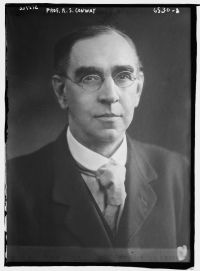 Robert Seymour Conway,
The Making of Latin
(1923)
Robert Seymour Conway,
The Making of Latin
(1923)
“ Where the current of air is only modified by receiving a vibration from the tongue we get the Liquids, r when the tip of the tongue is vibrated, and l when the sides of the tongue are vibrated; to produce l the front of the tongue is generally set fast against the teeth or palate. Eng. and Lat. r and l are both made with Voice. In modern English the Vibration of r has become very weak, and at the end of a syllable it is hardly heard at all unless a vowel follows. ”
 Wesley Mills,
Voice production in singing and speaking…
Wesley Mills,
Voice production in singing and speaking…
“ Of the tongue, soft palate, and lips, which are the principal modifiers of the shape of the mouth cavity, the tongue has by far the most influence. When the tongue lies flat in the mouth, it may be considered to be in its primary position, and it is important that in singing and speaking the student learn to begin his voice-production with this organ in that position, or a slight modification of it, for it is only when it is thus placed that a tone at once round, full, and pure can be produced. ”
D. A. Clippinger, The Head Voice and Other Problems…
“ A tone is something to hear, and hearing is mental. An old French anatomist once said: “The eye sees what it is looking for, and it is looking only for what it has in mind.” The same is true of the ear. We hear the tone mentally before we sing it, and we should hear it as distinctly as if it were sung by another. ”
Thomas Tapper, Music Talks with Children
“ We should have names for the scale-tones like the pretty Italian syllables, or, if not these, whatever our teacher suggests. Then we should have a conception of the tones as they are related. We should learn that every tone of the scale is colored by the tonic. Every one gets a character from the tonic which tells us all about it, because we learn to hear its relation to its principal tone. In a little while, with patience, we shall be able to hear the scale-tones in any order we may choose to think them. That power will be a fine help forever after—we must be sure to get it in the first days. ”
Emma Seiler, The Voice in Singing
“ The perfection of a tone at a certain pitch depends, in the resonance of the cavity of the mouth, upon the utterance of some vowel, to which the parts of the mouth are adjusted; and this perfection is considerably affected by even a slight variation in the timbre of the vowel, as it occurs in different dialects of the same language. On the other hand, the peculiar tones of the cavity of the mouth are almost wholly independent of age and sex. The peculiar pitch of the resonance apparatus has also an influence upon the tone. ”
Thomas L. Papillon and Hugh M. Ross, 1911 Encyclopædia Britannica (1910)
“ Bell Tones and Tuning.—A good bell, fairly struck, should give out three distinct notes—a “fundamental” note or “tonic”; the octave above, or “nominal”; and the octave below, or “hum-note.” (It also gives out the “third” and “fifth” above the fundamental; but of these it is less necessary to take notice.) ”
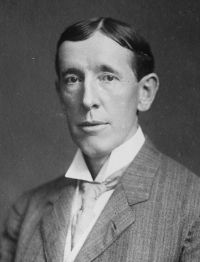 Woods Hutchinson,
A Handbook of Health
Woods Hutchinson,
A Handbook of Health
“ If you will try to sing the scale, beginning with a comfortable note about the middle of your voice range, and letting your mouth take the shape for that note unconsciously, you will find that, as you sing up the scale, you change the shape of your mouth, lips, and tongue at every note, thrusting the lips and mouth further forward as if to whistle, narrowing the opening and closing up the back of your throat for the high notes. ”
“ The general mode in which the radix of the tongue turns upon its axis is the direct and fundamental cause productive of the various languages of the world; such general mode necessitating special movements of the tongue for the production of the sounds of any special language. Regarding the proper emission of consonant sounds every one knows that the same depends upon the particular spot of contact of the tongue's tip with parts of the oral cavity. ”
Various, Graham's Magazine, Vol. XLI, No…
“ Even the northern and southern tongues, though all springing from the same root, are modified and characterized by the tone and natural feeling which climate and association have diversified. In southern tongues, sounds seem such as those that the soul of music and of feeling might give vent to, as through the lips it passes to liberty away; in northern tongues sounds seem each as the soul of thought and feeling might mutter when their confined power is aroused to action within us. ”
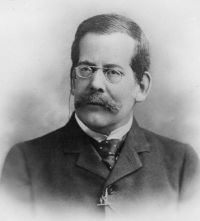 Henry Sweet,
1911 Encyclopædia Britannica
(1911)
Henry Sweet,
1911 Encyclopædia Britannica
(1911)
“ The flattening of the tongue makes our vowels wide and favours the development of mixed vowels, and gives the dull quality which is especially noticeable in our (l) ; and its retraction is unfavourable to the development of teeth sounds; while the neutrality of the lips eliminates front-round vowels. In such a language as French everything is reversed. The tongue is arched, and raised, and advanced, and the lips articulate with energy. Hence French sounds tend to narrowness, mentality and distinct rounding. ”
“ The muscle of the tongue, for vocal utterance, is the most important in our organization. It appears [Pg 62] to me, in fact, as if in its tip there were a concentration of all the threads which control our existence; and that it is, therefore, representative of an epitome of our entire being. As all sciences, in a general, though in some instances perhaps somewhat remote, sense, centre in the science of life, so do the controlling elements in our composition centre in the tip of the tongue. ”
William Smyth Rockstro, A Dictionary of Music and Musicians (1900)
“ Now it is a law that no two Accents—that is to say, no two of the greater Accents by which the Rhythm of the Bar is regulated, without reference to the subordinate stress which expresses the division of the notes into groups—no two of these greater Accents, we say, can possibly fall on two consecutive Beats; any more than the strong Accent, called by Grammarians the 'Tone,' can fall on two consecutive syllables in a word. ”
Katherine Jewell Everts, Vocal Expression: A Class-book of Voice Training and Interpretation
“ But we must not stop with the throat, which is but part of the channel involved in the emission of breath as speech. There is the tense jaw to be reckoned with—the jaw set by nervous tension, the jaw which refuses to yield itself to the moulding of the tone into the beautiful open vowel and the clean-cut consonant which make our words so interesting to utter. It is the set jaw which, forcing the tone to squeeze itself out, causes it to sound thin and hard. ”
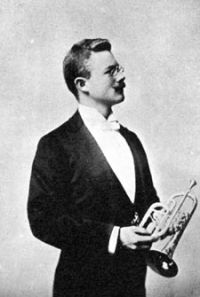 Herbert L. Clarke,
Characteristic Studies
(1915)
Herbert L. Clarke,
Characteristic Studies
(1915)
“ First, always practice softly; try to produce a light positive attack in the middle register. My tongue is never rigid when playing, and rests at the bottom of my mouth, the end pressed slightly against the lower teeth. I then produce the staccato, by the centre of the tongue striking against the roof of the mouth. This I have practiced so as to acquire rapid single Tongueing without fatigue, nor causing a clumsy tone, and when under full control, Double and Triple Tongueing becomes a simple matter by diligent practice, keeping the mind upon each articulation. ”
Ontario. Department of Education, The Ontario Readers: The High School Reader…
“ Exercise.—With the syllable pā exemplify the different kinds of waves, with the same variations of radical pitch, interval, and stress, as before.The elementary sounds of speech are of three natural divisions; the tonics, the subtonics, and the atonics.The Tonics are the simple vowels and diphthongs. They are of perfect vocality; they admit the concrete rise and fall through all the intervals of pitch; they may be uttered with more abruptness than the other elements; and being capable of indefinite prolongation they can receive the most perfect exemplification of the vanishing movement. ”
Emma Seiler, The Voice in Singing
“ Every one who knows how to play on any instrument knows that some of its tones sound sweeter and are more easily given than others; these are the tones in which the peculiar tone of the instrument and its over-tones sound together. ”
Robert Seymour Conway,
The Making of Latin
(1923)
“ To follow the history of the sounds in any language we must understand how sounds are produced. Just as in a whistle or an organ sound is made by a current of air passing through certain openings, and being set in vibration by certain tongues or edges put in the way of the current, so sound is produced in the human throat and mouth by a current of air sent out from the lungs; and different kinds of sound arise from the different ways in which the current is treated as it passes through the throat and mouth. ”
Friedrich Kluge, An Etymological Dictionary of the German Language (1891)
“ Tonne, feminine, ‘tun, cask, barrel,’ from the equivalent Middle High German tunne, Old High German tunna, feminine. A corresponding word with a similar form is preserved by Dutch ton, Anglo-Saxon tunne, English tun; according to these Low German cognates the High German word ought to have an initial z, or rather the cognates an initial d. Hence the word must have been borrowed by one or the other, which is all the more probable since it is wanting in Swabian and Bavarian. The Romance languages have French tonne (tonneau) , Spanish and Portug. ”
 John Gray McKendrick,
1911 Encyclopædia Britannica
(1911)
John Gray McKendrick,
1911 Encyclopædia Britannica
(1911)
“ Analytical Power of the Ear.—When we listen to a compound tone, we have the power of picking out these partials from the general mass of sound. It is known that the frequencies of the partials as compared with that of the fundamental tone are simple multiples of the frequency of the fundamental, and also that physically the waves of the partials so blend with each other as to produce waves of very complicated forms. ”
Karl Wilson Gehrkens, Music Notation and Terminology
“ Quoting from the report at this point:—"A great deal of confusion is more apparent than real between note and tone, between step and degree, between key and tonality. No practical harm is done by speaking of the first note of a piece when really first tone would be more [Pg 148] accurate. To say that a piece is written in the key of B♭ is more convenient than to say that it is written in the tonality of which B♭ is the tonic. ”
Henry Sweet,
1911 Encyclopædia Britannica
(1911)
“ The next step is to analyse its formation. Let the student, for instance, compare the two consonants in such a word as five by isolating and lengthening them till he can both hear and feel the voice-vibration in the second one. In the same way let him learn to feel the changes in the position of the tongue and lips in passing from one vowel to another. When the native sounds have been thoroughly studied in this way, the learner will proceed to foreign sounds, deducing each new sound from those which are already familiar to him. ”
Various, Popular Science Monthly (1903)
“ As already explained, the quality of tone is entirely influenced by the number of over-tones, these being due to other parts of the throat accessory to the vocal cords in voice production. Fig. 6. Diagram of Vocal apparatus During Pronunciation of Vowel 'ah' (Seiler) Before explaining this point, we must first consider what other organs are essential in the production of the voice. The fundamental tones are made in the larynx as already explained, but these alone do not produce articulate speech; in fact, such tones are not limited to the human race. ”
 Catharine Esther Beecher,
Common Sense Applied to Religion…
Catharine Esther Beecher,
Common Sense Applied to Religion…
“ The operation of mere sound, disconnected with the ideas which are often conveyed by it, is a subject of curious speculation. Sounds differ from each other in quality, pitch, force, and in length. The difference in tone may be illustrated by the sounds of a clarionet compared with the sound of a bell or of the human voice. Every instrument and every human voice has each a peculiar tone by which it is distinguished from all others. The difference in pitch is shown by sounding a low and a high note in succession on an instrument. ”
George M. Shaw, Popular Science Monthly (1878)
“ It is because the different positions of the mouth resound to different overtones. While some vowel is sung we hold different resonators to the ear until we find the overtones. They must be the cause of the vowelizing of the tone sung. To prove it we take a tuning-fork vibrating the note of that vowel's overtone as found by the resonator, and, holding it in front of the mouth, we shape the mouth until it resounds to the tuning-fork. Keeping the mouth in this position, we sound the vocal chords, and the result is the vowel, thus proving that that particular overtone is its stamp. ”
Katherine Jewell Everts, Vocal Expression: A Class-book of Voice Training and Interpretation
“ Not technique of speech, but technique of tone is our study. Not how to make beautiful speech forms, but how to make beautiful speech-tones; not how to distinguish one speech from another in a language, or the speech forms of one language from those of another, but how to distinguish interrupted speech-tone from uninterrupted speech-tone—such is our problem.But tone is breath before it becomes speech, so our first concern is with the initial stage. The process of breath control in the Ricardo method of tone production (as in my own) is analogous to the process of pumping water. ”
Frank Herbert Tubbs, Seed Thoughts for Singers
“ This result invariably follows the attempt to cultivate the voice on vowels only, or on one single vowel. He who watches tone while cultivating his voice reaches this result. We express our thought while singing in words. Words are made by the organs of speech, the chief of which are the tongue and lips. The tone receives its expression from the pharyngeal cavity. If tone and words agree, the tongue, lips and pharynx will work harmoniously in accord. It is when one or the other does not work correctly that one belies the other. ”
Karl Wilson Gehrkens, Music Notation and Terminology
“ Terminology Adoptions, 1907-19101. Tone: Specific name for a musical sound of definite pitch. Use neither sound, a general term, nor note, a term of notation.2. Interval: The pitch relation between two tones. Not properly applicable to a single tone or scale degree. Example: "Sing the fifth tone of the scale." Not "sing the fifth interval of the scale."3. Key: Tones in relation to a tonic. Example: In the key of G. Not in the scale of G. Scales, major and minor are composed of a definite selection from the many tones of the key, and all scales extend through at least one octave of pitch. ”
Thomas Lathrop Stedman, Phrase Book in the Canton Dialect (1888)
“ Tones.—The Chinese, having so many words of similar sound, make use of varying inflexions of the voice to distinguish them. These are called tones. In the Canton dialect there are eight of these tones, four in a higher, and four in a lower, key, separated from each other by two or more full musical notes. The first tone is the even or monotone. It is the tone used in ordinary conversation. In English. The voice neither rises nor falls, but continues on an even key. The second tone is the rising. ”
Edwin W. Bowen, Questions at Issue in Our English Speech (1909)
“ It is an interesting chapter in English phonology to trace the tortuous course of a given sound, say a, through its various mutations from the Anglo-Saxon period down to the present time. Our vowels, especially, have changed and interchanged to an extent which is simply astonishing. The average scholar who has not made a special study of our English language has absolutely no conception of the radical nature and vast extent of the change and development [Pg 18] of English sounds. Take as an illustration our vowel e. ”
Ontario. Department of Education, The Ontario Readers: The High School Reader…
“ Hence, a musical tone is a note, which may be prolonged at will without varying in pitch, either up or down. A speaking tone, on the contrary, is produced by vibrations which are not isochronous; it is not a note, properly so called, and can not be prolonged, without varying in pitch. Musical tones are discrete,—the voice passes from pitch to pitch through the intervals silently. In speaking, every tone, however short the time taken in uttering it, passes from one pitch to some other through [xv] an interval concretely, that is, with continuous vocality ”
