Helmet (heraldry)

Definition and stakes

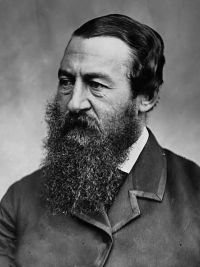
Portrait of Arthur Charles Fox-Davies Arthur Charles Fox-Davies,  A Complete Guide to Heraldry

“ Some of the objections one hears raised to official heraldry will not hold water when all facts are known; but one certainly thinks that those who object to the present helmet and its methods of usage have ample reason for such remarks as one frequently sees in print upon the subject. To put it mildly, it is absolutely ridiculous to see a helmet placed affronté, and a lion passant looking out over the side of it; or to see a helmet in profile with the crest of a man's head {320}affronté placed above it, and as a consequence also peeping over the side. ”
Source: Gutenberg

Anonymous,  The Manual of Heraldry; Fifth Edition

“ The helmet is now placed over a coat of arms; and by the metal from which it is made, the form, and position, denotes the rank of the person whose arms are emblazoned beneath it.
The helmets of sovereigns are formed of burnished gold; those of princes and peers, of every degree, silver figured with gold; knights, esquires, and gentlemen, [Page 84] polished steel.
The helmets of the king, the royal family, and peers, are open-faced and grated: the number of bars served formerly to distinguish the bearer's quality. The helmets of knights are open-faced, without bars.
”
Source: Gutenberg

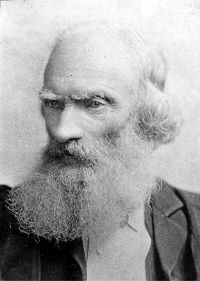
Portrait of Arthur Charles Fox-Davies Arthur Charles Fox-Davies,  A Complete Guide to Heraldry (1909)

“ To the modern mind, which grumbles at the weight of present-day head coverings, it is often a matter of great wonder how the knights of ancient days managed to put up with the heavy weight of the great iron helmet, with its wooden or leather crest. A careful study of ancient descriptions of tournaments and warfare will supply the clue to the explanation, which is simply that the helmet was very seldom worn. ”
Source: Wikisource

Get perspective with Kwize: daily news enlightened by great literature