Mantling

Definition and stakes

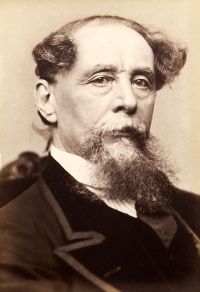
Portrait of John Edwin Cussans John Edwin Cussans,  The Grammar of Heraldry (1866)

“ The Mantling is the ornamental accessory generally depicted behind the escutcheon. When the arms have supporters, it is usual to represent the mantling as a cloak (manteau) , or robe of estate. The royal mantling is of gold, and that of peers of crimson velvet; both being lined with ermine. The mantling of esquires is commonly depicted as hanging from the helmet ”
Source: Wikisource

John W. Mollett,  An Illustrated Dictionary of Words used in Art and Archaeology (1883)

“ Mantle. A flowing robe worn over the armour, as shown in the costume of the knights in the ivory mirror-case. (Fig. 463.)
Mantling or Lambrequin. A small mantle, of some rich materials, attached to the helmet, and worn hanging down, and ending in tassels. (See Fig. 177.) It is usually represented, in Heraldry, with jagged ends, to represent the cuts it would be exposed to in actual battle.
”
Source: Gutenberg

George Grazebrook,  The Dates of Variously-shaped Shields…

“ Mantlings.
The first observed instance of a mantling or lambrequin, as it was then called,—a term still applied to it by the modern French heralds,—occurs in the large seal of Ralph de Monthermer, Earl of Gloucester and Hertford, 1299. This is engraved in Nicholas Upton, De Usu Militari [Bisse edition, 1654, p. 63] . In Planché's Poursuivant the helmet and mantling alone are engraved from this seal. It is represented as a square handkerchief or shawl fastened at one end under the crest, and flying out loose behind. There is no hacking (see No. 62) .
”
Source: Gutenberg

Get perspective with Kwize: daily news enlightened by great literature