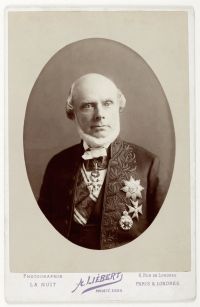
“ Migration commenced at a very early period, the facility with which our species becomes habituated to every climate and accommodates itself to variations of temperature, taken in connection with the nomadic character which distinguished primitive populations, explains to us the displacement of the earlier inhabitants of the earth. Soon, means of navigation, although rude, were added to the power of travelling by land, and man passed from the continent to distant islands, and thus peopled the archipelagos as well as the mainland. ”
Human migration
Definition and stakes
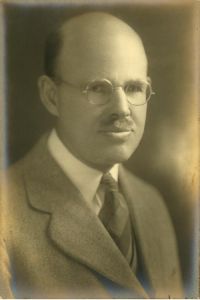
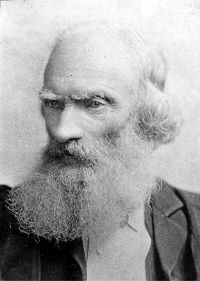
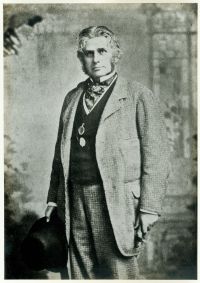
Human migration, the movement of people for resettlement—whether permanent or temporary—includes both voluntary and forced displacement, shaping societies across time and space. From economic pursuits to escaping persecution, migration has driven human development, as noted by authors like Isaiah Bowman, who connected it to the expansion of food sources and cultural exchange, or Louis Figuier, who traced early migrations to climate adaptability and nomadic ways of life.
Scholars such as Ellsworth Huntington emphasized migration’s role in spreading populations from Central Asia, while others highlighted its dual nature as both a survival strategy and a catalyst for societal change. Contemporary analyses underscore its economic advantages and complex social effects, revealing migration as a dynamic force that continues to reshape global demographics and intercultural relationships.
Quotes about “human migration”
Various, The Journal of Negro History, Volume 6…
“ The subject of migration in general is capable of very lengthy treatment, but as this is not our purpose here we shall terminate this discussion at this juncture. In this preliminary survey the aim has been to try to show, though in an exceedingly brief manner, the meaning and significance of migration as a factor in the human struggle for existence; the distinction between migration and the earliest movements of primitive man; the types of forces which figure in any migration; and the various forms in which a migration may occur. ”
Various, Popular Science Monthly (1898)
“ In those cases the birthplace may have been the original home, before the migratory habit was acquired, and scarcity of food the reason why it was acquired; and 'the influence of scarcity in causing migration is well shown by the occasional or irregular migrations of certain prolific animals which do not ordinarily leave their birthplaces, although, when these become overstocked, migrations take place, just as human colonists go out from thickly settled countries to find new room for growth in foreign lands. ”
Harry Johnston, Pioneers in Canada
“ Long after this wonderful event in the Earth's history, when the human species was spread over a good deal of Asia, Europe, and Africa, migration to the American continents began in attempts to find new feeding grounds and unoccupied areas for hunting and fishing. ”
Isaiah Bowman, The Andes of Southern Peru
“ In analyzing the facts of distribution we shall do well to begin with the causes and effects of migration. Primitive man is in no small degree a wanderer. His small resources often require him to explore large tracts. As population increases the food quest becomes more intense, and thus there come about repeated emigrations which increase the food supply, extend its variety, and draw the pioneers at last into contact with neighboring groups. The farther back we go in the history of the race the clearer it becomes that migrations lie at the root of much of human development. ”
T. A. Coward, The Migration of Birds — Chapter 1 (1912)
“ Indeed a full bibliography of migration would be a considerable volume. Even workers within the last few years have declared that certain phenomena were beyond human understanding, only to be explained by instinct, a word capable of most varied interpretation. ”
A. de Quatrefages,
The human species
(1879)
“ But I have observed above, that we are justified in assuming that man followed into Europe the great mammals which were driven by the cold into more southern countries. There can, then, be nothing strange in the idea that the race, to which everything points as having been the most ancient upon our soil, should also have been the one to accomplish the migration. ”
Anne Cary Maudslay, A Glimpse at Guatemala (1899)
“ If, as is generally believed, the population of America came originally from the Asiatic continent, such an original migration must have taken place so early in the history of the human race that it antedated the use of bronze, iron, or domestic animals in the land from which the migrants came. ”
Augustus Henry Lane-Fox Pitt-Rivers,
The Evolution of Culture, and Other Essays
“ At the same time large tracts now occupied by the sea may then have been land, uniting or connecting by a chain of easily accessible islands the regions in which men of the same colour and physical peculiarities are now found. But it will be seen by the map that the lines of distribution of two of the races, the Negroid and the Australioid, cross each other, and this, according to the theory of migration by land, appears to involve a succession of submersions and upheavals during the human period, which it is difficult to account for. ”
Ellsworth Huntington,
The Red Man's Continent: A Chronicle of Aboriginal America
(1919)
“ The evidence points to central Asia as man's original home, for the general movement of human migrations has been outward from that region and not inward. ”
Charles A. Ellwood, Sociology and Modern Social Problems
“ Ancient migrations were, moreover, somewhat different from modern immigration and emigration. Ancient migrations were largely those of peoples or tribes, while in modern times migration is more of an individual matter. ”
Francis A. Knight, In the West Country
“ We have learnt much in recent years with regard to migration. With one single exception, we know where every one of the summer migrants goes to rear its brood. The haunt of one only—the curlew-sandpiper—still defies discovery. ”
Ellen Churchill Semple,
Influences of Geographic Environment
“ Herein lies the great difference between migration in empty or sparsely inhabited regions, such as predominated when the world was young, and in the densely populated countries of our era. As the earth grew old and humanity multiplied, peoples themselves became the greatest barriers to any massive migrations, till in certain countries of Europe and Asia the historical movement has been reduced to a continual pressure, resulting in compression of population here, repression there. ”
Theodor Mommsen,
The History of Rome, Book I
“ We have no information, not even a tradition, concerning the first migration of the human race into Italy. It was the universal belief of antiquity that in Italy, as well as elsewhere, the first population had sprung from the soil. ”
Henry Pratt Fairchild,
Immigration
(1913)
“ Even civilized man, in his highest development, has his seasonal journeyings, from his summer home to his winter home, and back. But none of these comings and goings deserve to be included as true movements of peoples, or to be called migrations in the present sense. Migration involves an actual and permanent change of residence. It thus becomes evident that migrations can occur only in the most rudimentary form among people in the hunting stage ”
Richard Jefferies,
The Life of the Fields
(1884)
“ No space is left for a mysterious agency; migration is purely natural, and acts for the general preservation. Try to put yourself in a bird's place, and you will see that migration is very natural indeed. If at some future period of the world's history men should acquire the art of flying, there can be no doubt that migration would become the custom, and whole nations would change their localities. Man has, indeed, been always a migratory animal. ”
Charles A. Ellwood, Sociology and Modern Social Problems
“ The Huns, for example, came into Europe as a nation, but the immigration into the United States at the present time is wholly an individual movement. The causes of migration are more or less universal, but corresponding to the difference in ancient and modern migrations we find the causes varying somewhat in ancient and modern times. The causes of ancient migrations and the primary causes of all migrations seem to be: (1) lack of food; (2) lack of territory for an expanding population; (3) war. In modern times we find other causes operating, like, (4) the labor market ”
Sir Daniel Wilson,
Prehistoric man
“ Various considerations tend to favour the idea of such a migration, rather than the maintenance of intercommunication and exchange, among a people of the same race, throughout regions so extensive and so geographically distinct. ”
Frederick Charles Lincoln,
Migration of Birds (1950)
“ Acceptance of this hypothesis requires abandonment of the belief that the development of migration was the result of useful ends that were served thereby, and in its place, to give approval to the idea that migration was merely "the natural consequence of an inherent behavior pattern responding to the drifting of continental masses." ”
Henry Pratt Fairchild,
Immigration
(1913)
“ All these forms of forced migration are evidently different in principle and in most of their characteristics from the great types of migration which have been mentioned. Their study is a subject by itself. ”
Henry Fairfield Osborn, Men of the Old Stone Age: Their Environment…
“ This would indicate that the long lines of eastward and westward migration were open and favorable to the arrival in western Europe of new migrants from the far east, including perhaps the most primitive races of man. ”
John R. Commons,
Races and Immigrants in America
“ Such, in brief, were the land and the people that furnished one-sixth of our total population and two-fifths of our Southern population. In shifting such a people from the torrid climate of equatorial Africa to the temperate regions of America, and from an environment of savagery to one of civilization, changes more momentous than those of any other migration have occurred. ”
Henry Pratt Fairchild,
Immigration
(1913)
“ Having thus considered some of the essential features of migration as a whole, it will be well to distinguish further between the four great types of migrations to 10which reference has been made. One of the earliest, simplest, and most natural of migratory movements is the invasion. ”
John Lord, Beacon Lights of History, Volume 14…
“ When we can feel assured that all the individuals of the same species, and all the closely allied species of most genera, have within a not very remote period descended from one parent, and have migrated from some one birthplace; and when we better know the many means of migration, then, by the light which geology now throws, and will continue to throw, on former changes of climate and of the level of the land, we shall surely be enabled to trace in an admirable manner the former migrations of the inhabitants of the whole world. ”
Richmond Mayo-Smith, Thomas Allan Ingram and Hans Friedrich Gadow, 1911 Encyclopædia Britannica, Volume 18… (1911)
“ Prehistoric migrations. Among savage and nomadic nations the whole tribe often moves into new territory, either occupying it for the first time or exterminating or driving out the indigenous inhabitants. ”
Walter Francis Willcox, 1922 Encyclopædia Britannica (1922)
“ The movement cannot yet be thoroughly studied, but what information is available indicates that the migration has been almost exclusively to the northern and western industrial districts. Whether it is a temporary dislocation of population due to war-time conditions or a persistent drift cannot yet be foreseen. ”
Clark Wissler, The American Indian (1917)
“ Early in this discussion, we saw how closely the prehistoric areas agreed with the historic, suggesting that a type of culture was in some vague manner firmly fixed in a locality. In some respects, such a conclusion is disconcerting, because the traditions of our subject call for a veritable and constant flux of migrations. While our previous discussions have made it apparent that migration is exceptional rather than universal, still, the logical necessities of the case require some movements of population. ”
Gilbert White,
The Natural History of Selborne…
“ Dear Sir,—You are, I know, no great friend to migration; and the well-attested accounts from various parts of the kingdom seem to justify you in your suspicions, that at least many of the swallow kind do not leave us in the winter, but lay themselves up like insects and bats in a torpid state, and slumber away the more uncomfortable months till the return of the sun and fine weather awakens them.But then we must not, I think, deny migration in general; because migration certainly does subsist in some places, as my brother in Andalusia has fully informed me. ”
Désiré Charnay,
The Ancient Cities of the New World
“ It is more likely that one or a series of calamities incident to a primitive race, such as war, pestilence, famine, more or less periodical among the aborigines, was the true cause of their migration. ”
Ellen Churchill Semple,
Influences of Geographic Environment
“ So with those rivers of men which we call migrations. The ethnic stream may start comparatively pure, but it becomes mixed on the way. From time to time it leaves behind laggard elements which in turn make a new racial blend where they stop. Such were the six thousand Aduatici whom Cæsar found in Belgian Gaul. These were a detachment of the migrating Cimbri, left there in charge of surplus cattle and baggage while the main body went on to Italy.142Complex currents of migration. ”
Sir Thomas Hungerford Holdich, The Gates of India: Being an Historical Narrative
“ What we wish to emphasize is the apparent inability on the part of many writers on the subject of ancient history and geography to realize the essential difference between then and now as regards human migratory movement. ”
Sir Daniel Wilson,
The lost Atlantis, and other ethnographic studies
“ There alike has been tested to what extent the European and the African are affected by migration to new regions, and by admixture with diverse races. There can now be witnessed the results of a transference, for upwards of three centuries, of indigenous populations of the Old World to a continent where they have been subjected to many novel geographical, climatic, and social influences. ”
Charles A. Ellwood, Sociology and Modern Social Problems
“ NEWSHOLME, Vital Statistics.CHAPTER IX THE IMMIGRATION PROBLEM In new countries population may increase by immigration as well as by the surplus of births over deaths. Immigration is, therefore, a secondary means of increasing the population of a country, and in new countries is often of great importance.Immigration, or the migration of a people into a country, along with its correlative emigration, or the migration of a people out of a country, constitutes a most important social phenomenon. All peoples seem more or less migratory in their habits. ”
A. L. Kroeber,
Anthropology
(1923)
“ It may seem strange that with all the reference to diffusion in the foregoing pages, there has been so little mention of migration. The reason is that migrations of peoples are a special and not the normal means of culture spread. ”
T. A. Coward, The Migration of Birds — Chapter 1 (1912)
“ Laws regulating migration in one area, whether it be the great continent of America, the British Islands or the islet of Heligoland, may have little application in other parts of the world; local evidence alone can never solve the great problems. ”
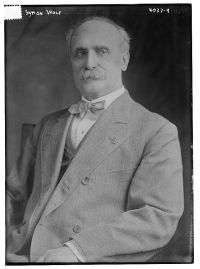
Simon Wolf,
The American Jew as Patriot, Soldier and Citizen
“ Subsequently, the migration of the Pilgrim Fathers to North America left an indelible impress in our modern civilization, and finally the migrations of yesterday and to-day, trending still westward to the Pacific, and the offshoots of the current to Australia, to New Zealand and to South America, have opened in the history of mankind a chapter which the Twentieth Century will not complete. ”
Chautauqua Institution, The Chautauquan, Vol. 04, March 1884…
“ We have to consider those creatures who are deprived of food by climate, but who are able to pass to other places where food still exists. Travel for this purpose is called migration, and it may be accomplished in two ways, namely, upon the earth by means of feet, or over it by means of wings. We will first take migration on foot.Again, I put aside man, because his migrations (and we English are the most migratory race on the earth) are the result of reason and not of instinct. Man migrates for a definite purpose. ”
Goldwin Smith,
Lectures and Essays
“ Migration by land under the pressure of hunger or of a stronger tribe, or from the mere habit of wandering, calls for no special effort of courage or intelligence on the part of the nomad. Migration by sea does: to go forth on a strange element at all, courage is required ”
Sagas from the Far East; or, Kalmouk and Mongolian Traditionary Tales
“ In the first place, it is altogether unlikely that in the case of a great migration all should have migrated rigidly in one direction. It is only [xi] natural to expect they should have poured themselves out every way, and to look for the original home in a locality which should have formed a central base of operations. ”
Karl Weule, Native life in East Africa (1909)
“ As to the way in which these migrations are accomplished, we are apt to be misled by the picture—no doubt a very incorrect 49one—which has remained in our minds from our school-days, in connection with the migration par excellence—the great westward movement of our own forefathers. ”
Various, Popular Science Monthly (1910)
“ From lands of more genial climates to lands of colder and longer winters, but also of the most active and energetic races, the migration has taken place. Present-day Migrations in the Temperate Zones.—Within the north temperate zone especially, and also across from the north to the south temperate, vast, peaceful migrations are taking place, determined to no small degree by climatic considerations. From Europe and Asia to the United States alone, a million people a year are now migrating. ”