Ice axe

Definition and stakes

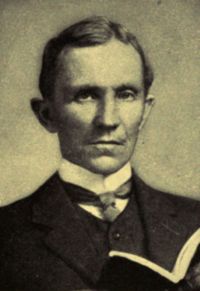
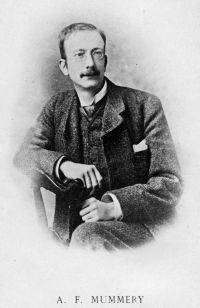
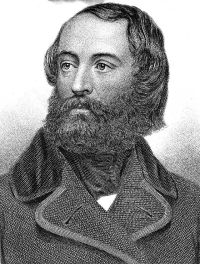
Portrait of Edward Whymper Edward Whymper,  Scrambles Amongst the Alps in the Years 1860-69

“ There is no better weapon for cutting steps in ice than a common pick-axe, and the form of ice-axe which is now usually employed by the best guides is very like a miniature pick. My own axe is copied from Melchior Anderegg’s. It is of wrought iron, with point and edge steeled. Its weight, including spiked handle, is four pounds. For cutting steps in ice the pointed end of the head is almost exclusively employed: the adze-end is handy for polishing them up, but is principally used for cutting in hard snow. Apart from its value as a cutting weapon, it is invaluable as a grapnel. ”
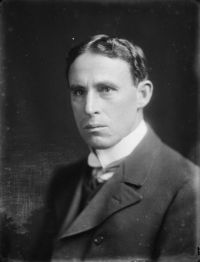
Source: Gutenberg

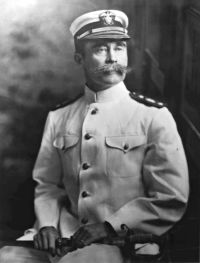
Portrait of Malcolm Ross Malcolm Ross,  A climber in New Zealand (1914)

“ In some places one man had to assist the other, and the ice-axes were handed up after the leader had gained a secure stand. Only one man moved at a time, and there was a constant cry of “Have you a good hold?” before the climbing of any difficult bit was undertaken by either of us.
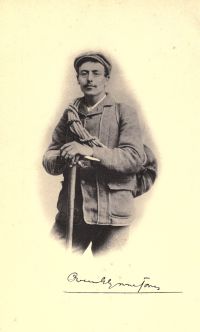
My axe weighed heavily on my mind. When passing through Christchurch I had asked Mr. Kinsey to lend me an ice-axe, and he generously gave me Zurbriggen’s. When a mountaineer gives away the trusty axe that has stood him in good stead on many an arduous expedition, it is like a soldier giving away his sword.
”
Source: Gutenberg

Get perspective with Kwize: daily news enlightened by great literature