Kite balloon

Definition and stakes

Laurence Yard Smith,  The Romance of Aircraft

“ When he springs from the balloon the parachute quickly opens and lands him gently and safely on the ground.
The kite balloon itself has been greatly improved since it was first constructed by the Germans. One of its greatest disadvantages lay in the great drag upon the cable, which when the wind was very high caused such an excessive strain that it was dangerous to use [43] the balloon. The German “drachen” was badly “streamlined,” that is to say, its shape offered great resistance to the wind. This resistance was increased by the rush of air into the open mouth of the steering ballonet.
”
Source: Gutenberg

Over the Seas for Uncle Sam

“ Up rose the balloon, until it climbed to about five hundred feet, but with its ballast gone it was like a kite without a tail—a wild balloon at the mercy of the wind. That was a sight you did not soon forget! All hands were on deck staring up with bated breath—a few tried to shout advice, but the gale drowned out their voices and the boy in the basket was far too busy hanging on for his life to heed us. ”
Source: Gutenberg

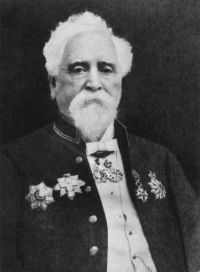
Portrait of Sir Walter Alexander Raleigh Sir Walter Alexander Raleigh,  The War in the Air; Vol. 1

“ The balloon is divided into two segments; the forward segment is filled with gas, the rear segment is kept full of air through a circular entrance attached, facing the wind, to the under surface of the balloon. But the steadying of the balloon is mainly achieved by the air-rudder, which is another inflated sausage, curved round the under side of the rear end of the balloon, and automatically filled with air through a valve at its forward end. The kite balloon is the ugliest thing that man has ever seen when he looks up at the sky, but it serves its purpose. ”
Source: Gutenberg

Get perspective with Kwize: daily news enlightened by great literature