Legislative repeal

Definition and stakes

Franklin Pierce,  Fourth State of the Union Address (1856)

“ More careful investigation may prove the law to be unsound in principle. Experience may show it to be imperfect in detail and impracticable in execution. And then both reason and right combine not merely to justify but to require its repeal.
The Constitution, supreme, as it is, over all the departments of the Government—legislative, executive, and judicial—is open to amendment by its very terms; and Congress or the States may, in their discretion, propose amendment to it, solemn compact though it in truth is between the sovereign States of the Union.
”
Source: Wikisource

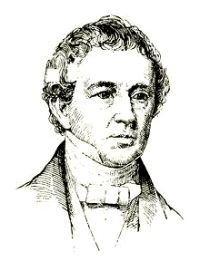
Portrait of Alexander Hill Everett Alexander Hill Everett,  Strictures on Nullification

“ The repeal of a law is as much an exercise of legislative power as the enactment of it, and from its very nature cannot be performed, unless by some person or persons invested with that power, in other words, by the Government. To assert the contrary, is in substance to assert that the same person can be sovereign and subject, or in a free State, in and out of office, at one and the same time. ”
Source: Gutenberg

Thomas Hart Benton,  Thirty Years' View (Vol. 2 of 2…

“ The repeal bill readily passed the Senate, and then went to the House, where it was quickly passed, and under pressure of the previous question, by a vote 128 to 98. The history of the passage of these two measures (bankrupt and distribution) each of which came to an untimely end, is one of those legislative arcana which should be known, that such legislation may receive the reprobation which it deserves. The public only sees the outside proceeding, and imagines a wise and patriotic motive for the enactment of important laws. ”
Source: Gutenberg

Get perspective with Kwize: daily news enlightened by great literature