Megapode

Definition and stakes

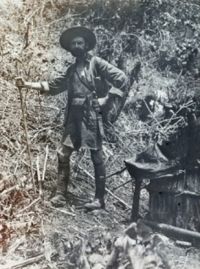
E. J. Banfield,  The Confessions of a Beachcomber

“ I come gladly to the conclusion that the megapode is a sagacious bird, not only in the avoidance of the dismal duty of incubation, but in respect of the making of those great mounds of decaying vegetable matter and earth which perform the function so effectively. In a particularly rugged part of the island is a mound almost completely walled in by immense boulders. In such a situation the birds could hardly have found it possible to accumulate by kicking and scratching so great a quantity of debris. ”
Source: Gutenberg

Alfred Newton,  1911 Encyclopædia Britannica (1911)

“ MEGAPODE (Gr. μέγας, great and πούς, foot) , the name given generally to a small but remarkable family of birds, characteristic of some parts of the Australian region, to which it is almost peculiar. The Megapodiidae, with the Cracidae and Phasianidae, form that division of the sub-order Galli named by Huxley Peristeropodes (Proc. Zool. Soc., 1868, p. 296) . Their most remarkable habit is that of leaving their eggs to be hatched without incubation, burying them in the ground (as many reptiles do) , or in a mound of earth, leaves and rotten wood which they scratch up. ”
Source: Wikisource

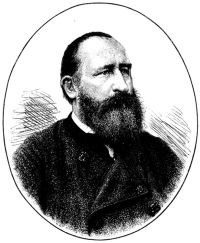
Portrait of Alfred Edmund Brehm Alfred Edmund Brehm,  Cassell's book of birds; vol. 3

“ At Port Essington I have shot this bird among mangroves, the roots of which were washed by the sea at high water; and Captain F. P. Blackwood killed one while running on the mud in a similar locality, in both instances close to a mound."
Gilbert also confirms the statement that it is found near the shore. The Megapode, he says, is almost exclusively confined to the dense thickets immediately adjacent to the sea-beach; it appears never to go far inland, except along the banks of creeks.
”
Source: Gutenberg

Get perspective with Kwize: daily news enlightened by great literature