Military winter quarters

Definition and stakes

Jacob D. Cox,  Military Reminiscences of the Civil War…

“ In winter, and especially on winter nights, it would be impossible to keep up anything like a steady temperature, and the thin shell of the building would soon chill through in a nipping and frosty air. We had to meet this difficulty in all winter quarters for troops, and there seemed to be no way to remove it. If one could be heavily clad, it was generally more healthful to endure a steady low temperature, than to meet the alternations of heat and cold which came of the replenishing and dying out of the fires in stoves during the long winter night. ”
Source: Gutenberg

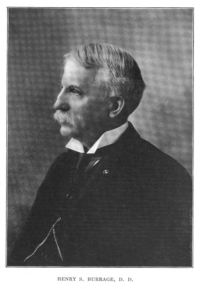
Edward Alexander Moore,  The Story of a Cannoneer Under Stonewall Jackson

“ The chief sport of the troops in their winter-quarters was snowballing, which was conducted on regular military principles. Two brigades would sometimes form in line of battle, commanded by their officers, and pelt each other without mercy. In one such engagement a whole brigade was driven pell-mell through its camp, and their cooking utensils captured by their opponents.
Once a week quite regularly an old negro man came to our camp with a wagon-load of fine oysters from Tappahannock.
”
Source: Gutenberg

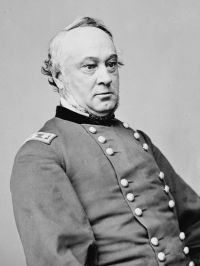
Portrait of H. W. Halleck H. W. Halleck,  Elements of Military Art and Science

“ If the camp is to be occupied for a considerable length of time, as for cantonments or winter-quarters, the greater must be the care in selecting its position and in the arrangement for the health and comfort of the soldiers. In the latter case, (of winter-quarters,) the engineer's art should always be called in play to form intrenchments, lines of abattis, inundations, &c., to render the position as difficult of access to the enemy as possible.
A bivouac is the most simple kind of camp.
”
Source: Gutenberg

Get perspective with Kwize: daily news enlightened by great literature