Molding (architecture)

Definition and stakes

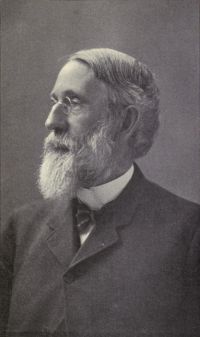
Portrait of John Henry Parker John Henry Parker,  A B C of Gothic Architecture

“ The Moldings of this style differ from the Early English chiefly in having the rounds and hollows not so deeply cut, and more generally filleted: the roll-molding, and the quarter round, are very much used; the abacus of the capital is in general a roll or filleted round, and the base is formed of round moldings without the deep hollow: as the style advances, the moldings become, generally, more shallow and feeble. ”
Source: Gutenberg

Portrait of John Henry Parker John Henry Parker,  A B C of Gothic Architecture

“ In many of the earlier examples the square profile of the recessed Norman arch is retained, and the moldings are cut chiefly on the angles; but as the style advances this squareness is lost, and the moldings appear to be cut on a chamfer, or sloping surface, as at Little Addington and Denford, Northants, and none of the plain square masonry remains, the whole being worked up into rich suites of moldings, separated only by deep hollows. In the later examples a peculiar molding called the roll [D] molding, is used ”
Source: Gutenberg

Portrait of John Henry Parker John Henry Parker,  A B C of Gothic Architecture

“ In late examples this is varied by a gentle swelling in the middle, forming a kind of shallow ogee molding, as at Kidlington. The ornamental sculptures in the hollow moldings are numerous, but there are two which require more particular notice; they are nearly as characteristic of the Decorated style as the zig-zag is of the Norman, or the tooth-ornament of the Early English. The first is the ball-flower, which is a globular flower half opened, and shewing, within, a small round ball. ”
Source: Gutenberg

Get perspective with Kwize: daily news enlightened by great literature