Naturalization (law)

Definition and stakes

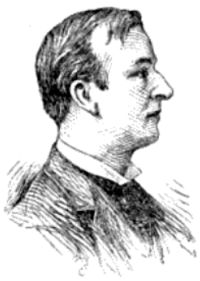
Portrait of Francis Newton Thorpe Francis Newton Thorpe,  The Essentials of American Constitutional Law

“ Naturalization is an artificial birth made possible by the will of sovereignty. It is effected by the operation of law,—and in America, by operation of statutory law only. Congress has not the exclusive power to pass naturalization laws, but it has the exclusive power “to establish a uniform rule of naturalization.”481 The power exercised here is suggested in the word “uniform.”482 Congress has seen fit to vest the exercise of this power in certain courts of law. Strictly speaking, the exercise of the function, in any of its aspects, is not essentially judicial. ”

Source: Gutenberg

Portrait of Frances Kellor Frances Kellor,  Straight America, a call to national service (1916)

“ What we really did was to increase the technicalities which cost influence and money to satisfy, but which gave America no better citizens. The naturalization law provides that an alien before becoming a citizen shall have a continuous residence of five years in America, shall comply with certain rules, shall have a knowledge of the English language and of the constitution, and shall renounce all allegiance to foreign governments. ”
Source: Gutenberg

Get perspective with Kwize: daily news enlightened by great literature