Parole (military)

Definition and stakes

Edward Davis Townsend,  Southern Historical Society Papers (1876)

“ Any officer or soldier who gives such parole will be returned to duty without exchange, and, moreover, will be punished for disobedience of orders. It is the duty of the captor to guard his prisoners, and if through necessity or choice he fails to do this, it is the duty of the prisoner to return to the service of his Government. He cannot avoid this duty by giving an unauthorized military parole.
3. A military parole not to serve until exchanged must not be confounded with a parole of honor to do or not to do a particular thing not inconsistent with the duty of a soldier
”
Source: Wikisource

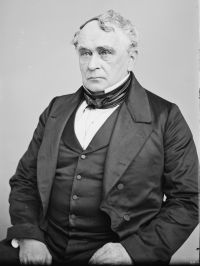
Portrait of Francis Lieber Francis Lieber,  A Code for the Government of Armies in the Field…

“ Civil officers kept as prisoners of war, may be paroled; but no citizens without office, no citizens in a merchant vessel stopped by a privateer or man-of-war, can be paroled. Nor can inhabitants of places or territories occupied by the enemy, be paroled by the latter. Their government does not lose its claim for military service upon such persons, should they give their parole, for it is of no value. If they should be paroled, and, being captured at a later period 22as soldiers, should not be treated by the captor as prisoners of war, such conduct of the enemy would be ground for retaliation. ”
Source: Gutenberg

James A. Moss,  Manual of Military Training

“ Any person subject to military law makes known the parole or countersign to any person not entitled to receive it according to the rules and discipline of war, or gives a parole or countersign different from that which he received, shall, if the offense be committed in time of war, suffer death or such other punishment as a court-martial may direct. ”
Source: Gutenberg

Get perspective with Kwize: daily news enlightened by great literature