Pen and ink

Definition and stakes

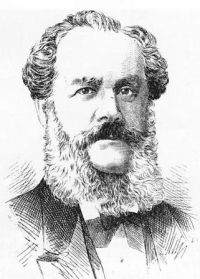
Portrait of Thaddeus Davids Thaddeus Davids,  The History of Ink (1860)

“ Though its great original and continual employment is in writing, it must be remembered that it is also largely used in the delineation of objects by artists. Ink and paint are mutually convertible to each others uses, but are yet so distinct in character and objects, that no one regards the words as synonymous, and no precise definition is needed to teach the distinction between them. As, for instance, in pen-and-ink drawings and sketches, the ink serves the purpose of paint. ”
Source: Wikisource

John L. Ridgway,  The Preparation of Illustrations for Reports of the United States Geological Survey

“ A draftsman who is preparing drawings of specimens with pen and ink should have a good assortment of pens equal to Gillott's Nos. 291, 290, and 170, liquid waterproof ink equal to that manufactured by Higgins, good pencils, hard and soft rubber erasures, plain dividers, and Reynolds's bristol board. A glass eraser is also useful.
Good pen drawings of specimens are much more difficult to make than brush drawings. They can be prepared only by a draftsman who has had some artistic training and experience in pen work.
”
Source: Gutenberg

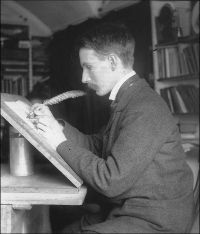
Portrait of Edward Johnston Edward Johnston,  Writing & Illuminating, & Lettering

“ A jet-black ink will test the quality of the writing by “showing up” all the faults; “pale” or “tinted” inks rather conceal the faults, and lend a false appearance of excellence (p. 322) . A thin ink greatly adds to the ease of writing (see Addenda, p. 23) . Waterproof inks, as a rule, are too thick or gummy, and do not flow freely enough.
The ink-bottle is kept corked when not in use, to keep the ink clean and prevent evaporation. Thick or muddy ink should be put away: it is not worth while trying to use it.
A small brush is used for filling the pen.
PENS
Fig.
”
Source: Gutenberg

Get perspective with Kwize: daily news enlightened by great literature